Your Cart is Empty


This article offers a comprehensive guide to understanding and combating cold feet, a common yet often overlooked issue. It explains the physiological causes—ranging from poor circulation and Raynaud’s syndrome to anemia and hormonal imbalances—and underscores the importance of seeking medical advice when symptoms persist. The article emphasizes the role of proper socks in regulating foot temperature, advocating for materials like Merino wool due to its superior insulation, breathability, and moisture-wicking properties. It also compares sock types, from compression-focused activity socks to extra-thick mountain and nature collections. Essential sock features such as terry construction, fabric blends, and fit are highlighted to maximize warmth and comfort. Finally, lifestyle adjustments like regular movement, hydration, stress management, and footwear choices round out the recommended strategies. For severe cases, the use of electrically heated socks or medical consultation is advised.
 Getting literal cold feet?
The reasons are very complex, but the answer is simple: high-quality warm socks that help regulate your body temperature and keep your feet comfortable in all conditions.
The principal causes for coldness in the area of your extremities include:
If your feet stay cold for extended periods or are accompanied by other symptoms like pain or color changes, seek medical advice from a licensed professional. Cold extremities can sometimes be a sign of an underlying health issue.
 The most well-known warm materials come in two categories: natural and synthetic.
Natural ones include Merino wool, alpaca fleece, and cotton, whereas you can also find thermoregulating synthetic fleece—you know it, the one that gives a plush look to any garment it is made into.
However, synthetic fleece is not as breathable as its natural counterparts. As such, wearing fleece socks creates a risk of overheating and sweat buildup. If you are not careful, you will trade one discomfort for another.
Natural alpaca fleece is a high-quality material, but its principal disadvantages are scarcity and high prices. Furthermore, the fabric is less absorbent than traditional wool - i.e., coming from sheep.
Our favorite sheepy fabric is undoubtedly Merino wool. The reason for that is that it is relatively affordable, while also providing you with numerous benefits like
To get the best of Merino wool socks, we recommend checking out brands that provide lanolin-free products. Lanolin is a natural wax that many people use in cosmetic self-care routines; however, it can be very harsh on sensitive skin and is not recommended for direct contact with your epidermis. A perfect sock is one that is fine enough to the touch to give you the barefoot feeling while being sturdy enough to withstand impact and improve your circulation. The best sock sets combine the qualities of Merino wool with the stretchiness and durability of fabrics like polyester, elastane, nylon, or polyamide.
Fabric blends are also a good idea when you buy cotton-based socks. However, cotton is not as versatile as wool. It will provide ample protection and breathability during transitional seasons like spring and autumn, but it tends to absorb moisture more readily than other natural textiles. Furthermore, it does not accommodate feet that swell due to weather or health conditions; in other words, it does not help with circulation.
 Besides material, sock style plays a crucial role in helping you overcome cold feet. Several Merino wool models focus on enforcing compression points to boost blood flow. This is especially prevalent in active wear and medical gear—and there's a way to get the best of both worlds.
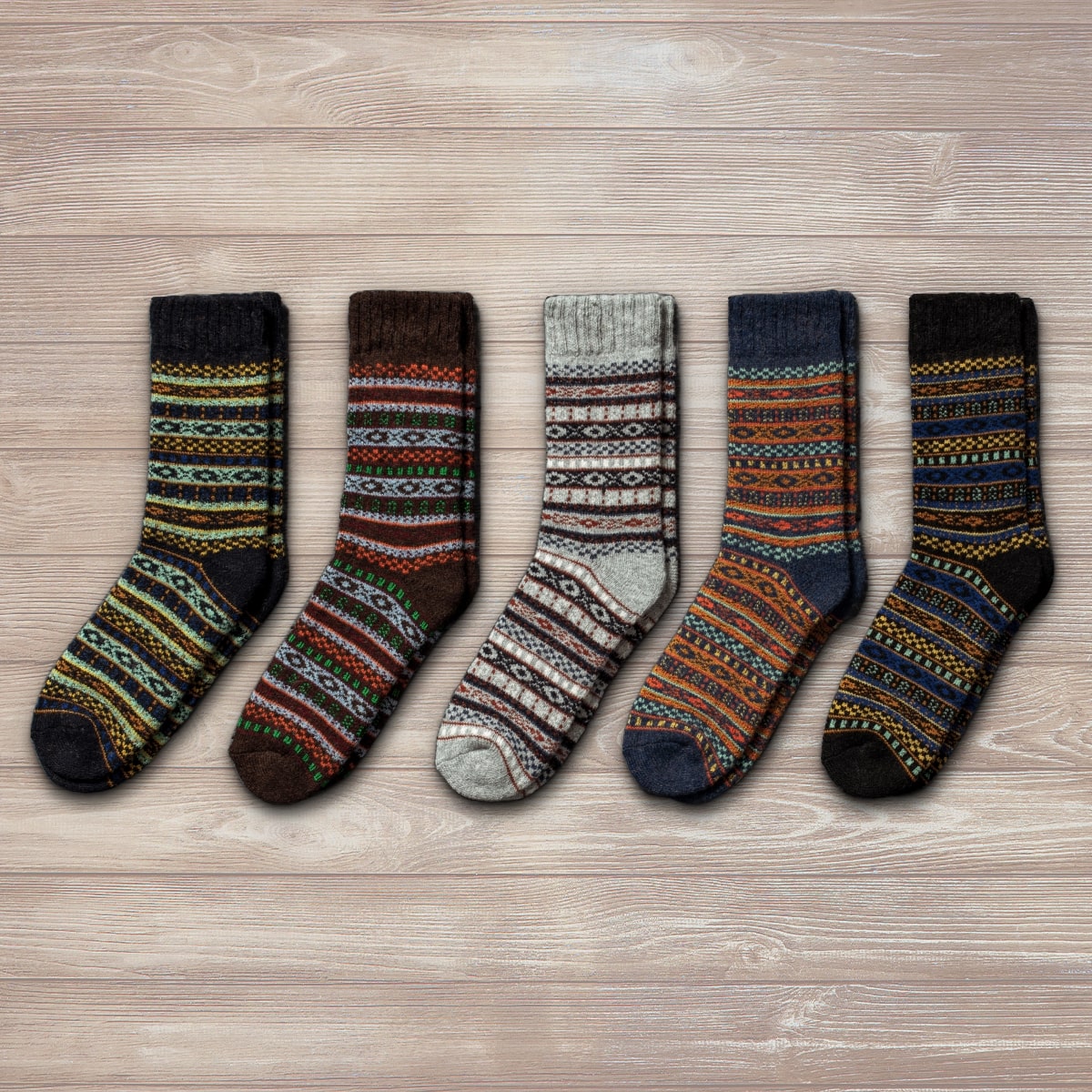
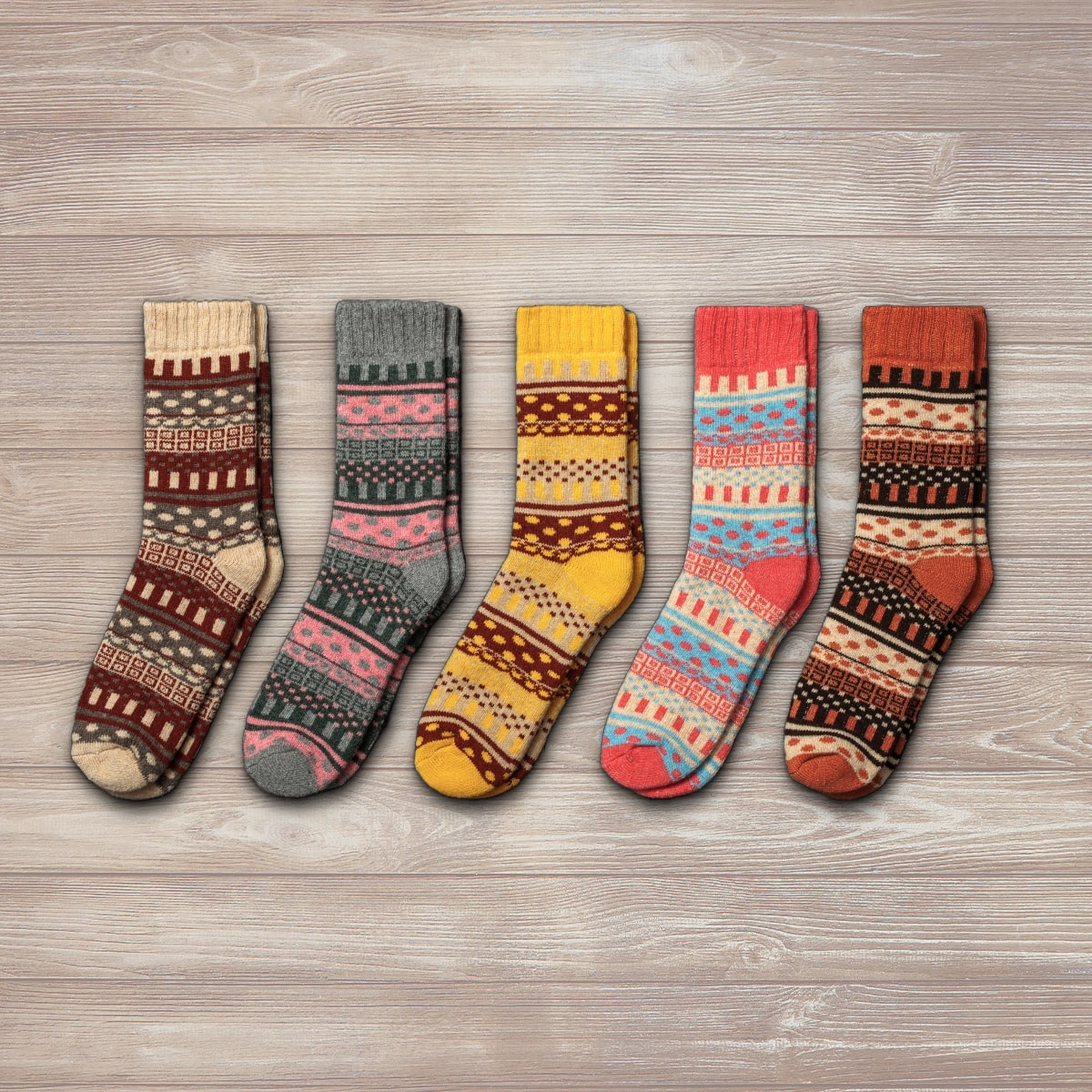
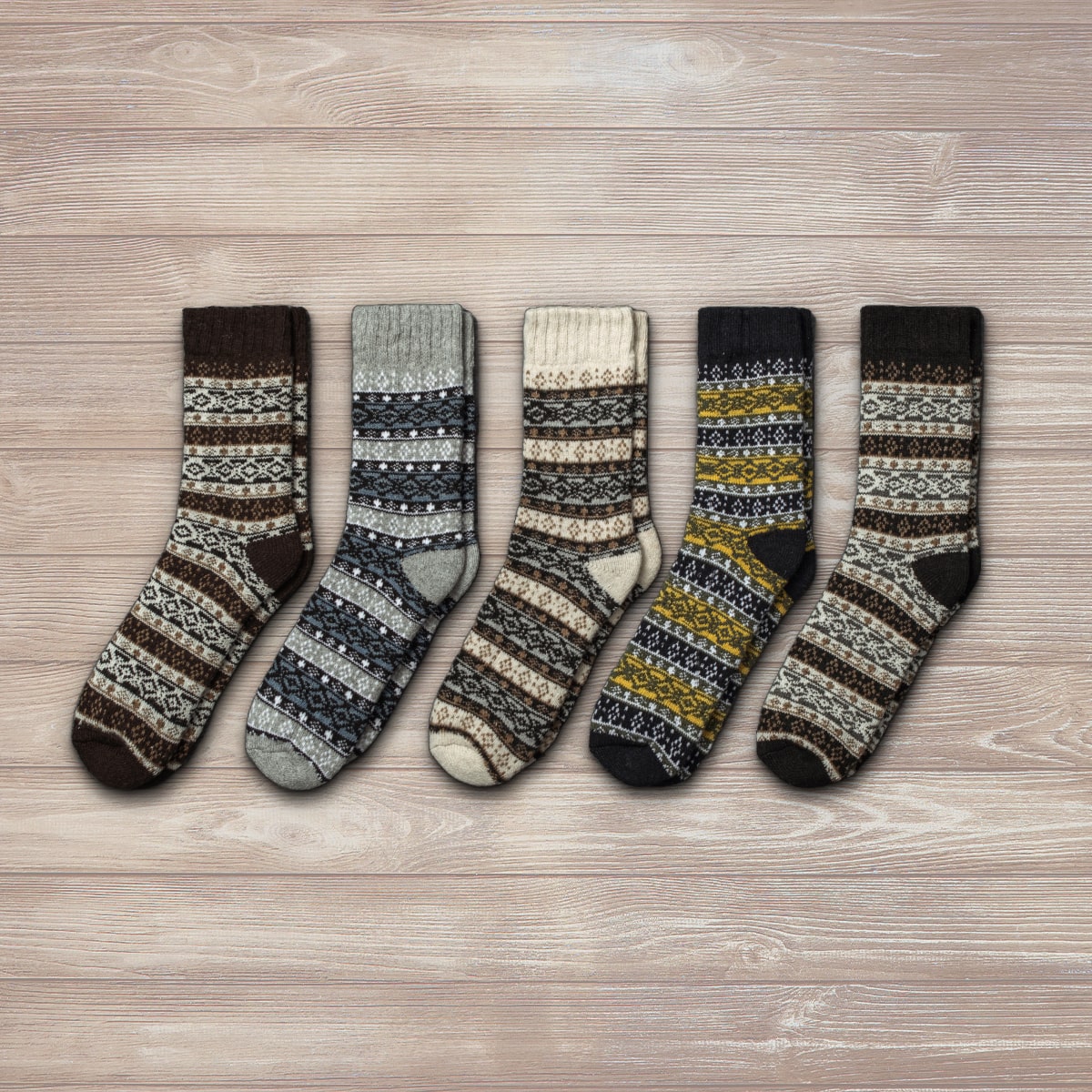
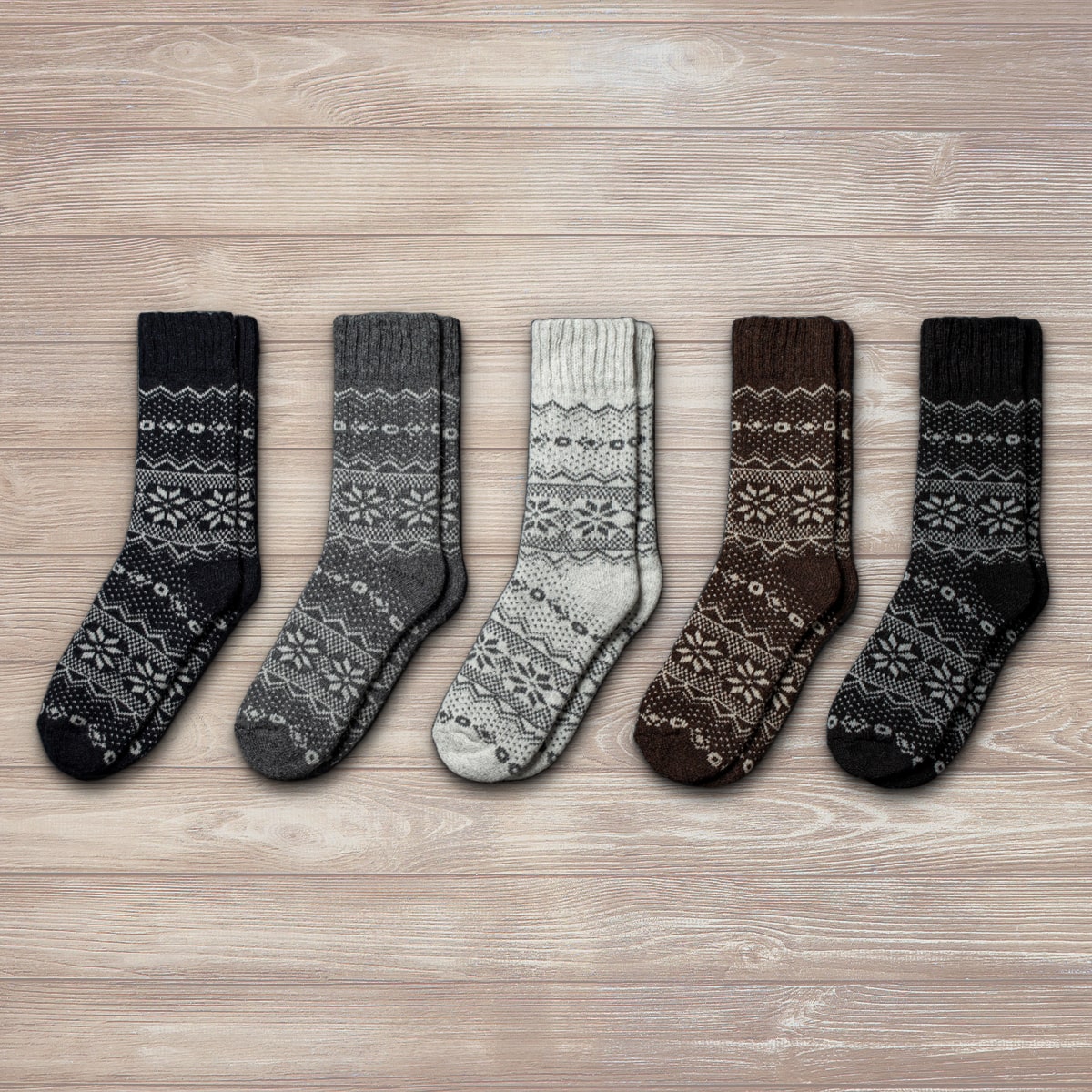
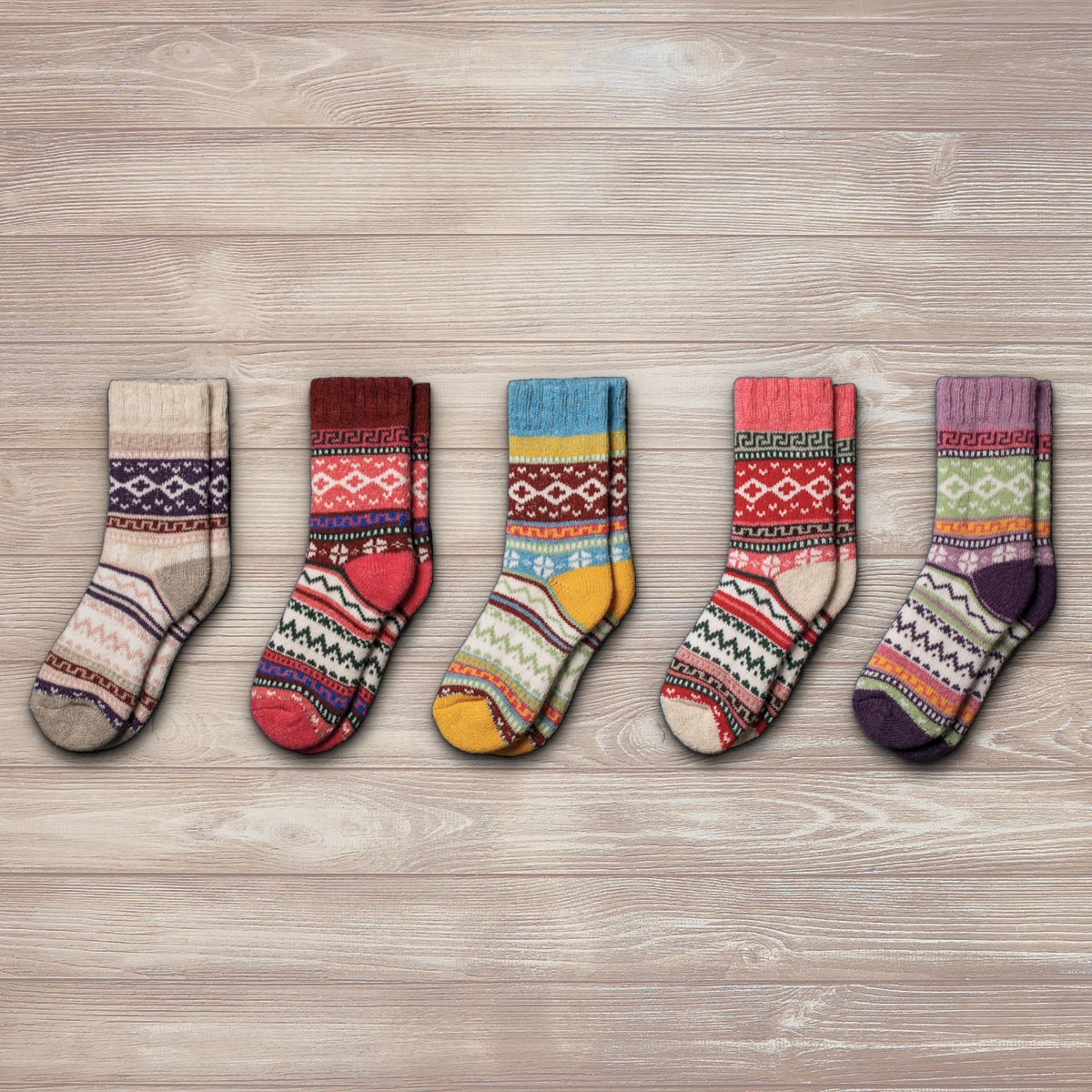
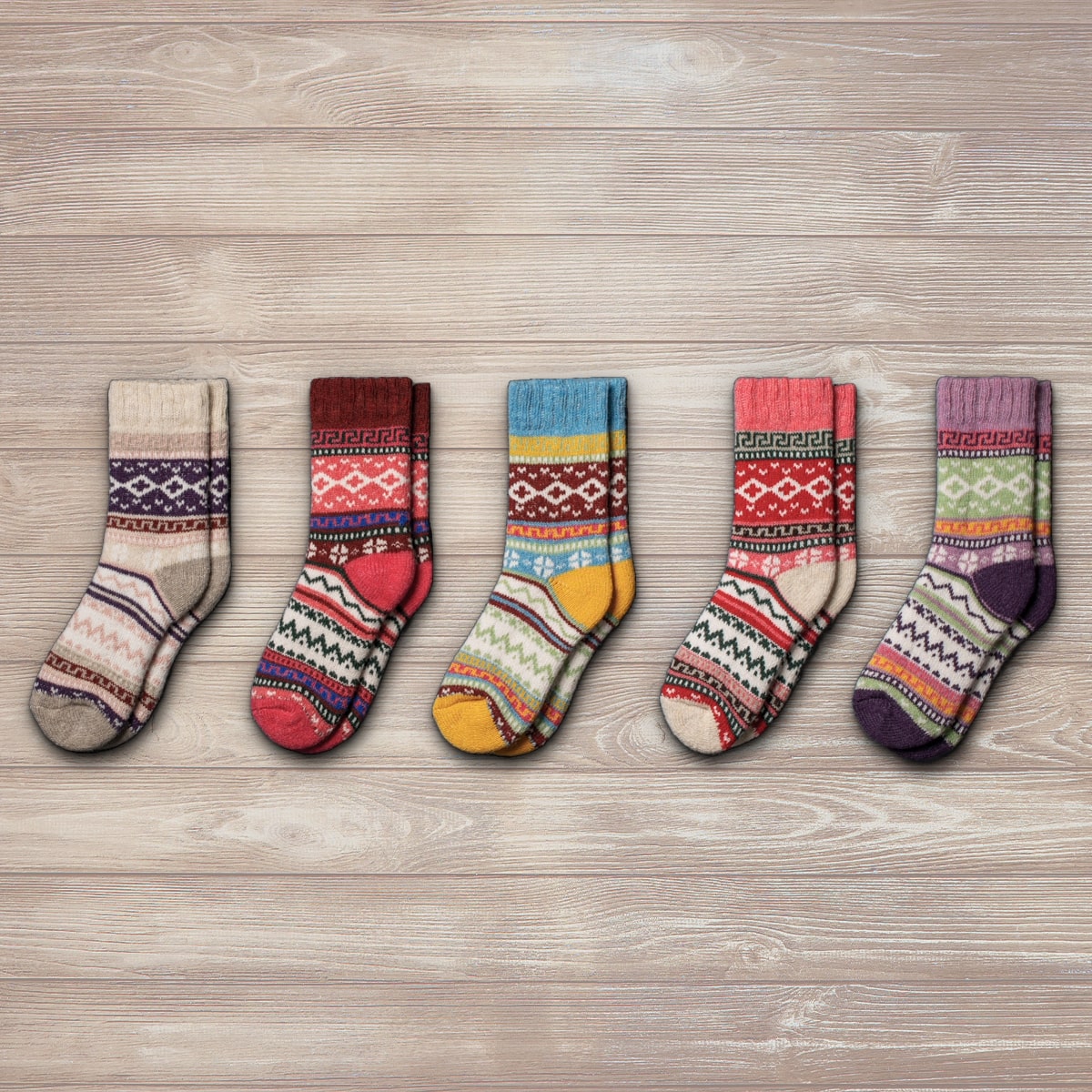
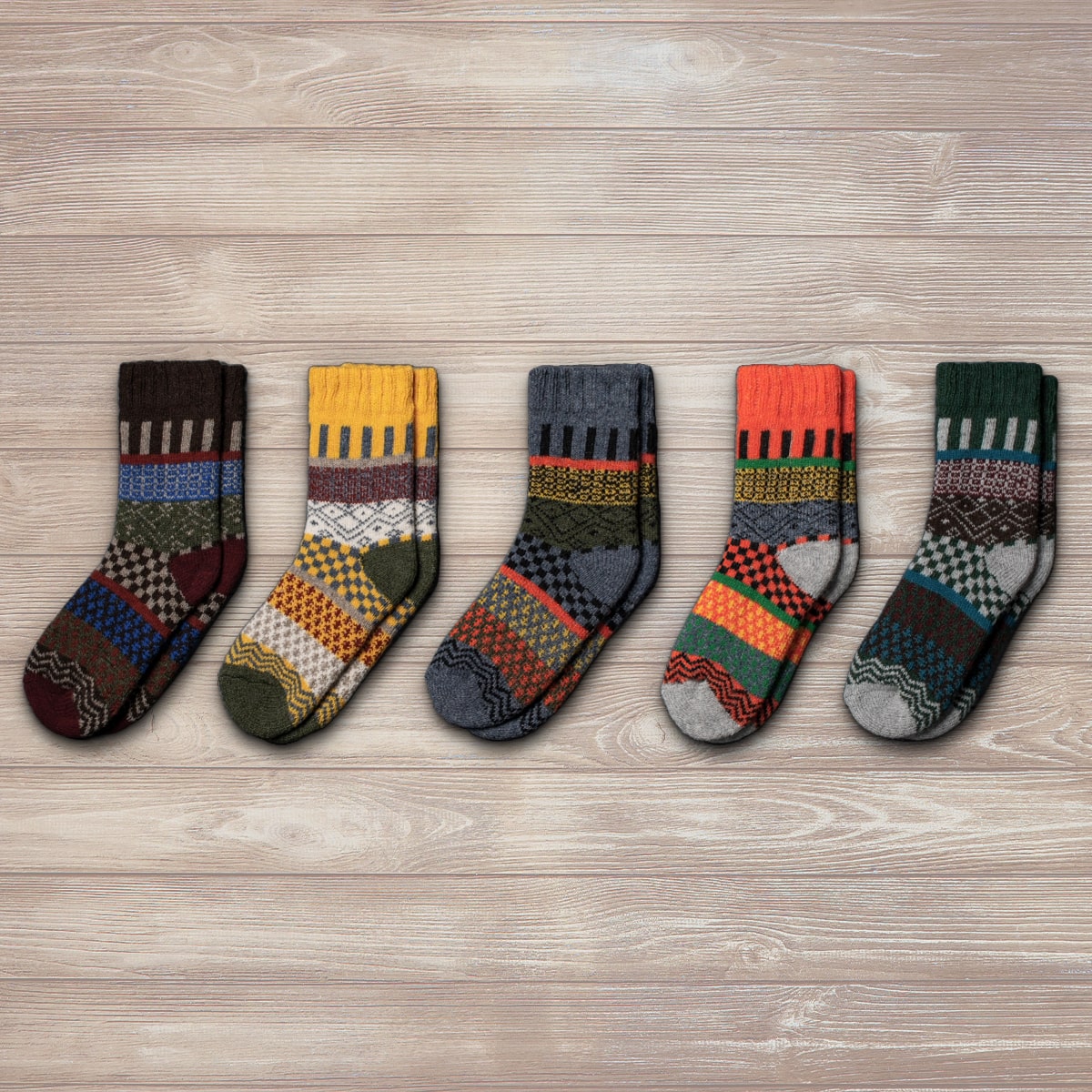
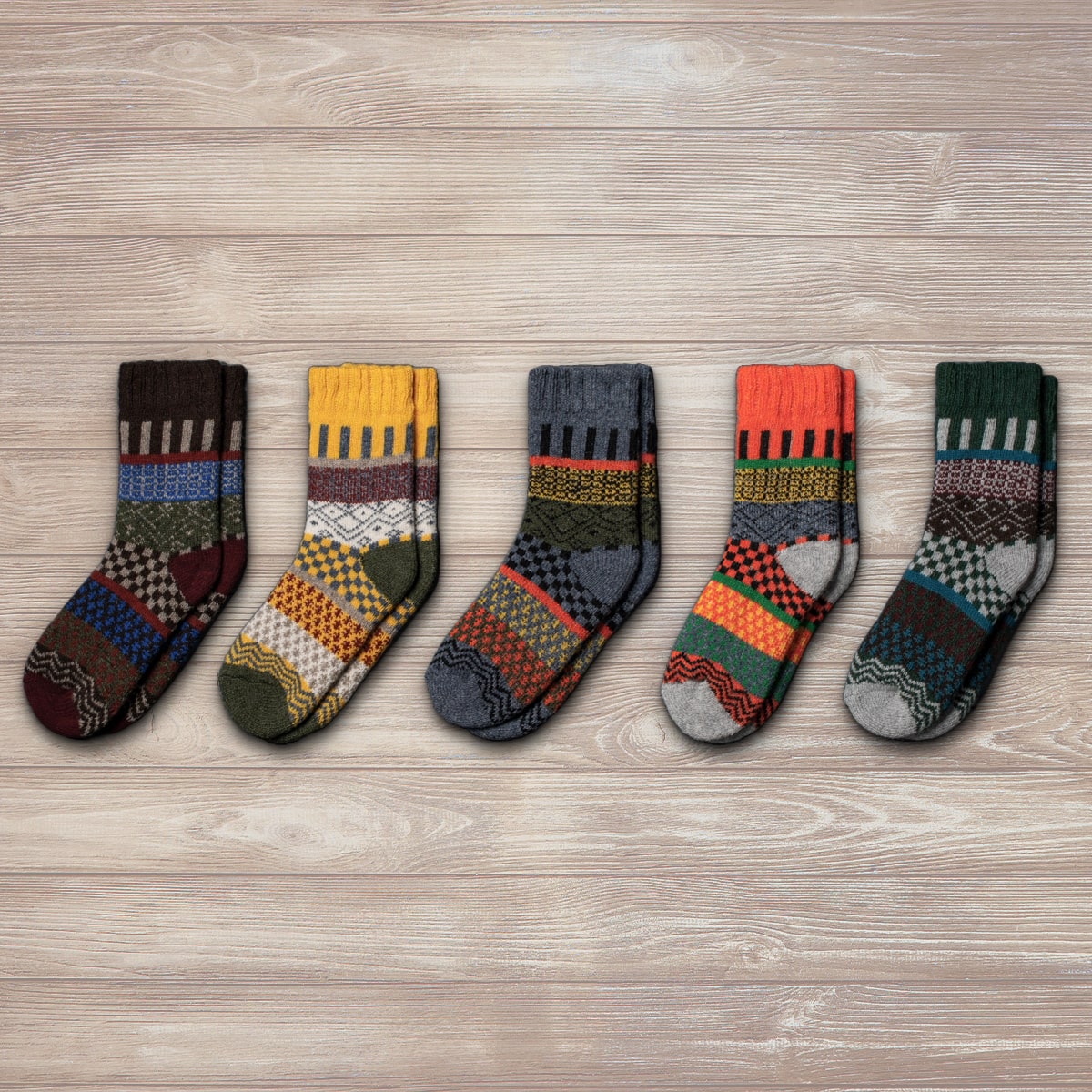
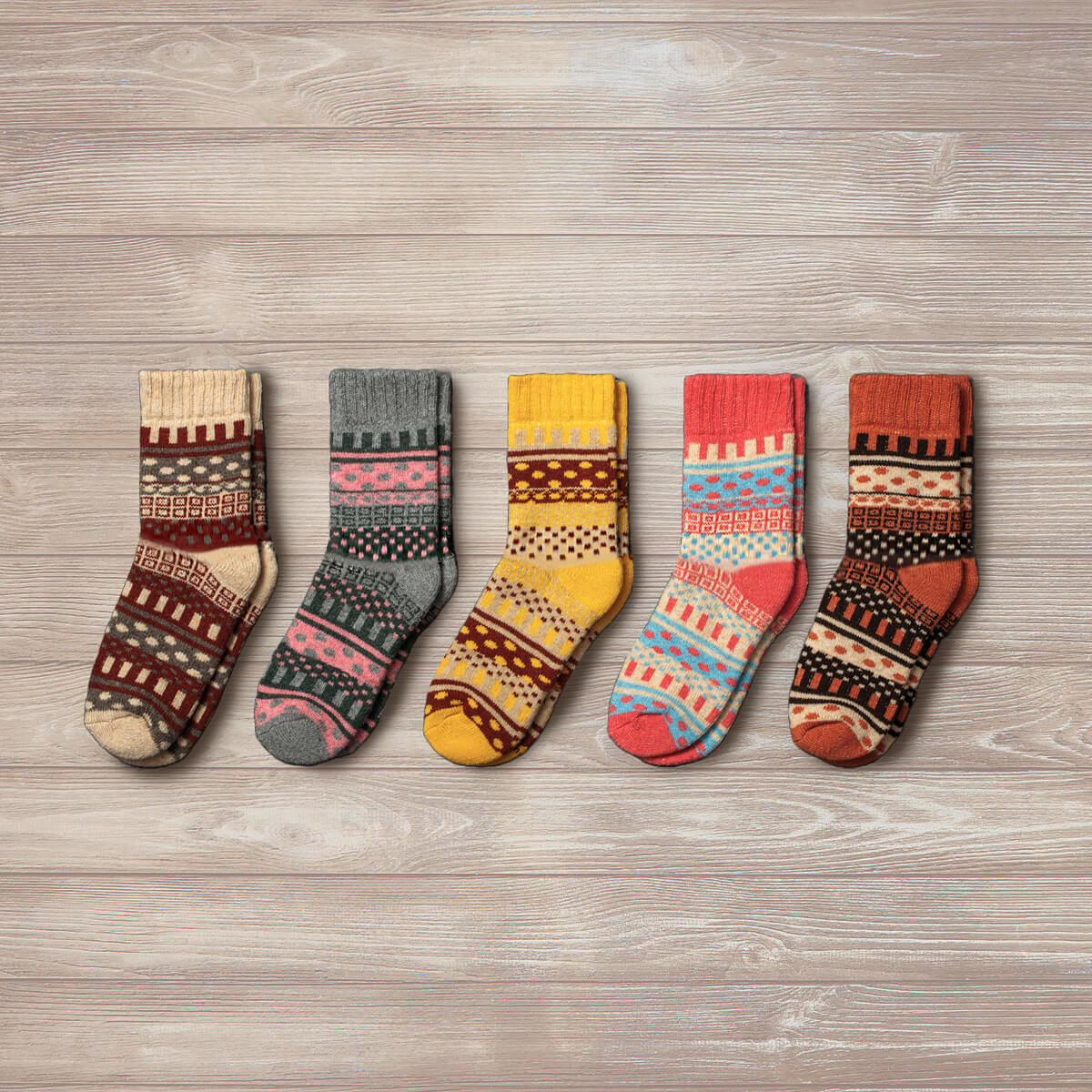
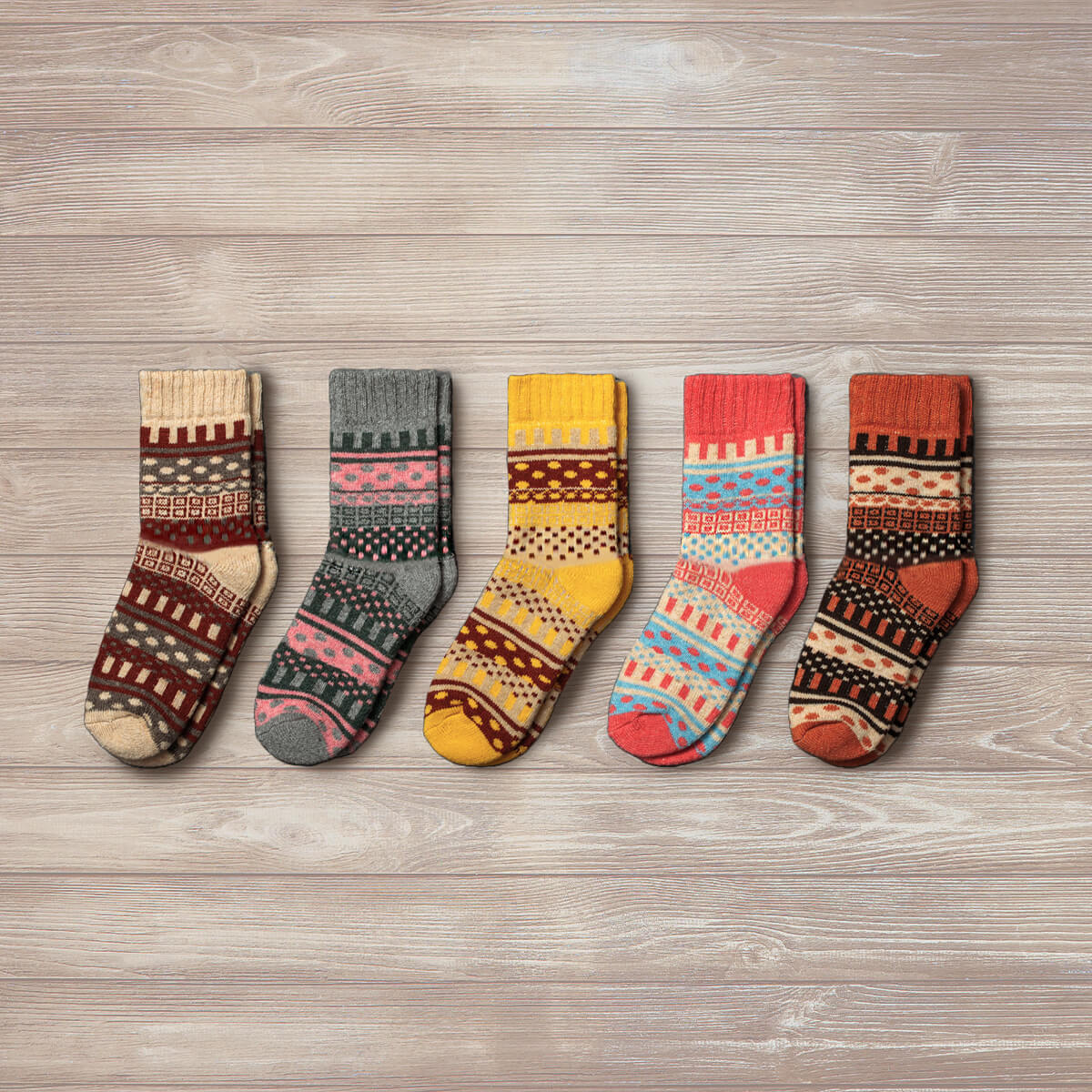
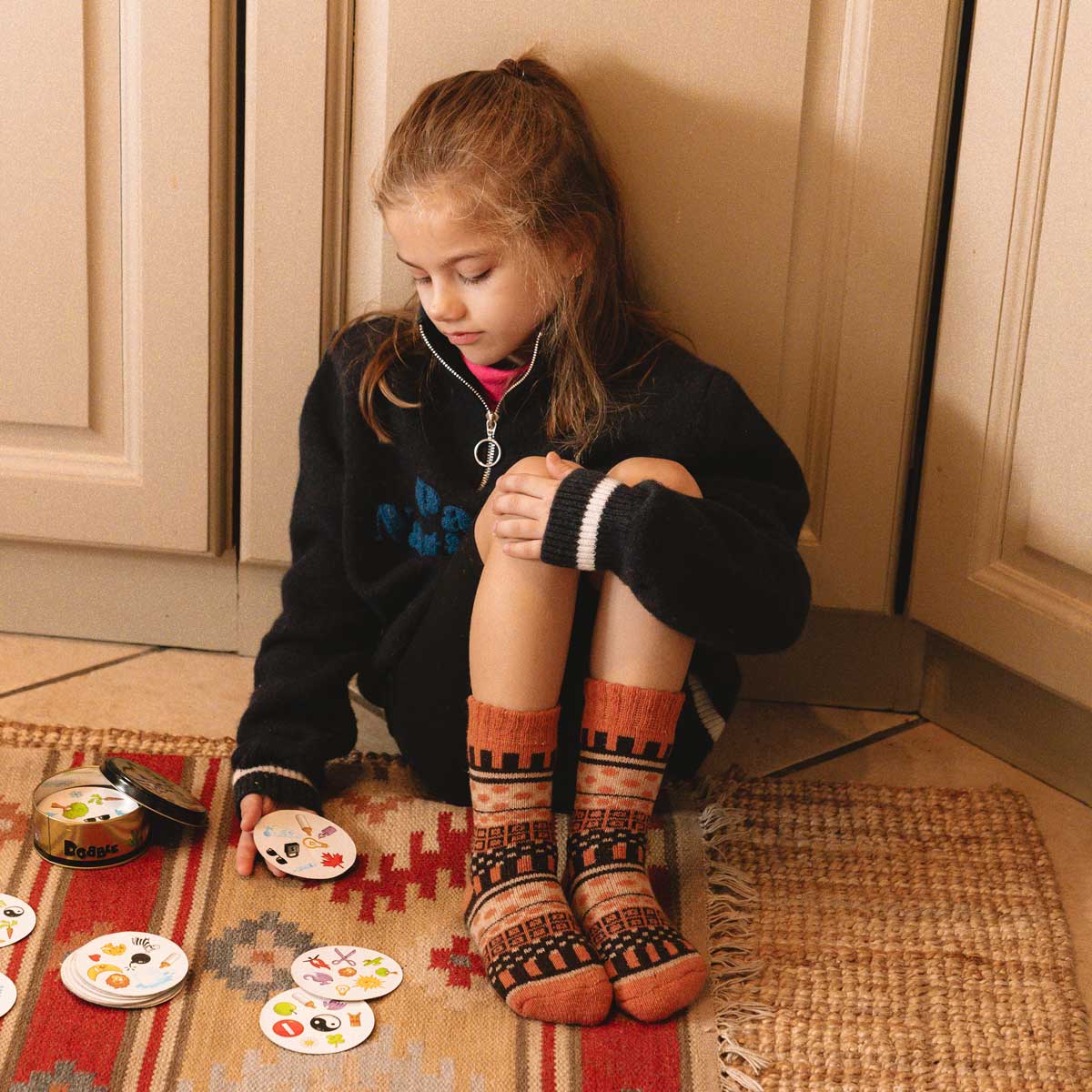
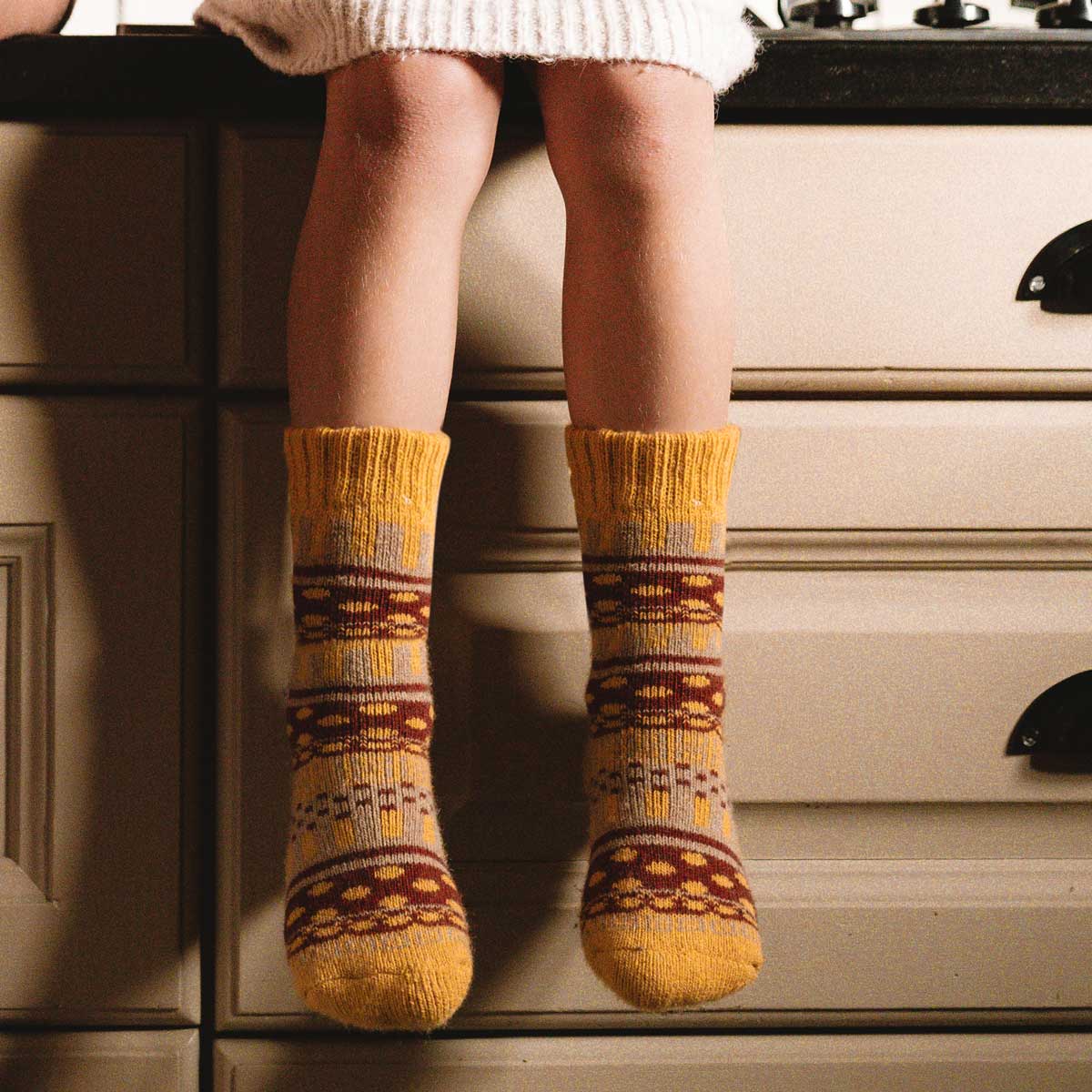
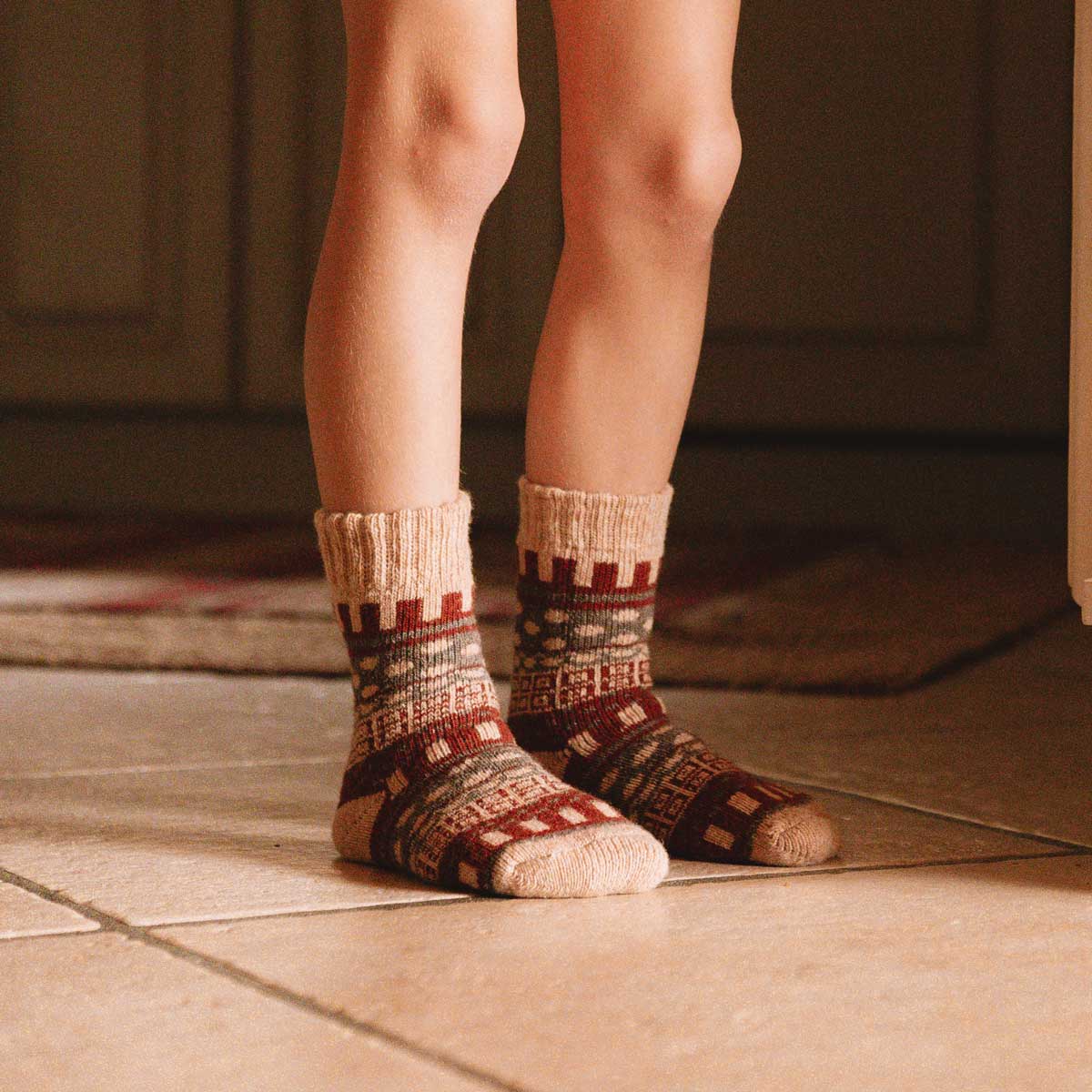
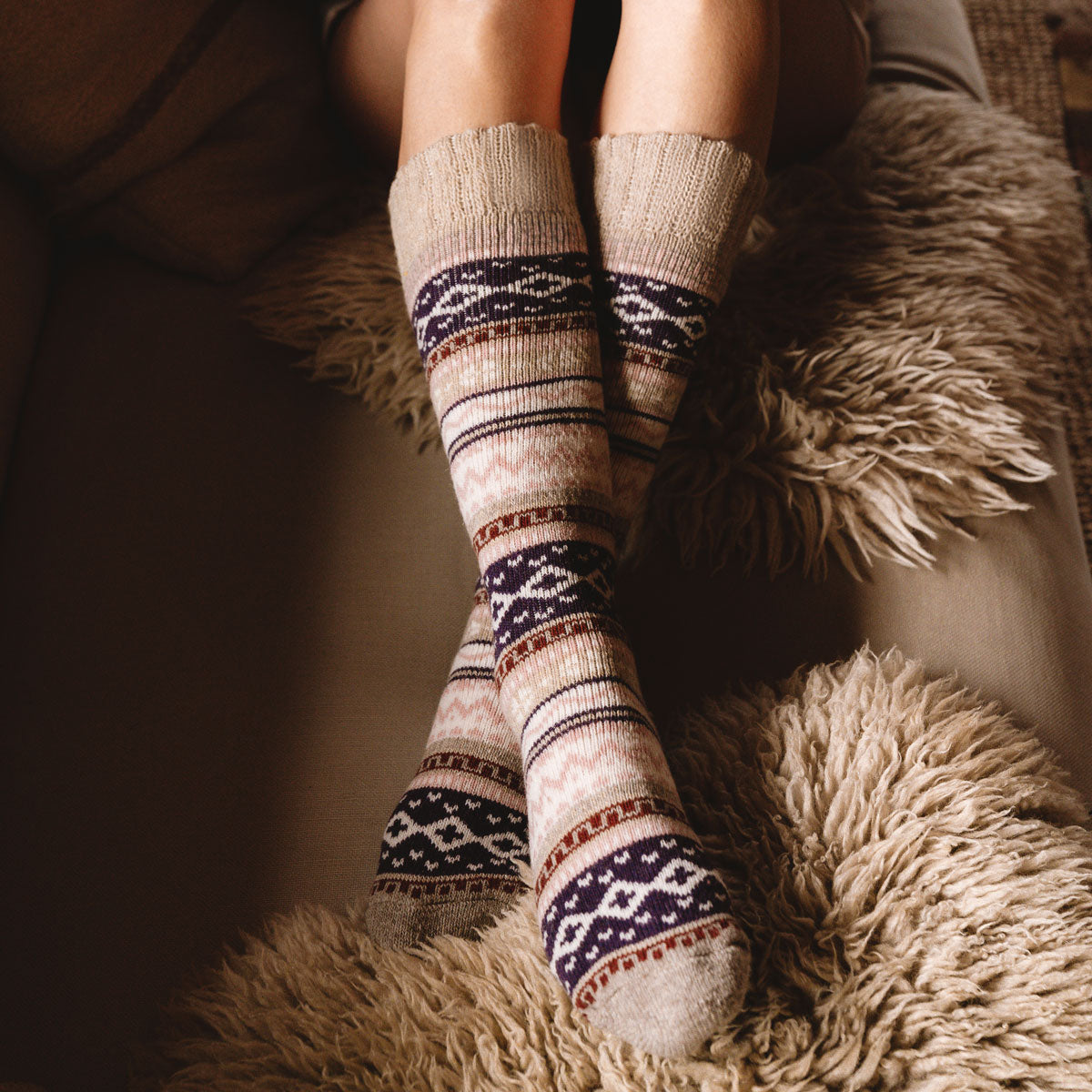
Other collections focus on providing you with superior warmth and a soft, lasting feel. These pairs can be worn with boots and other winter wear, all while maintaining comfort and the touch of high-quality wool.
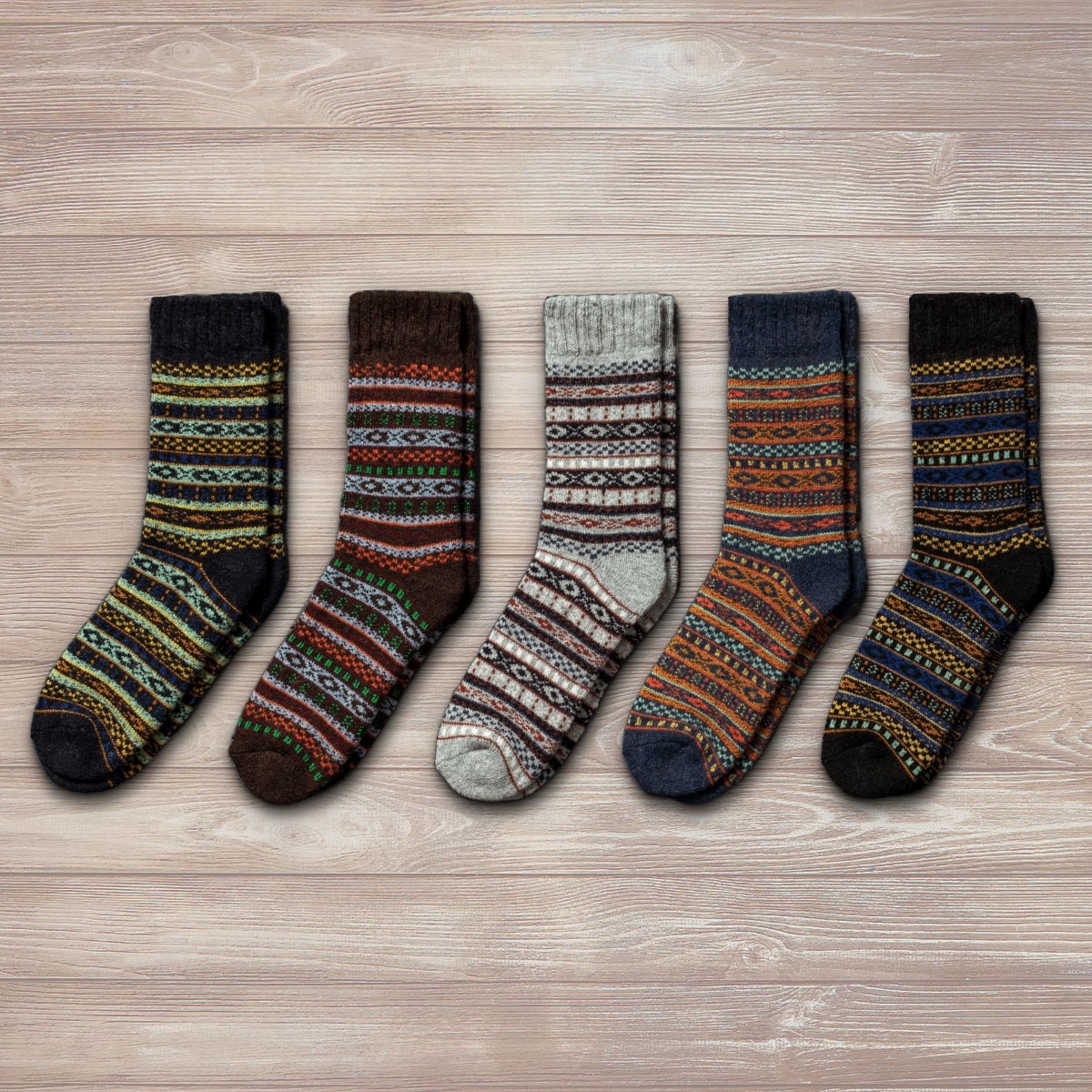
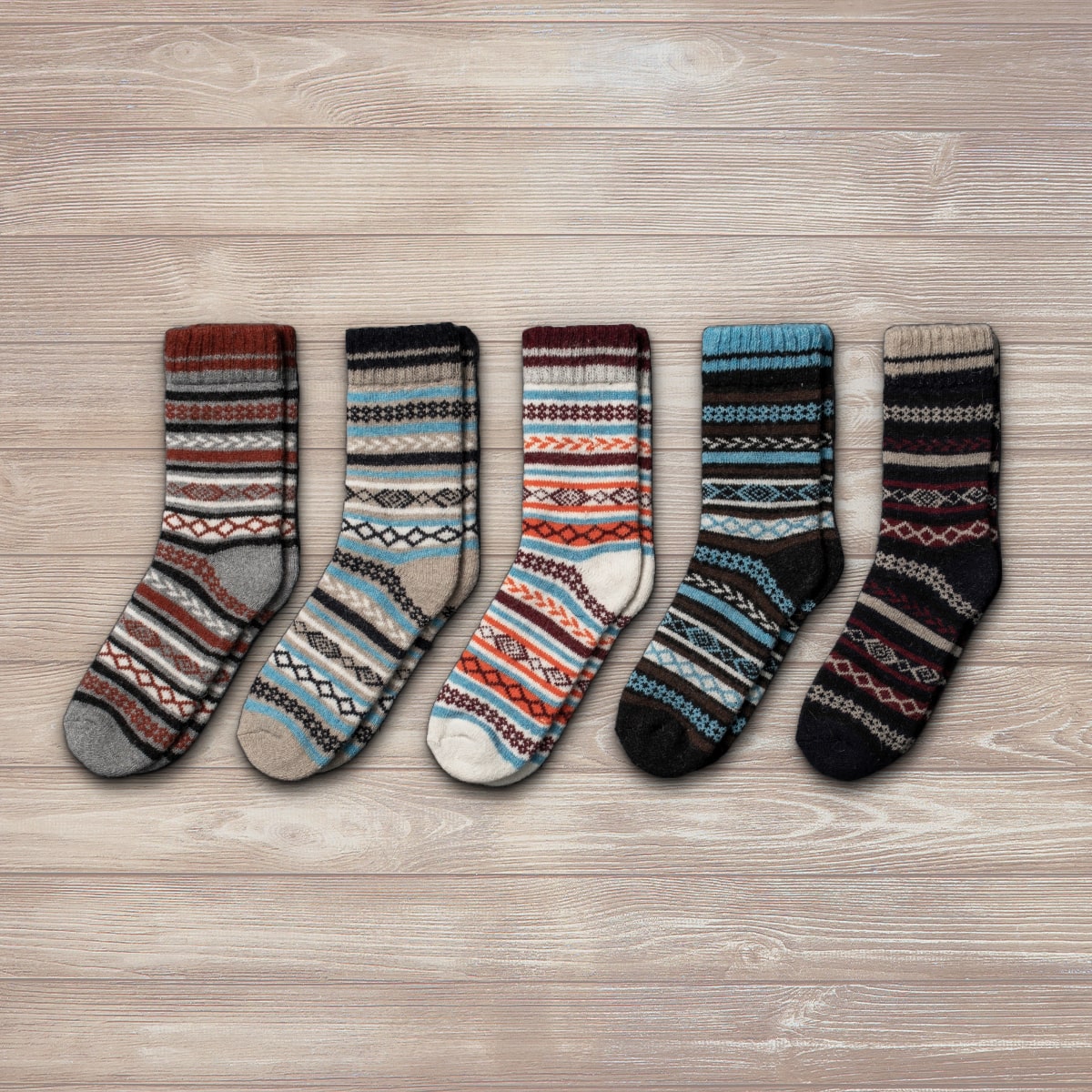
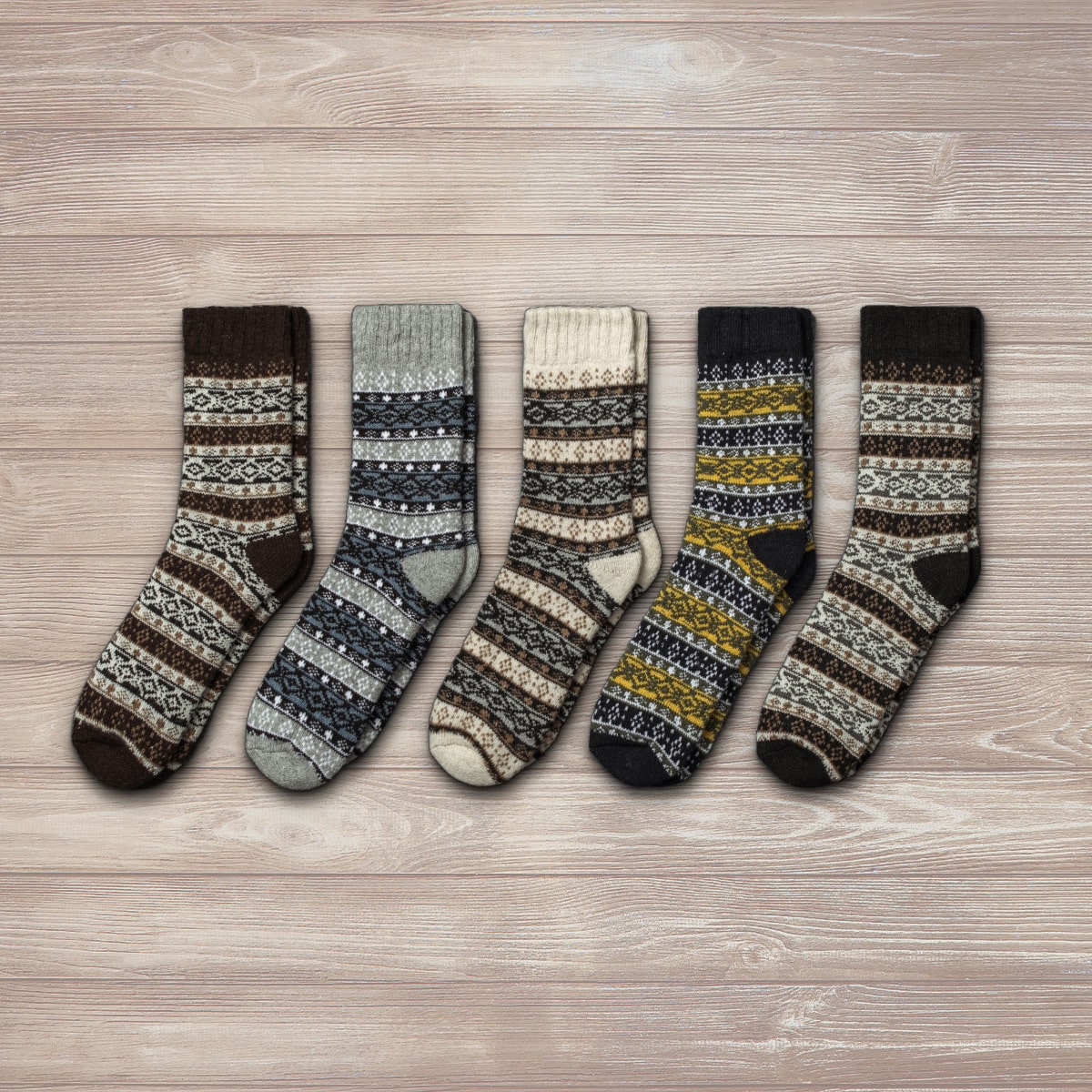
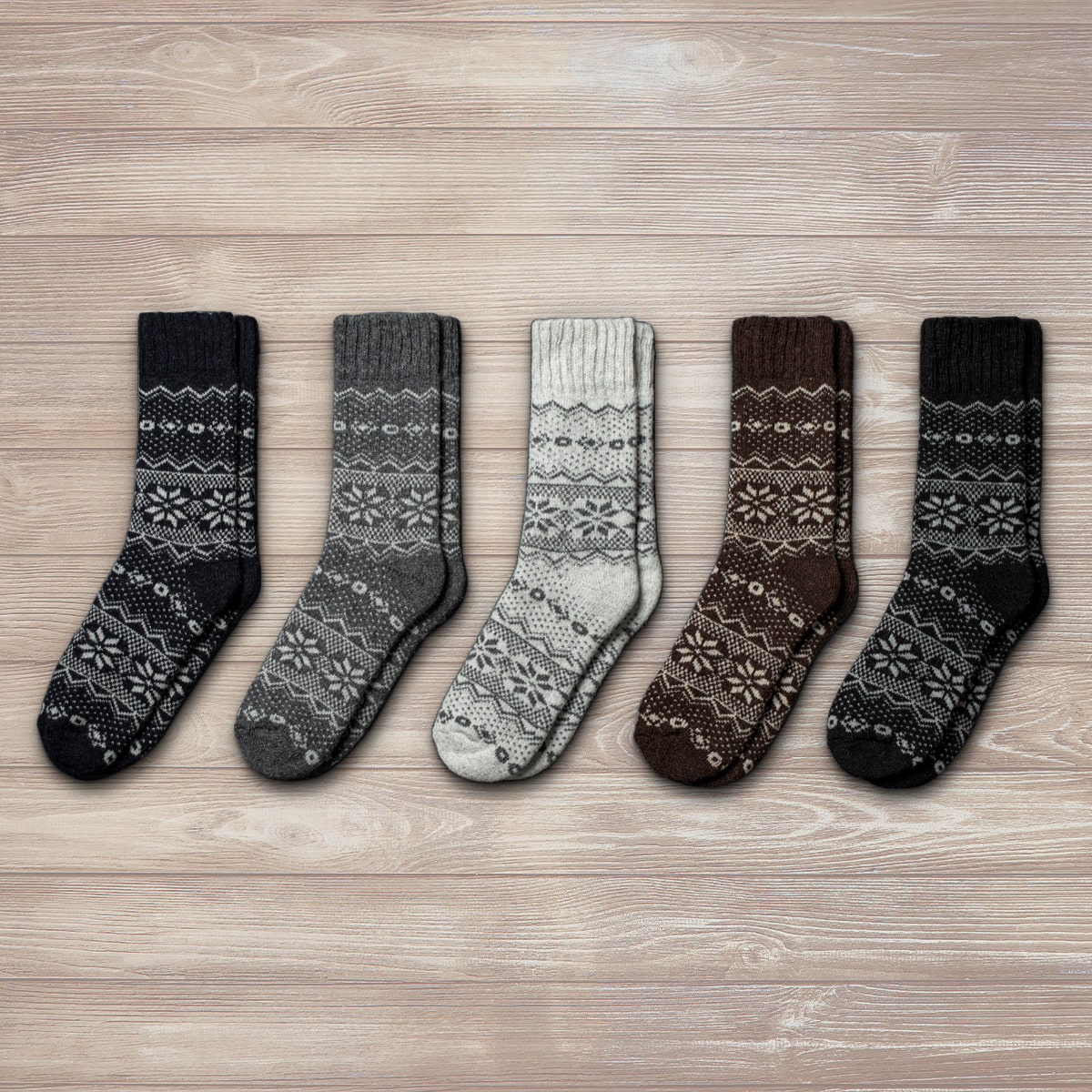
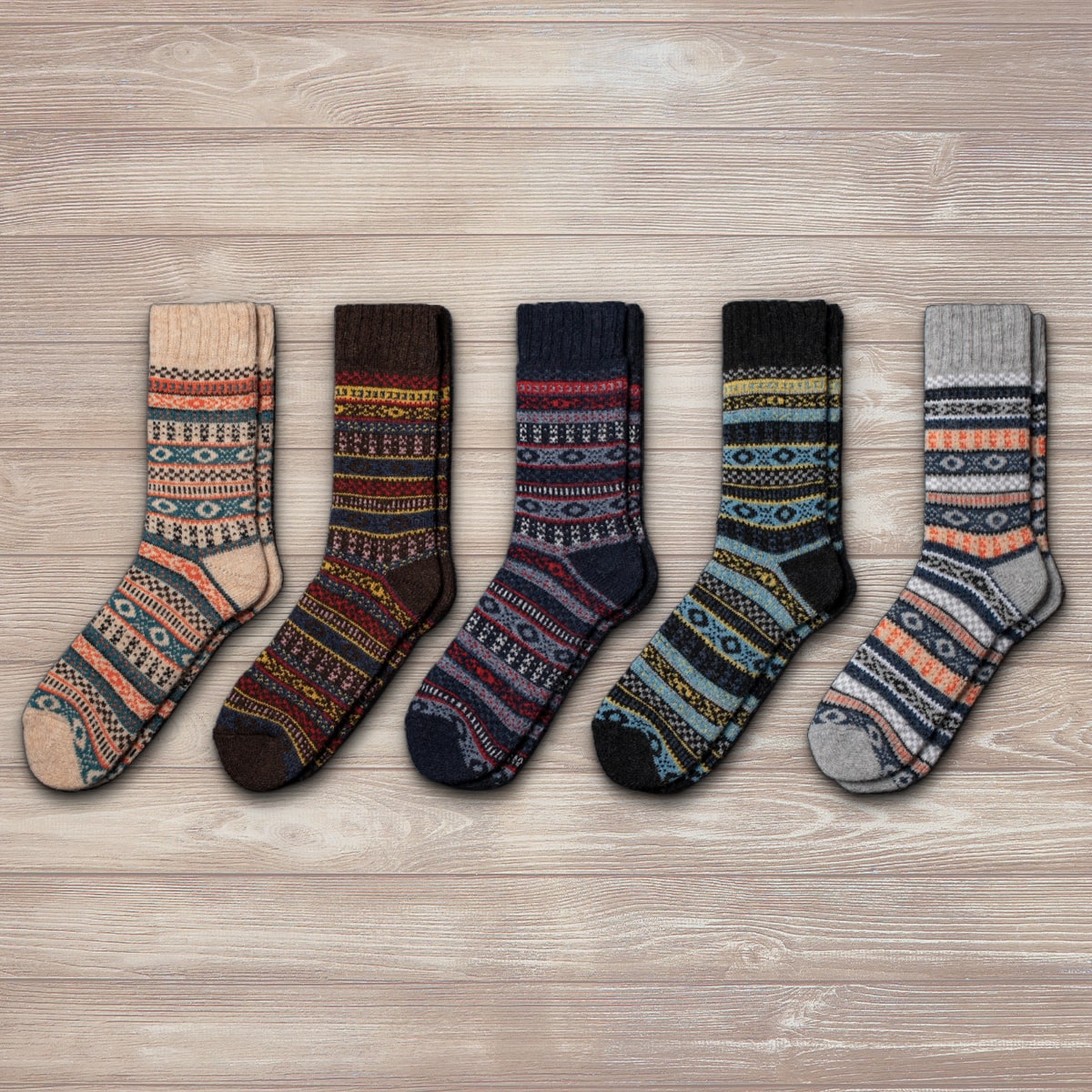
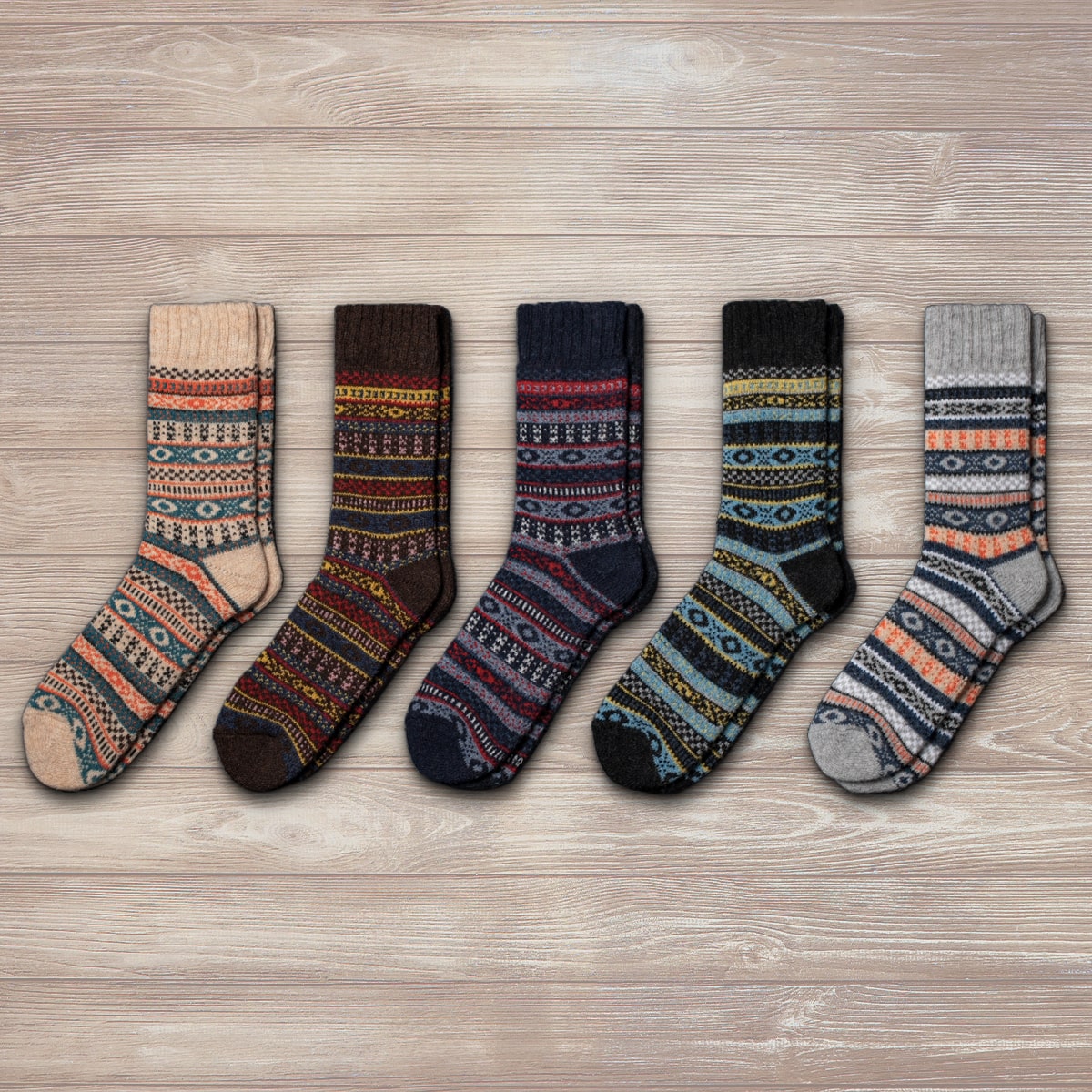
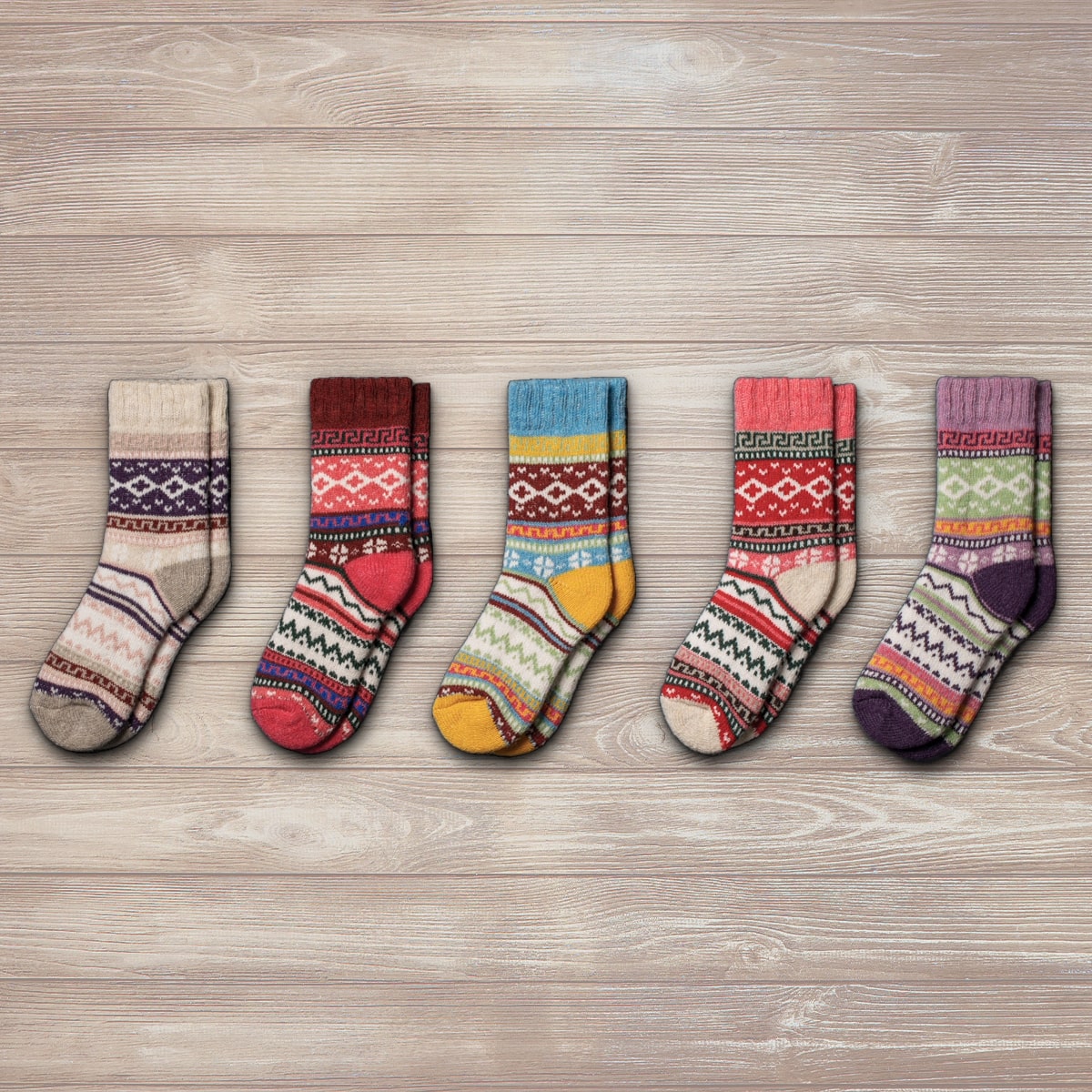
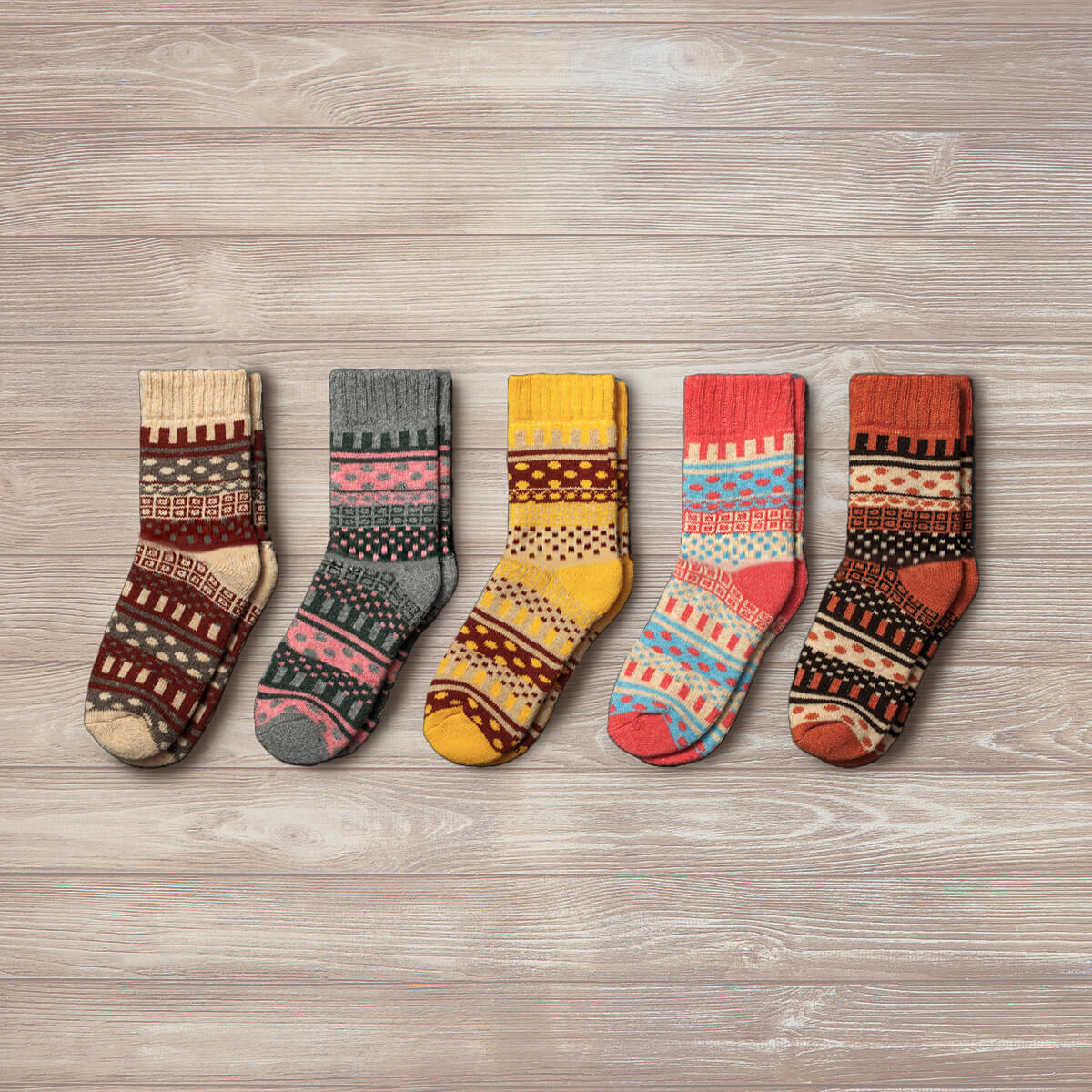
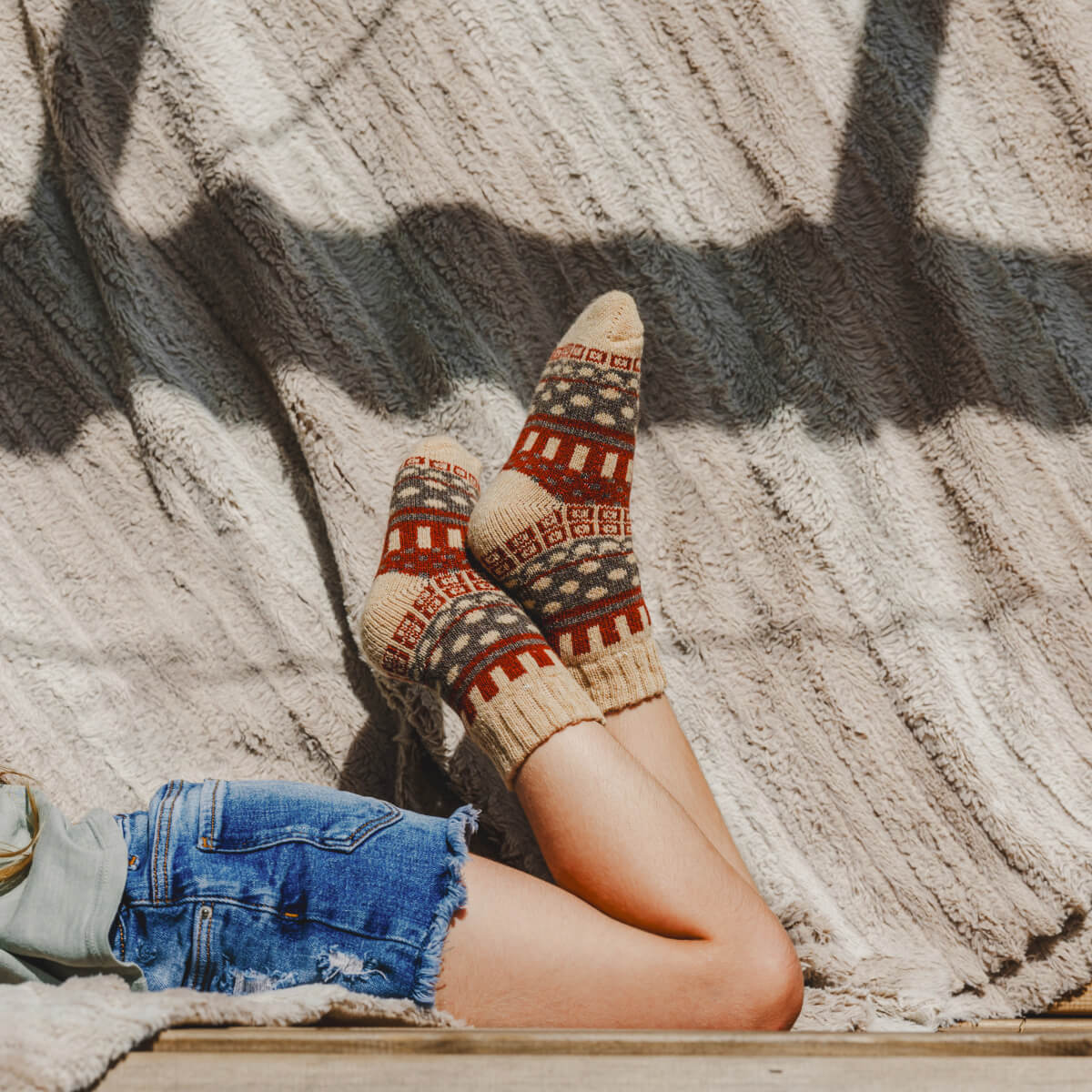
Always choose clothing, particularly essentials like socks, based on your personality and health needs. For example, if you are a sporty person, you will feel your best in Activity Socks. Made from Merino wool blended with supportive materials, this collection focuses on enhancing performance, although it has the classic Nordic sock look rather than the purely medical compression sock aesthetic.
This collection also has unique features like
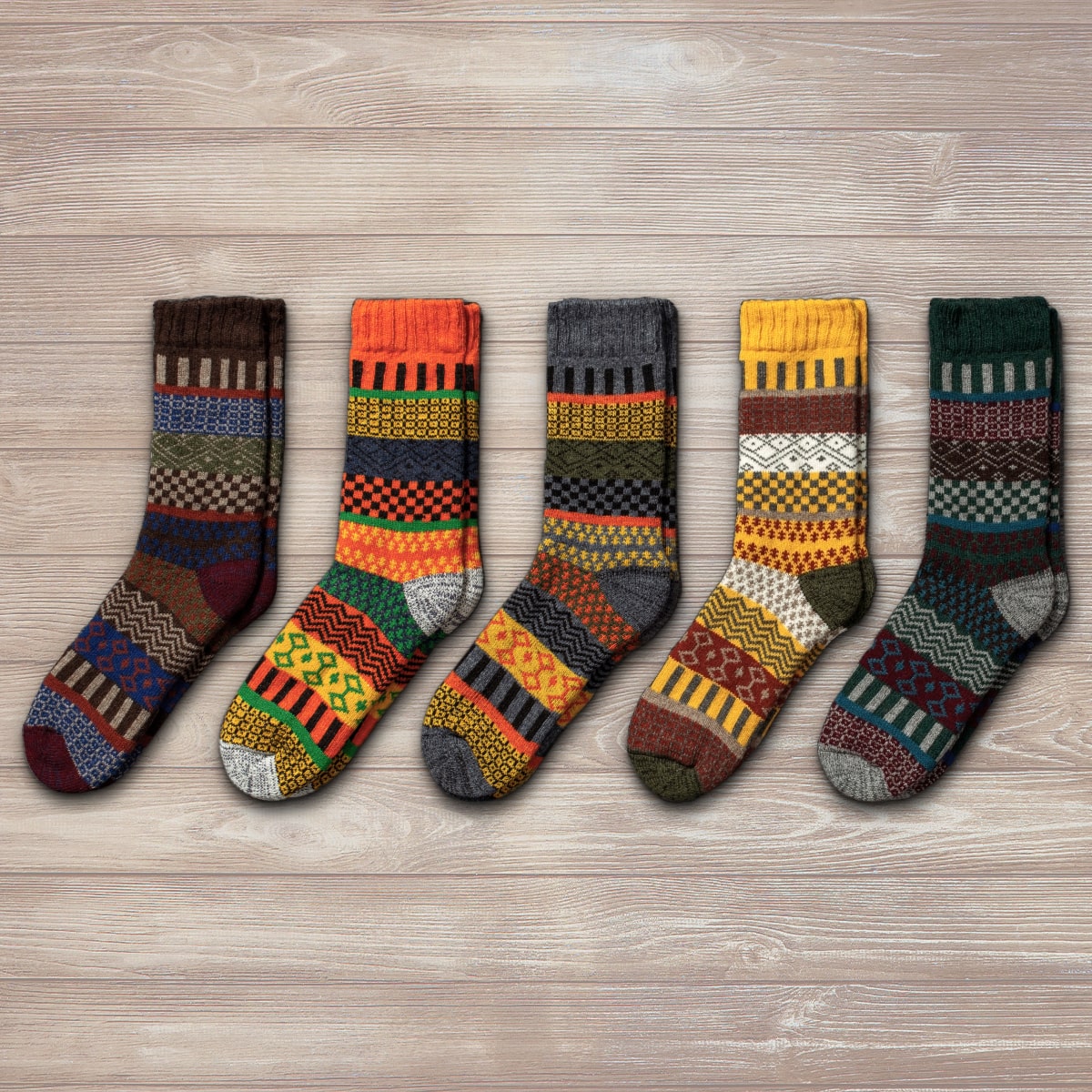
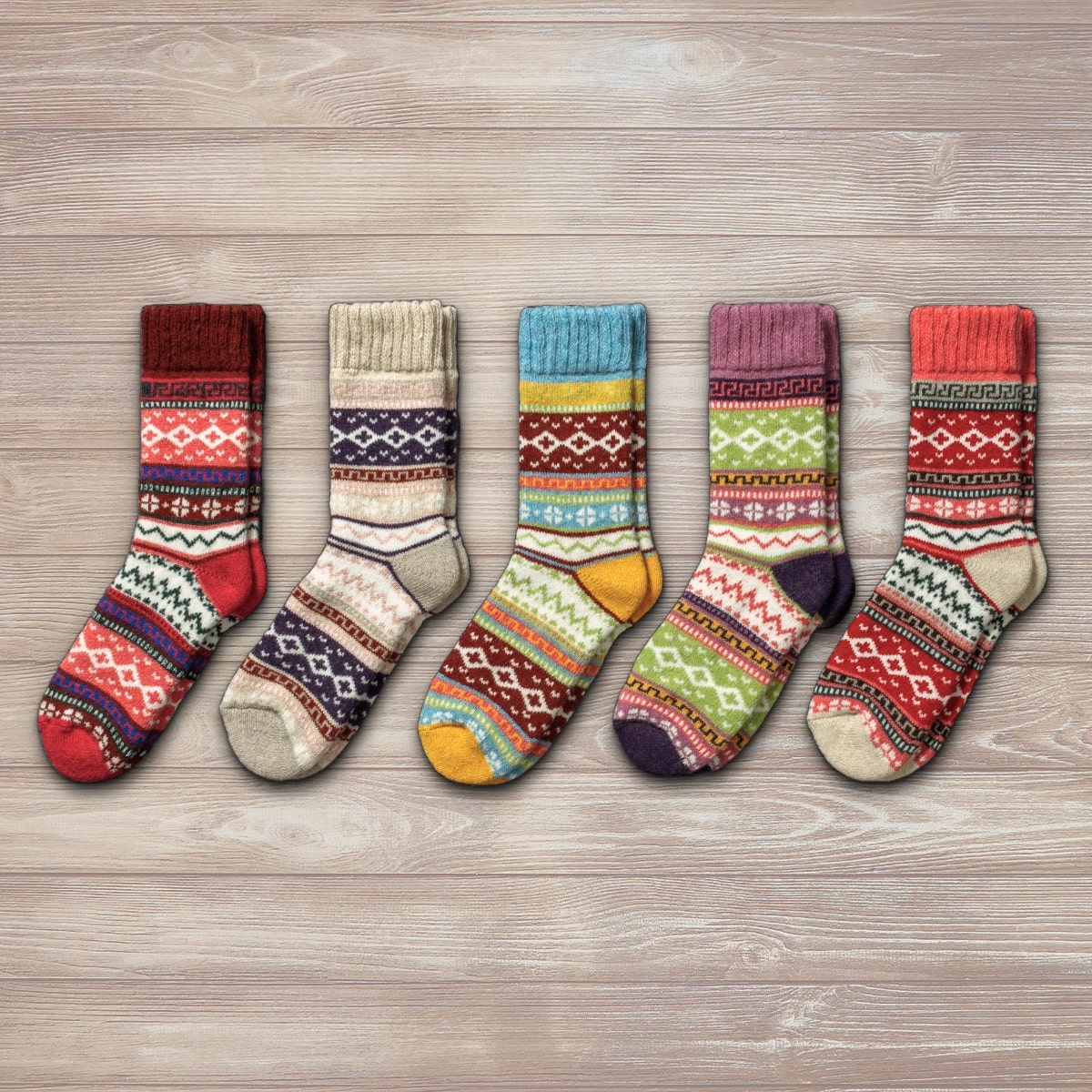
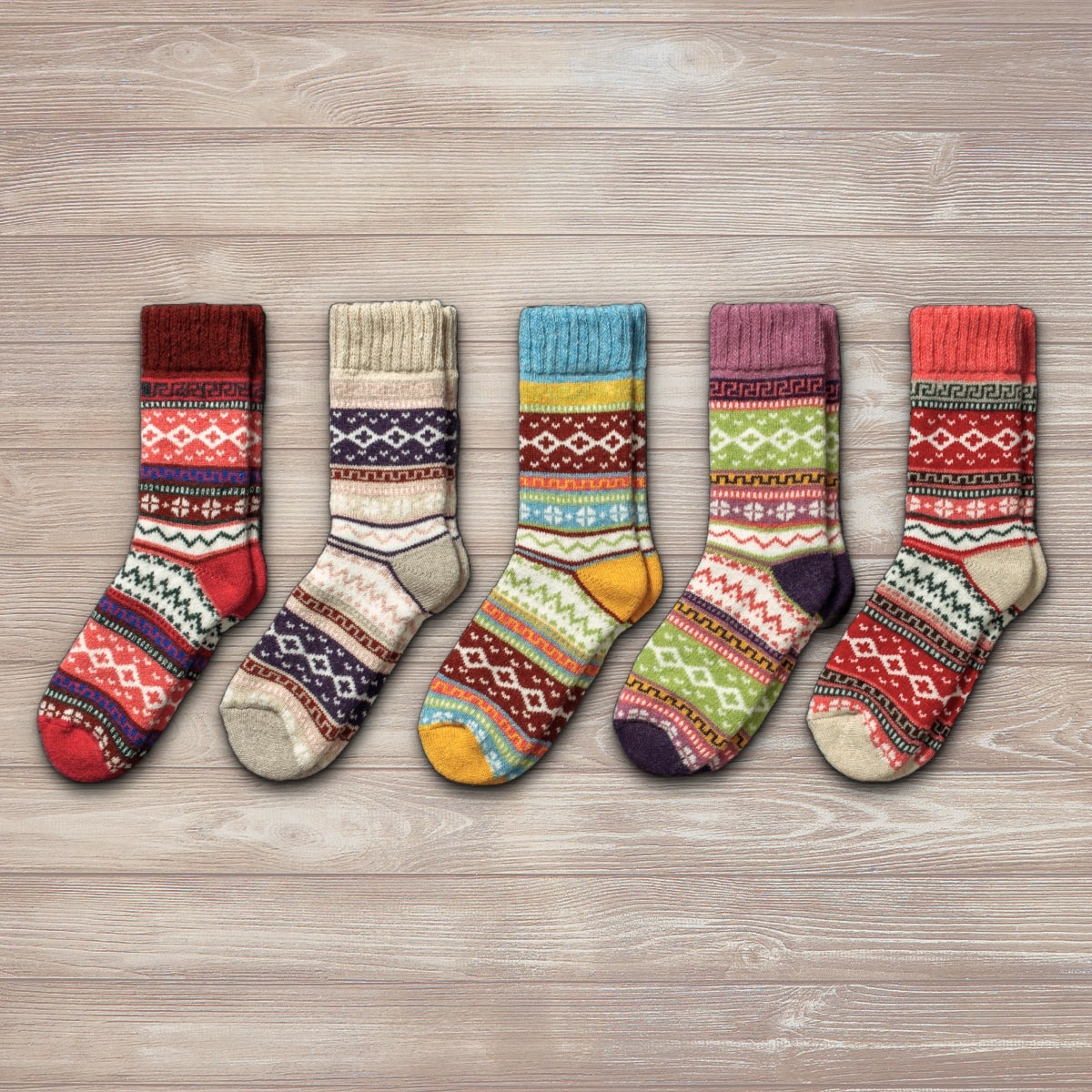
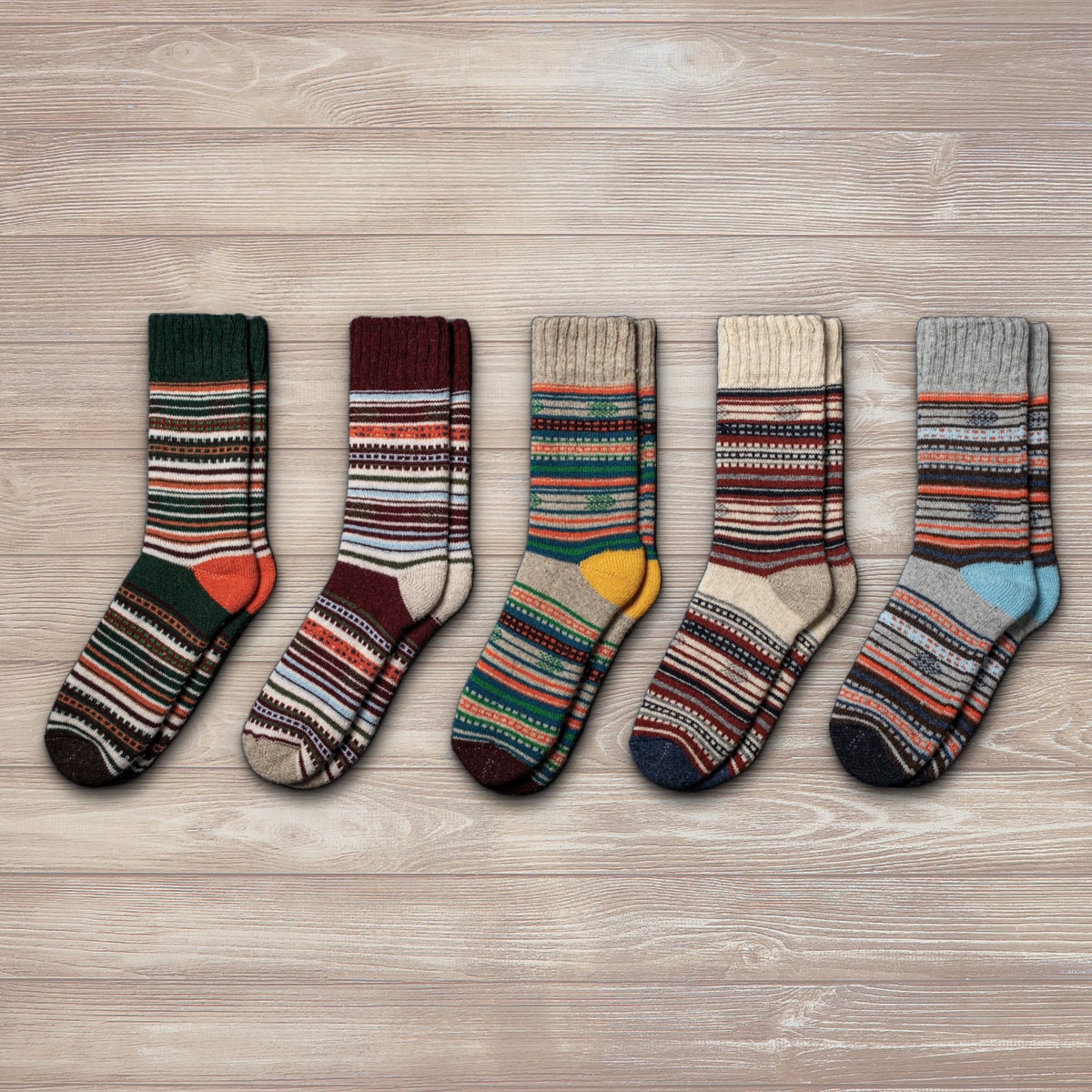
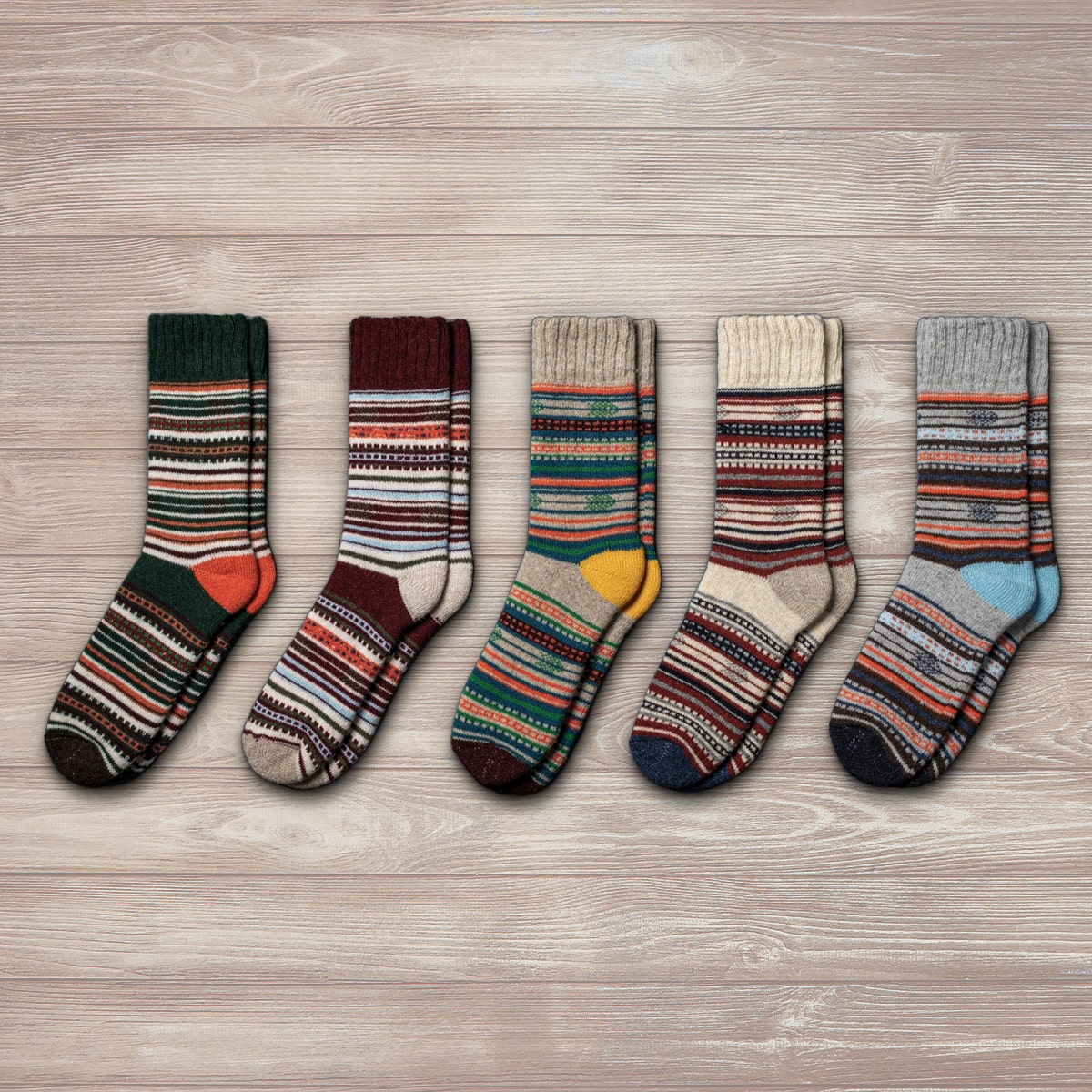
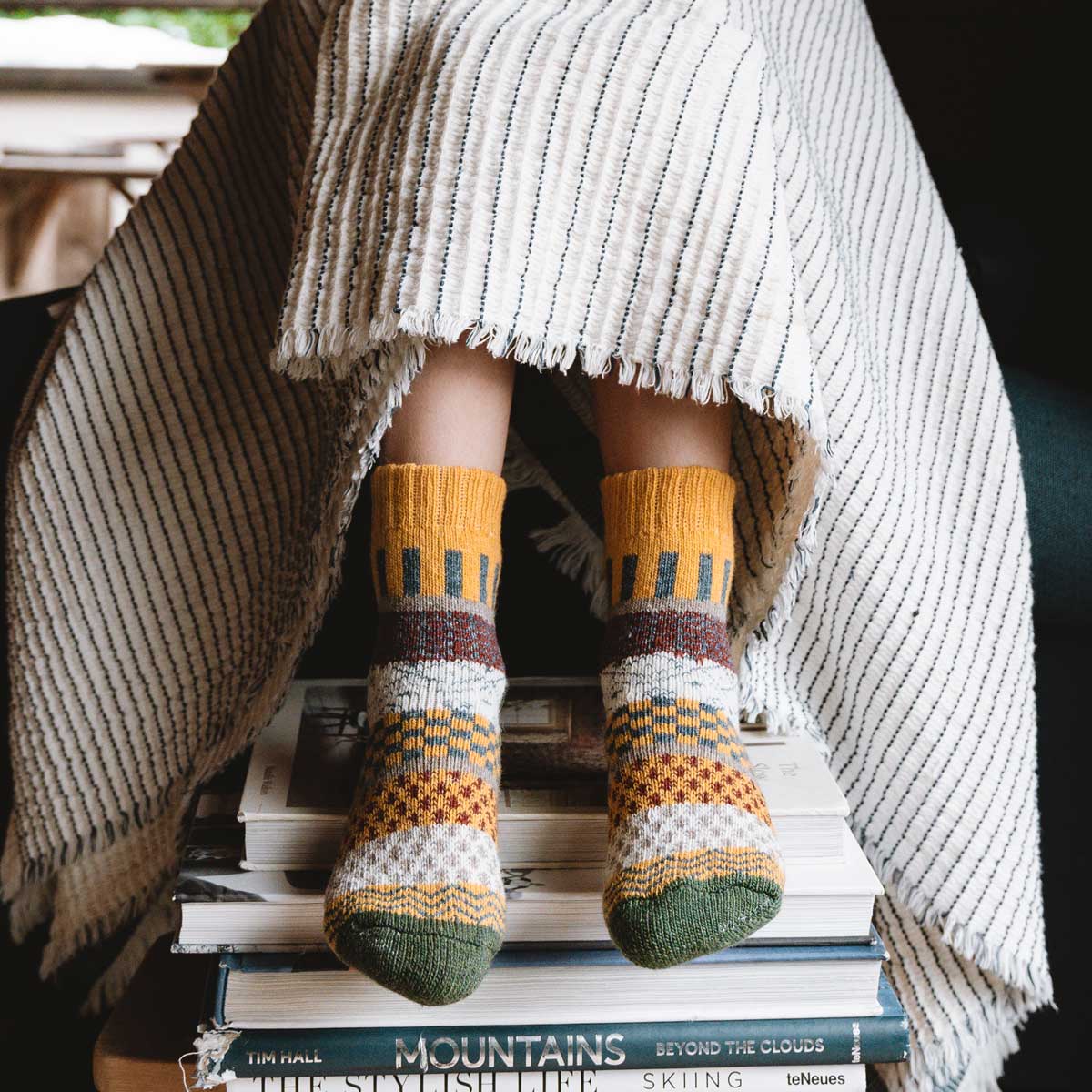
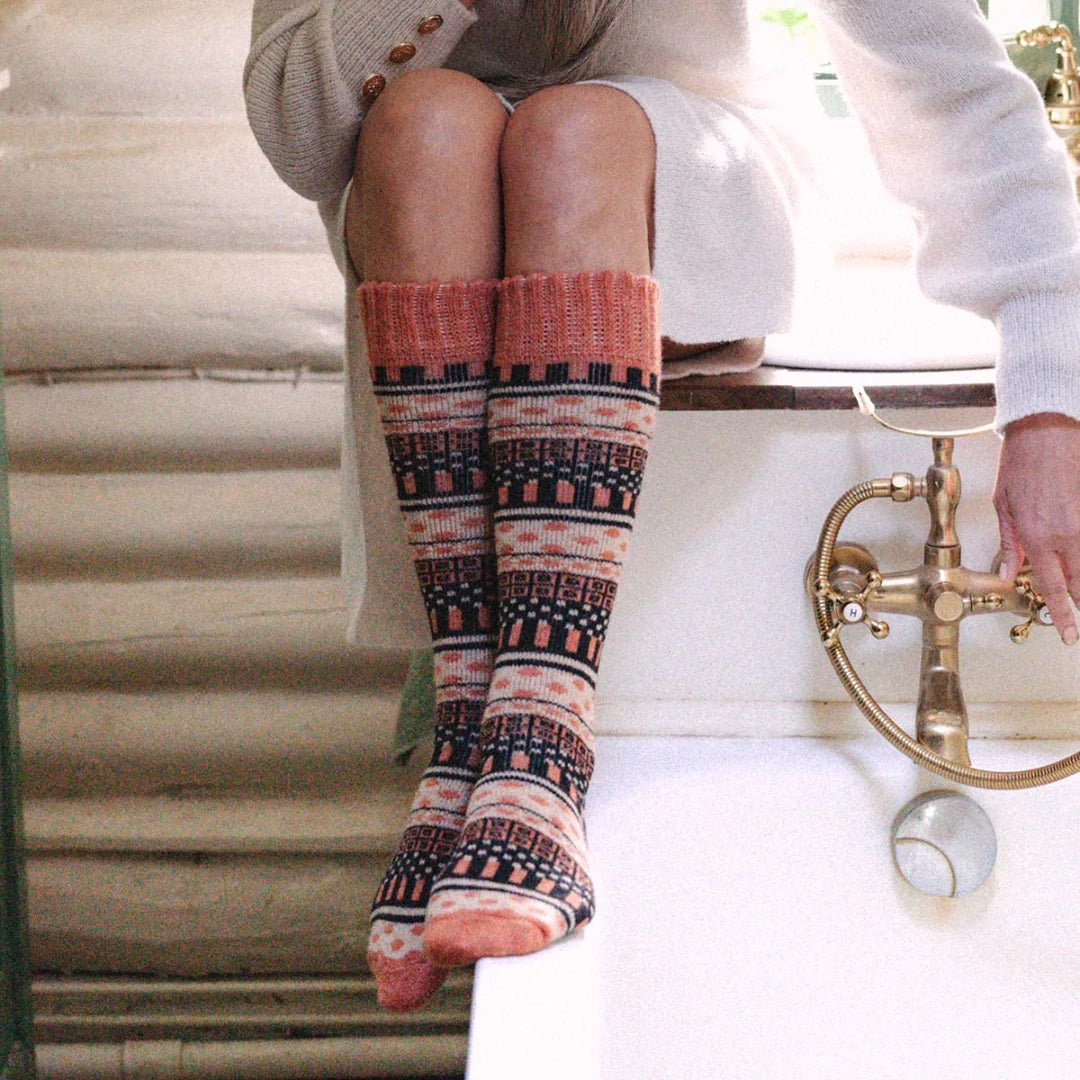
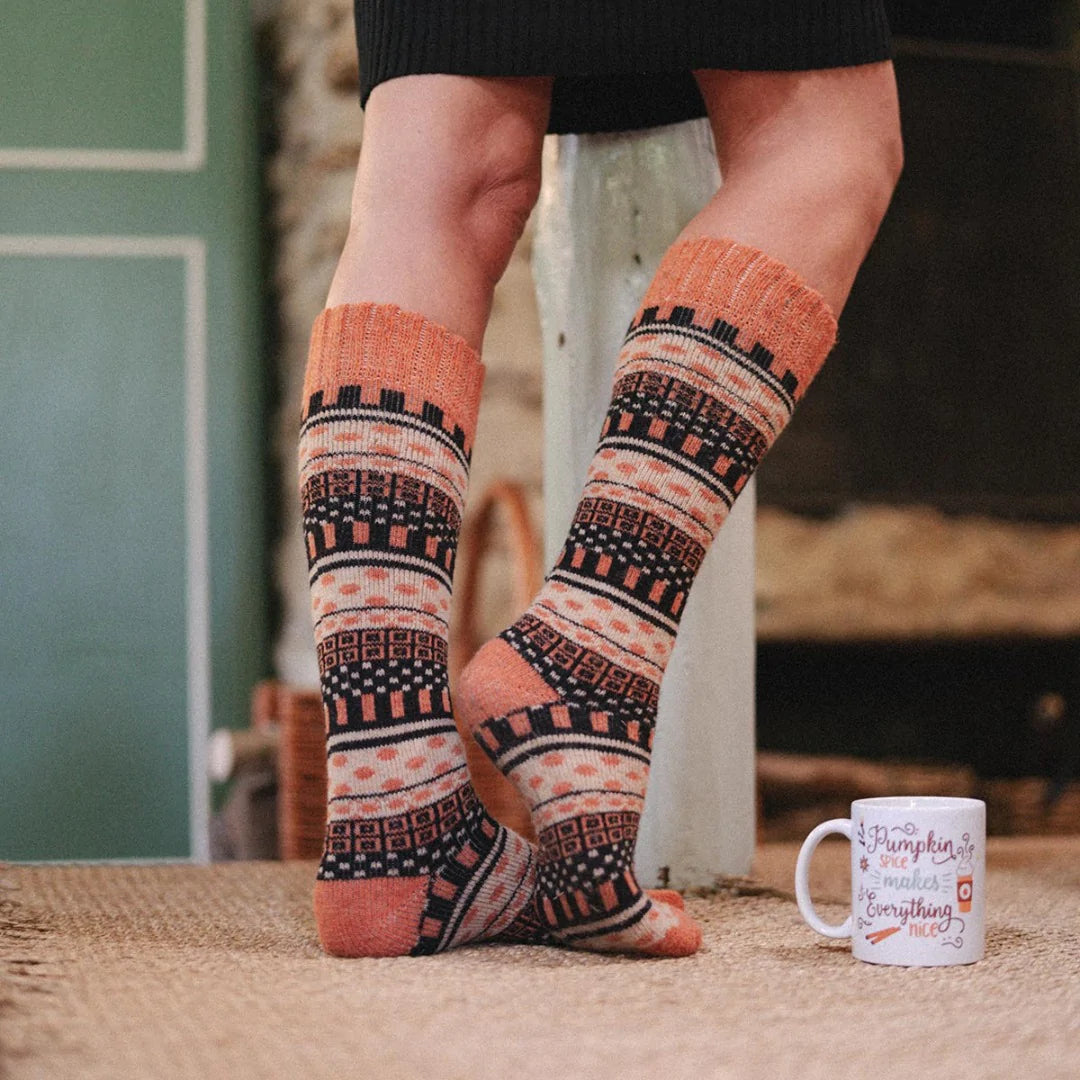
 The thickness of activity socks is medium. If you need something to keep you even toastier, you can opt for Mountain and Nature Socks. The first collection is dedicated to active people, but not only to them—you can brave hills and mountains in the same pair you would use for a cozy day indoors.
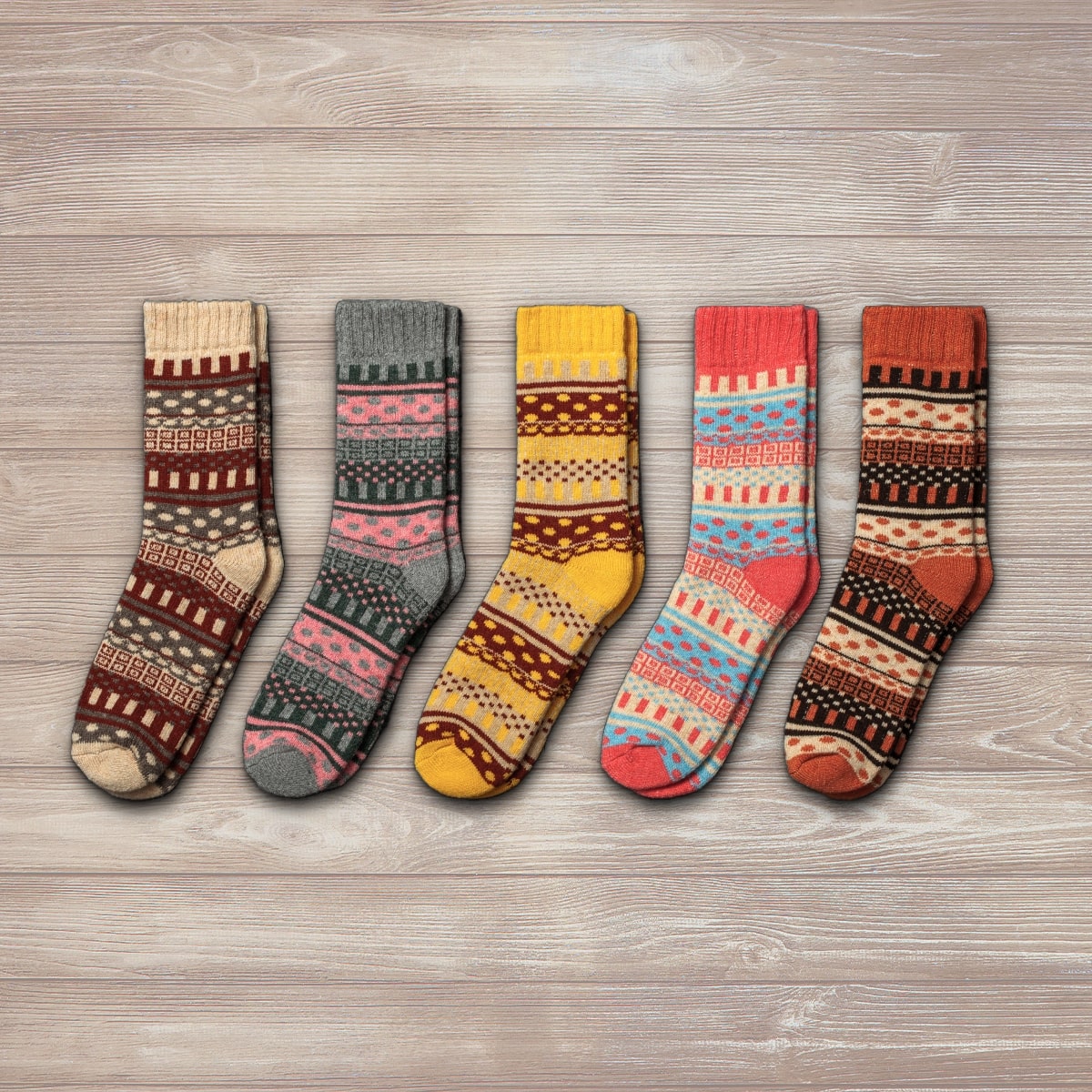
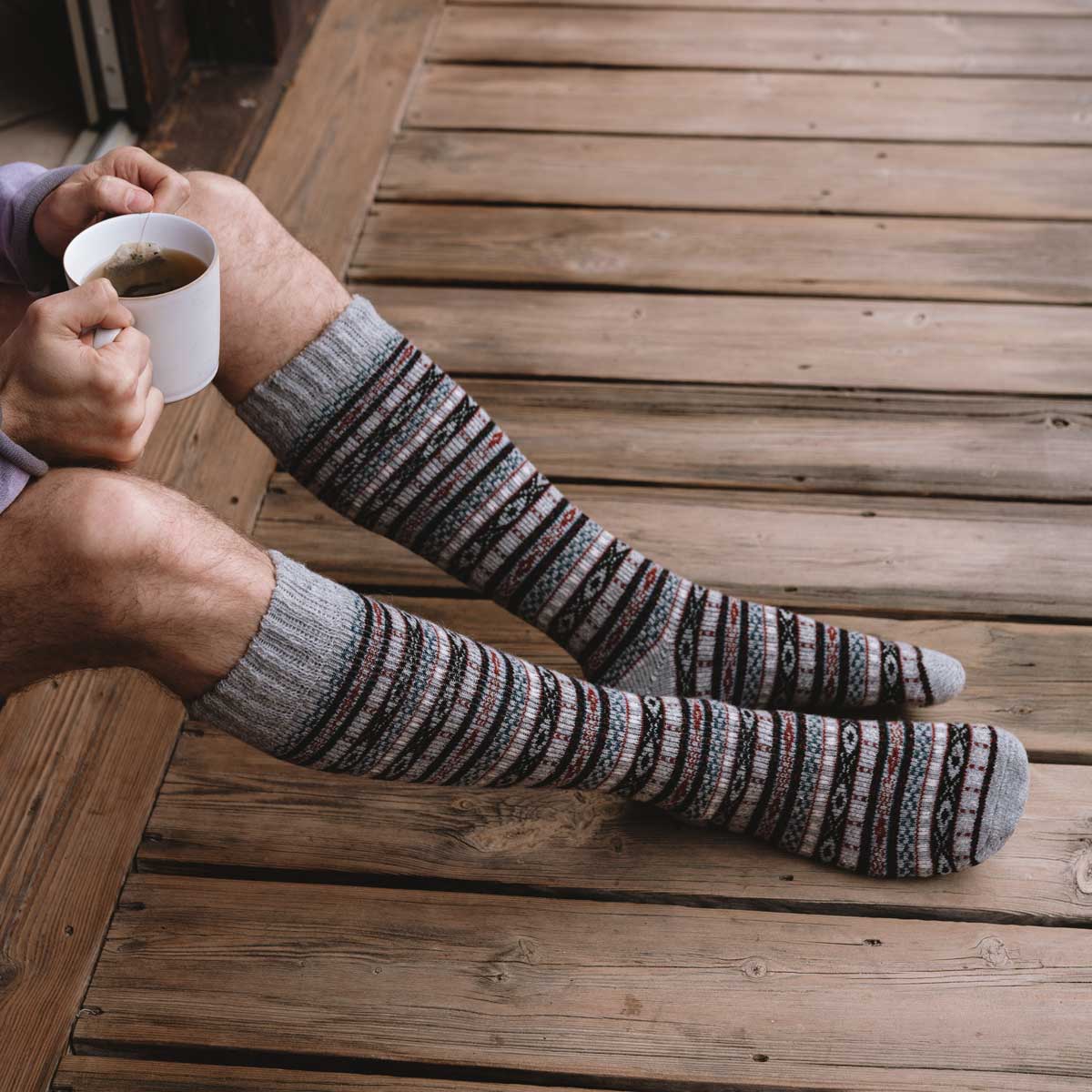
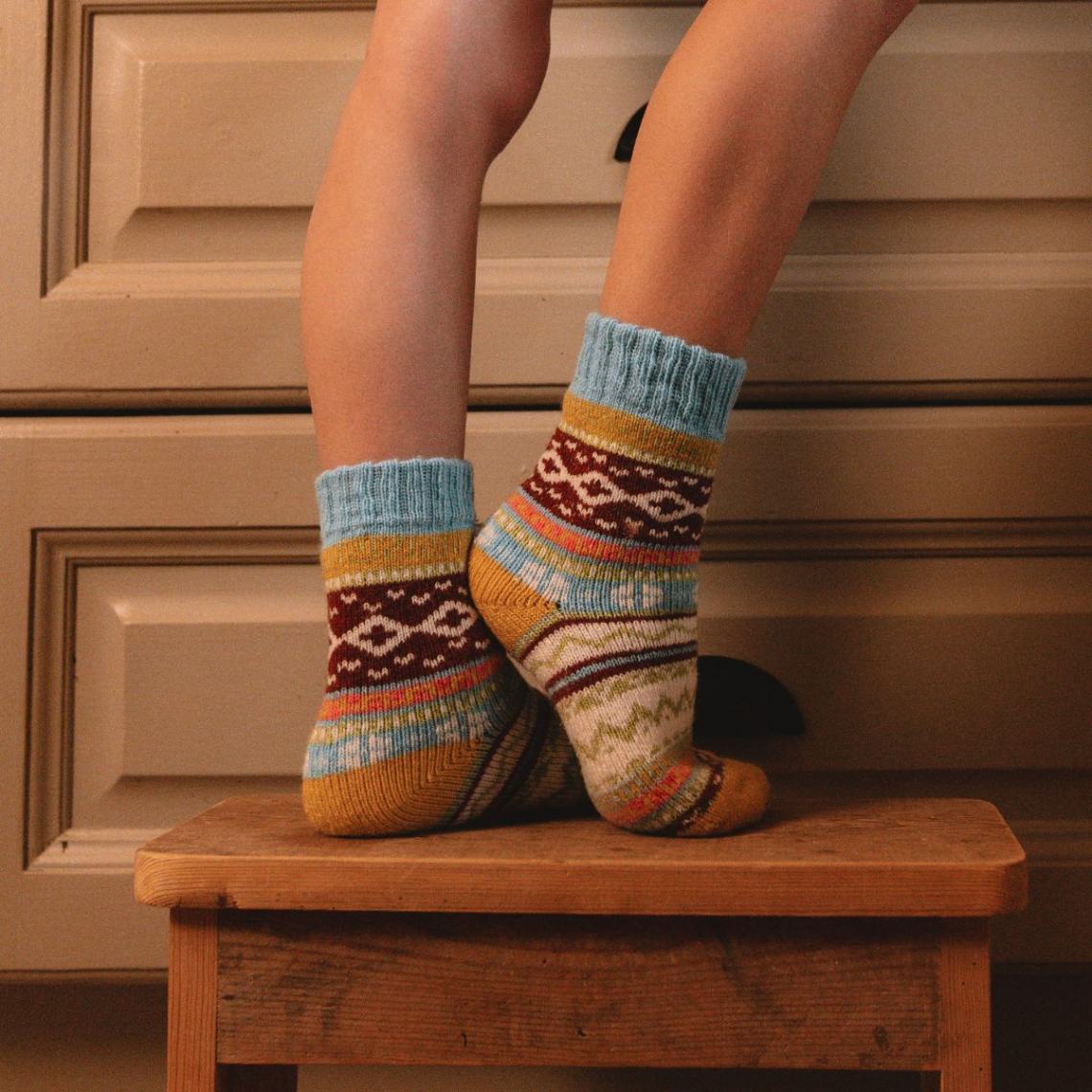
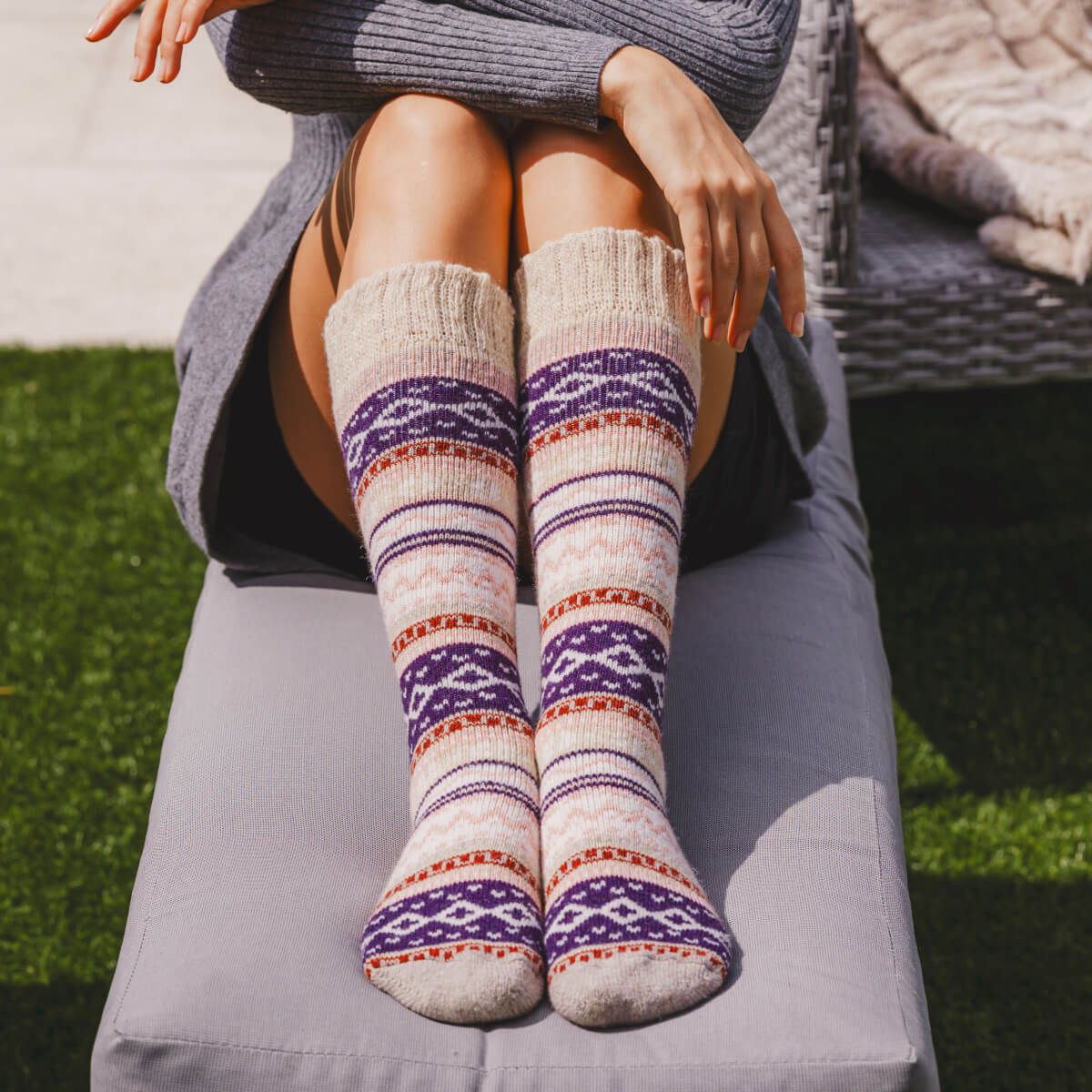
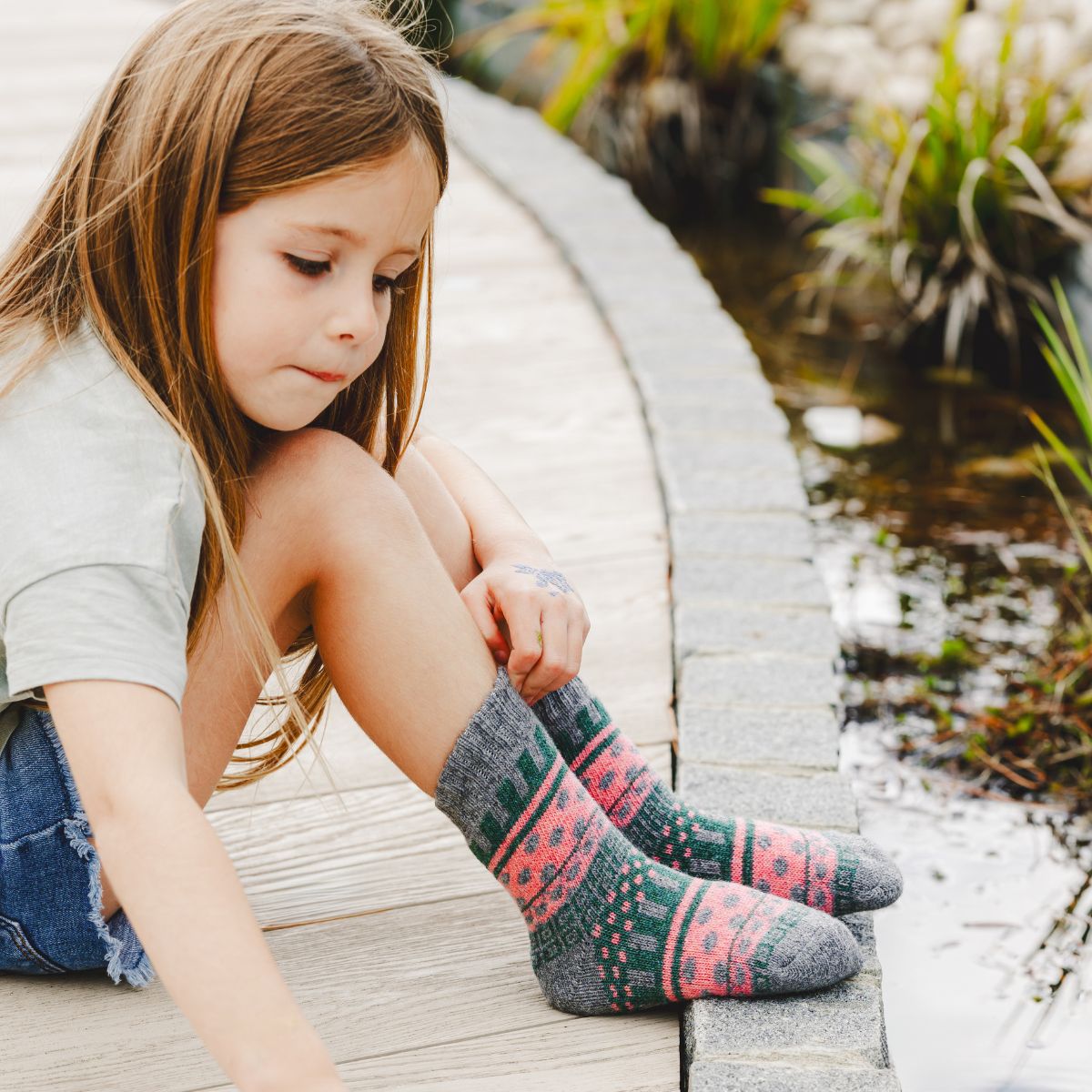
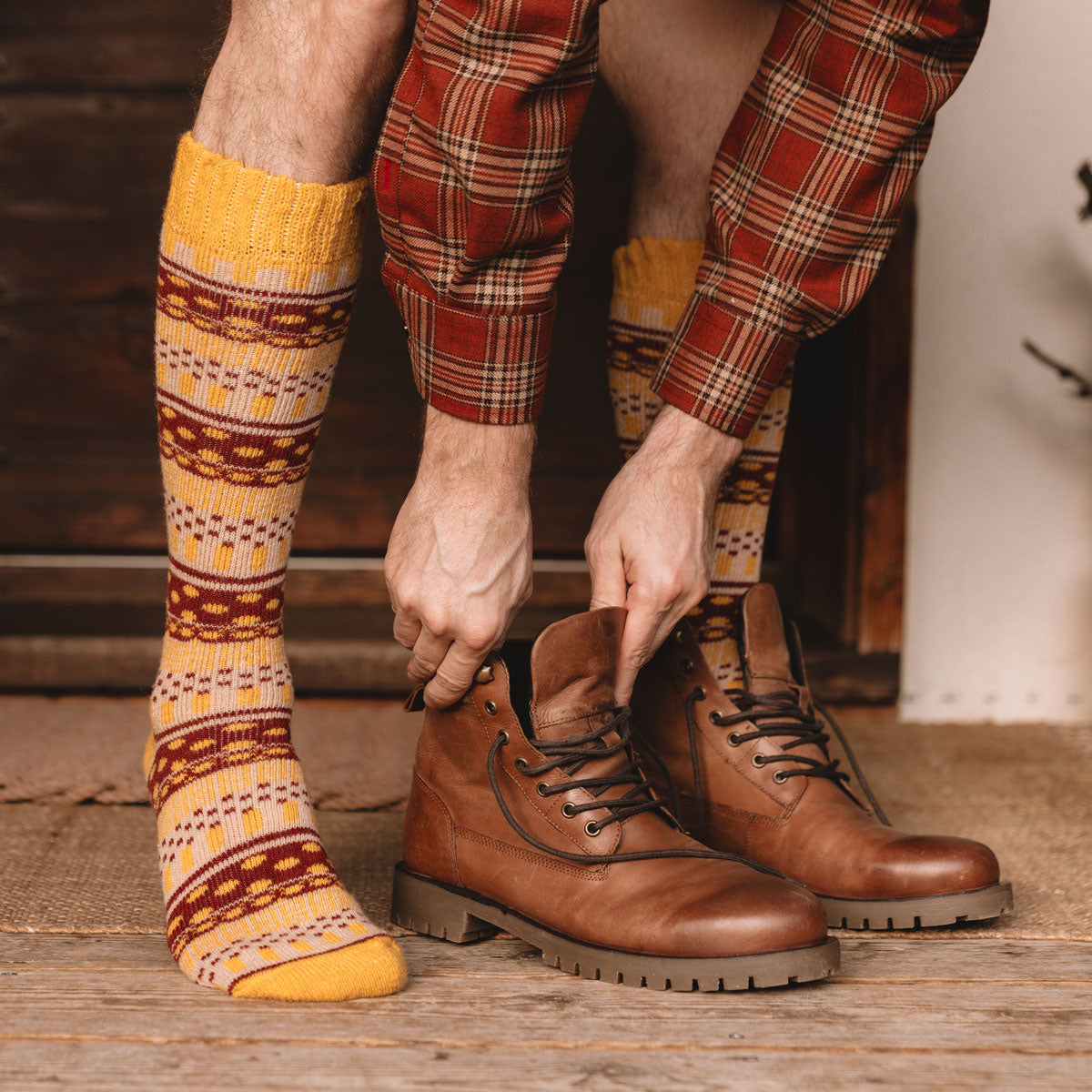
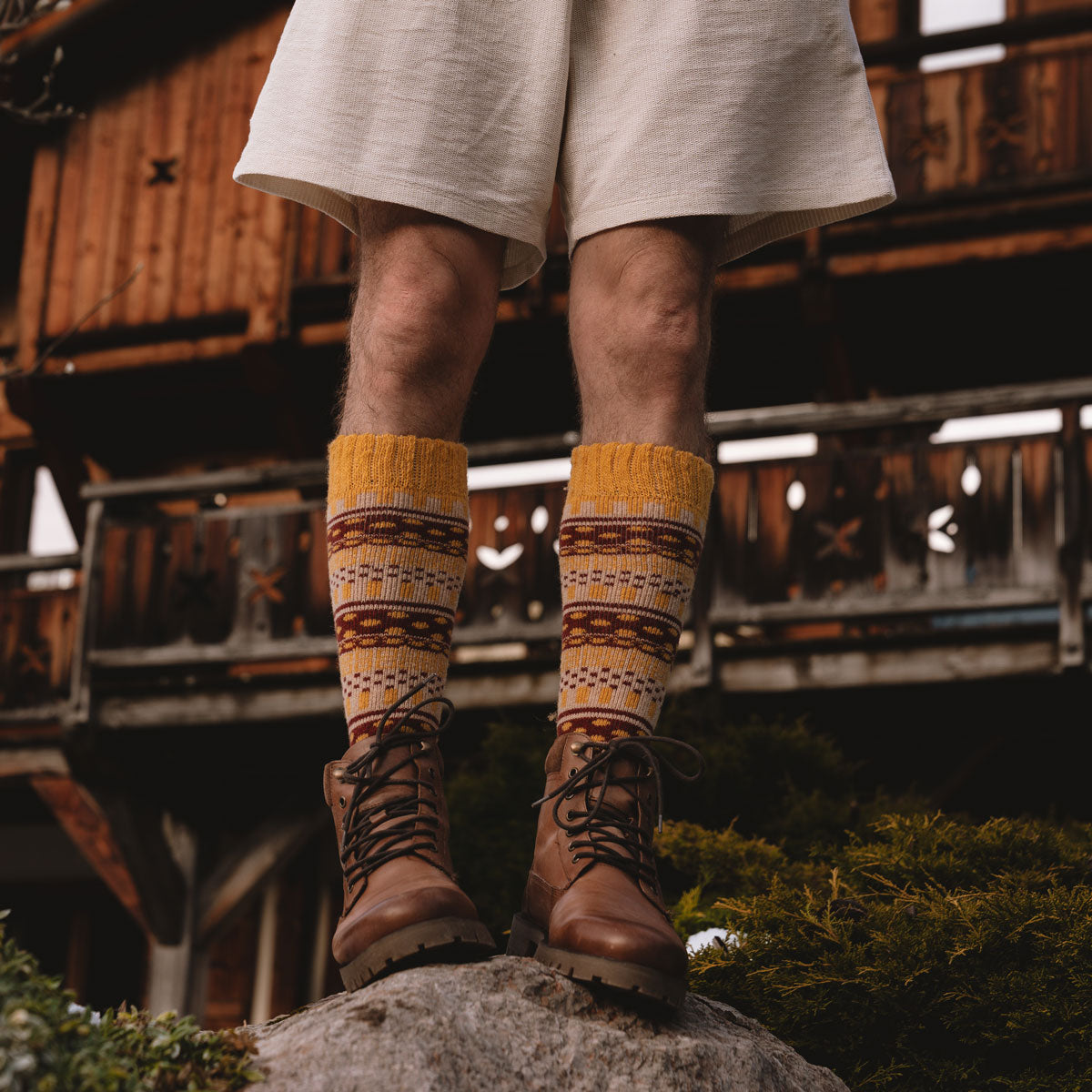
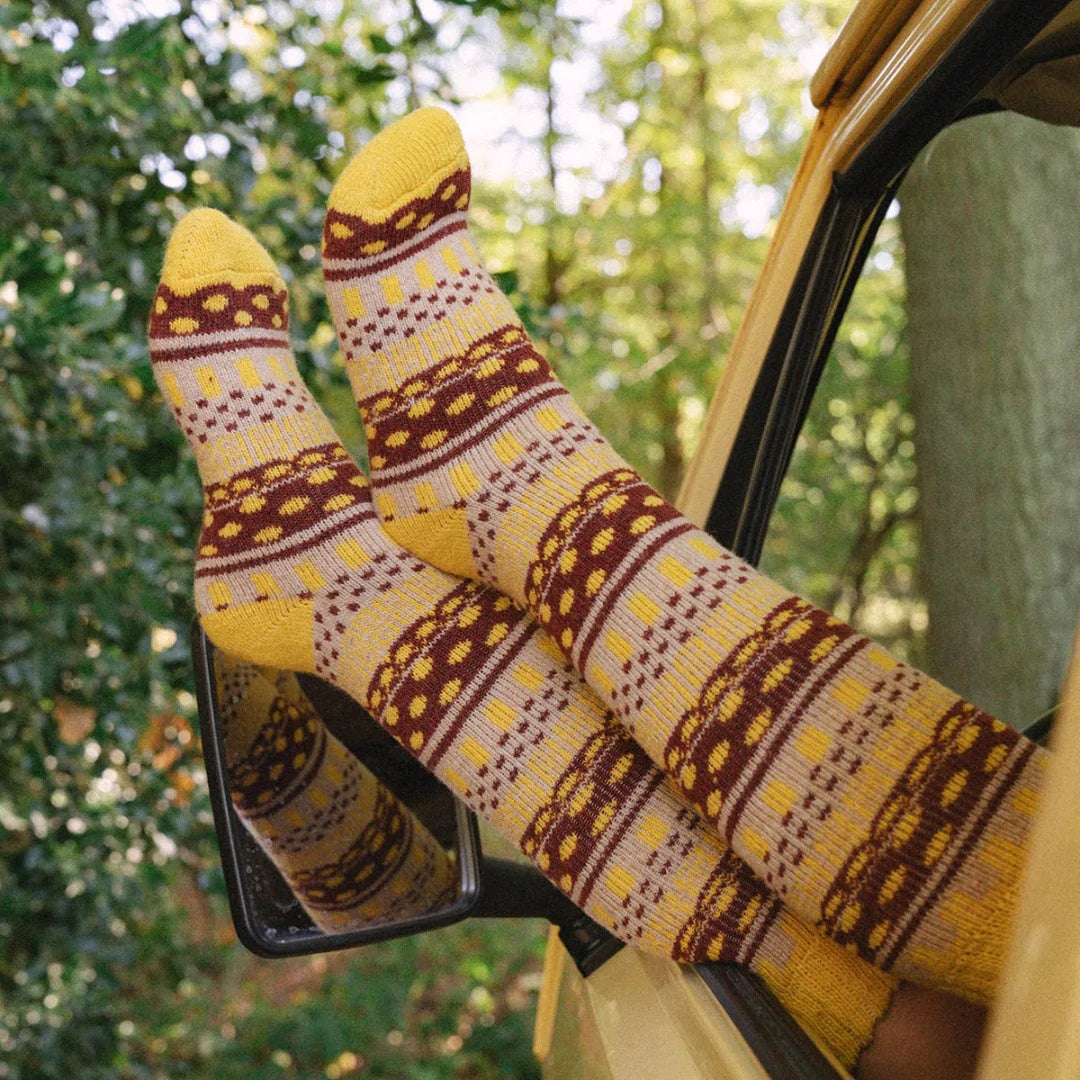
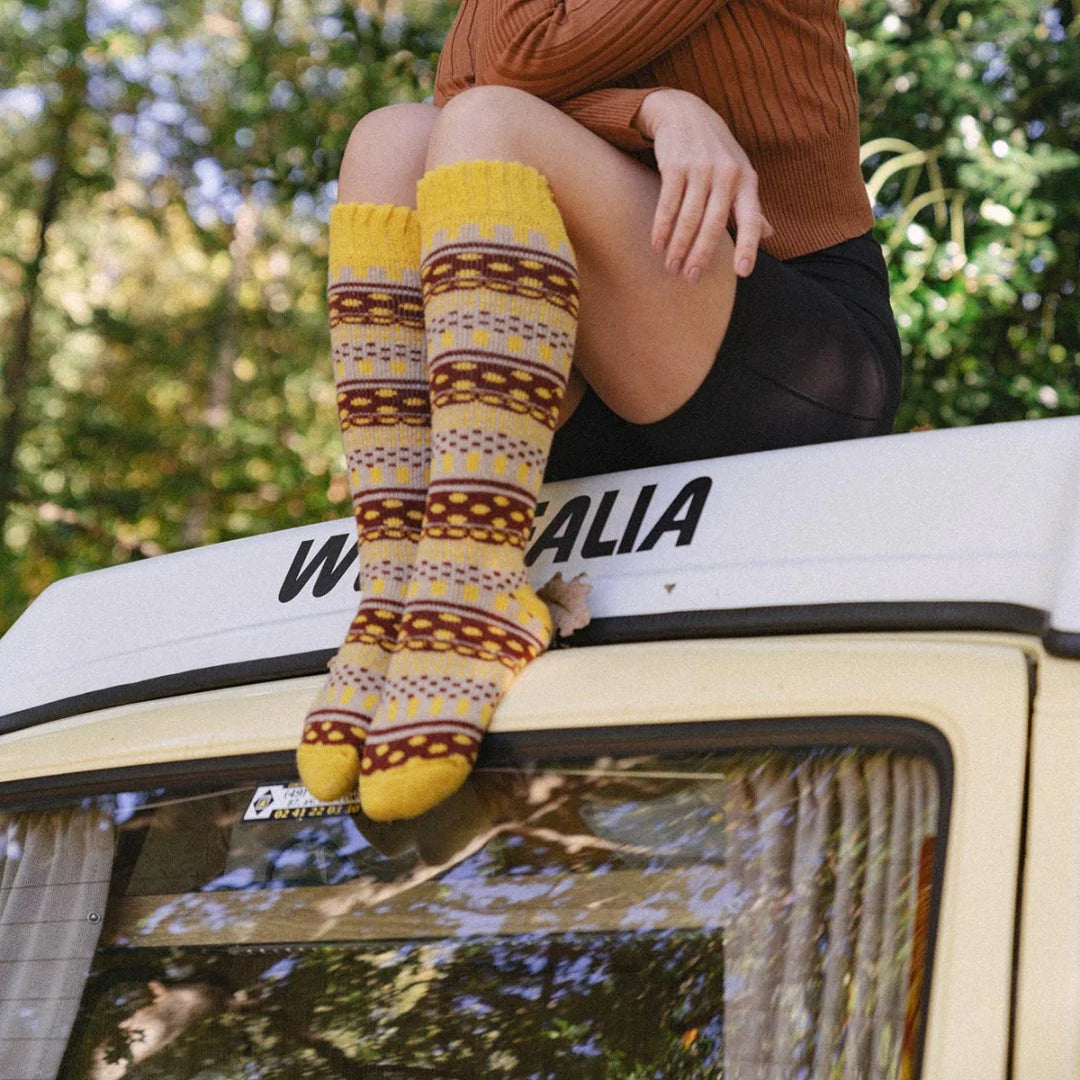
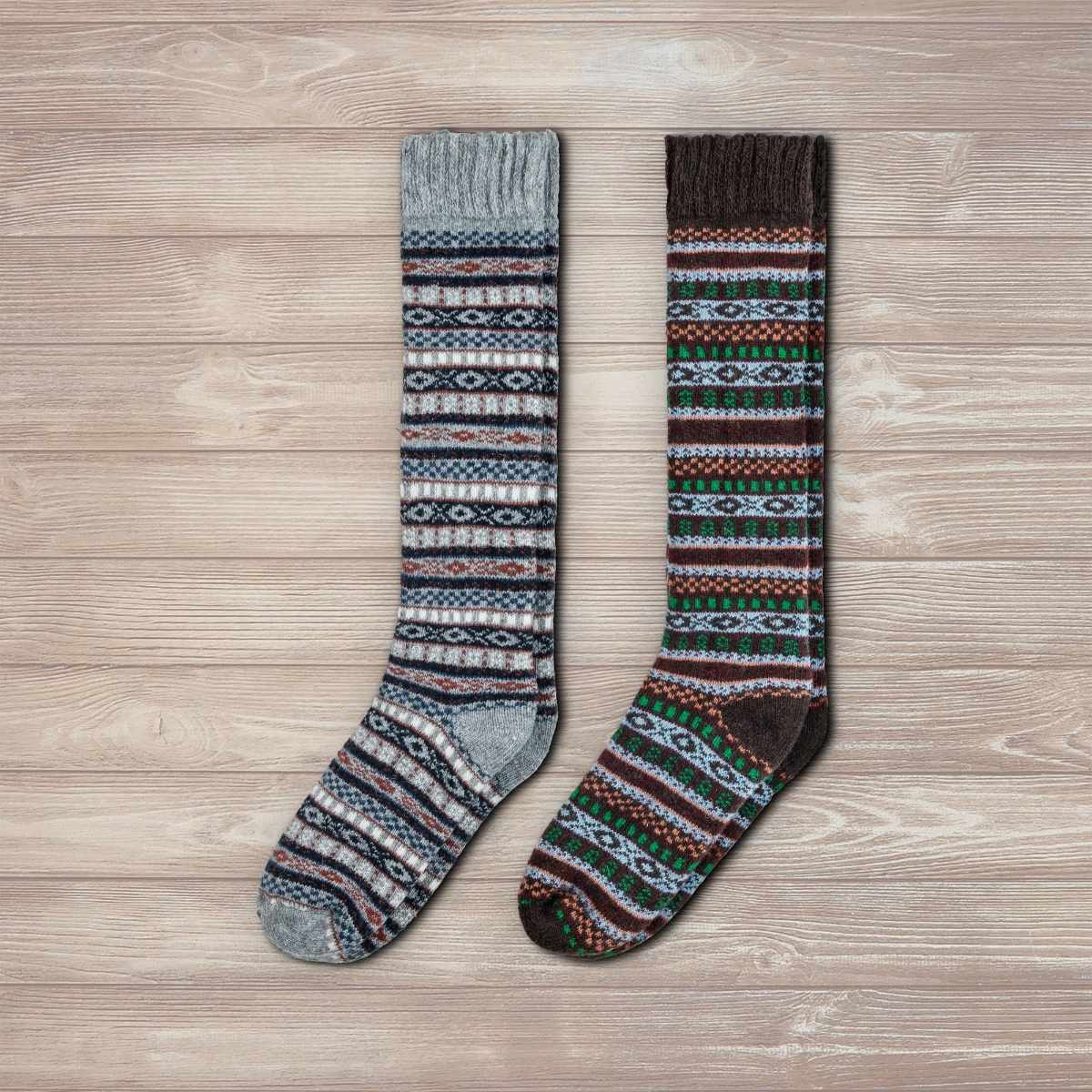
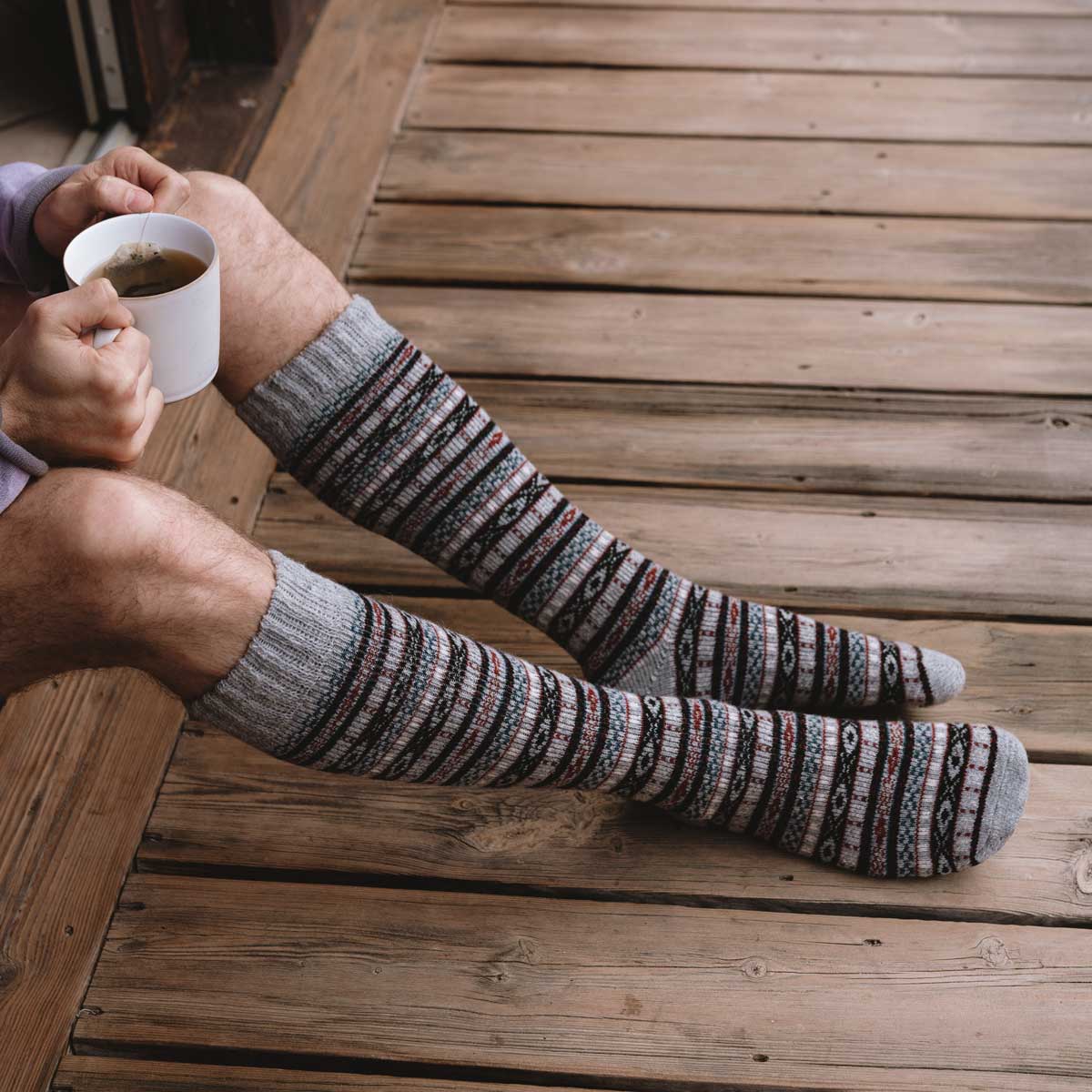
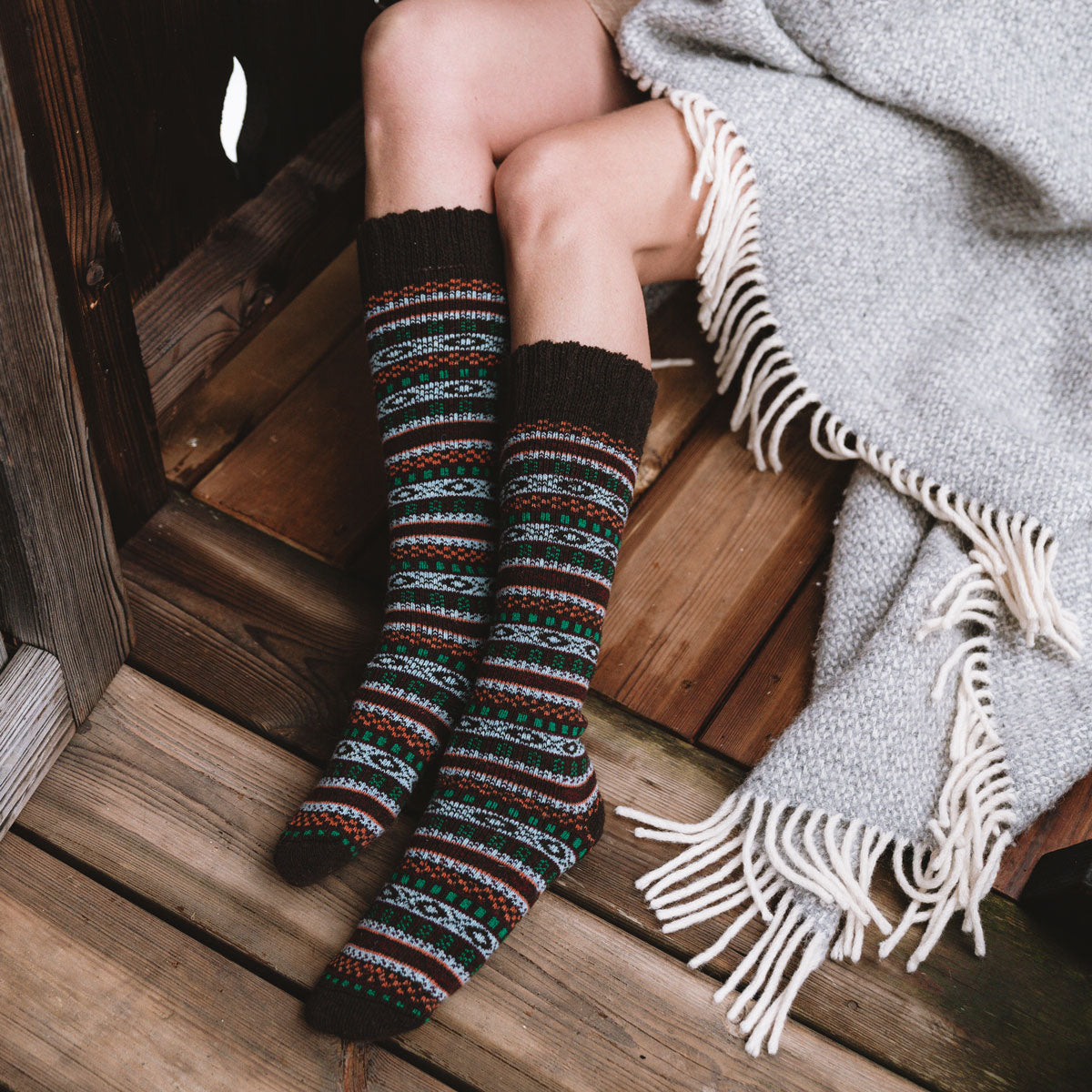
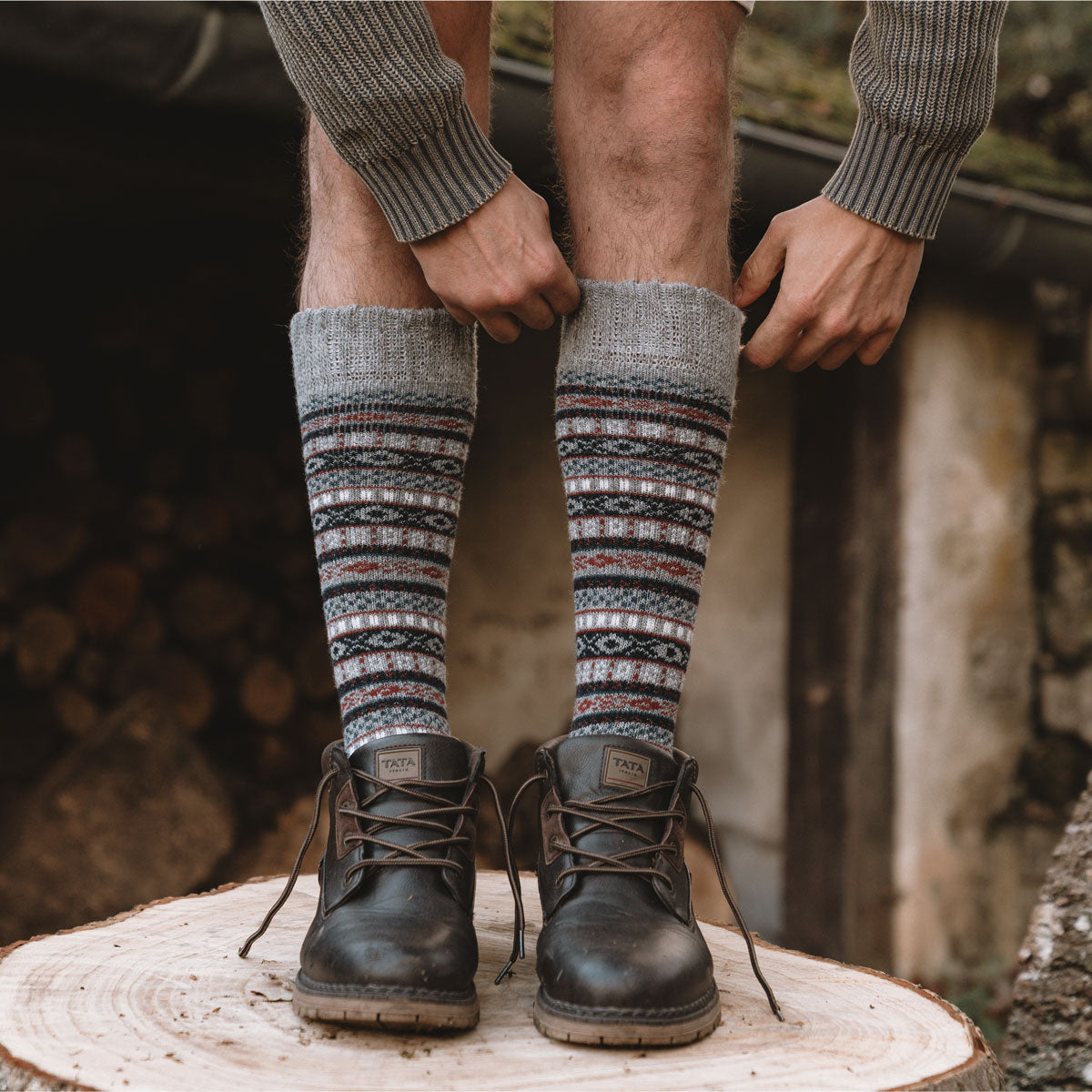
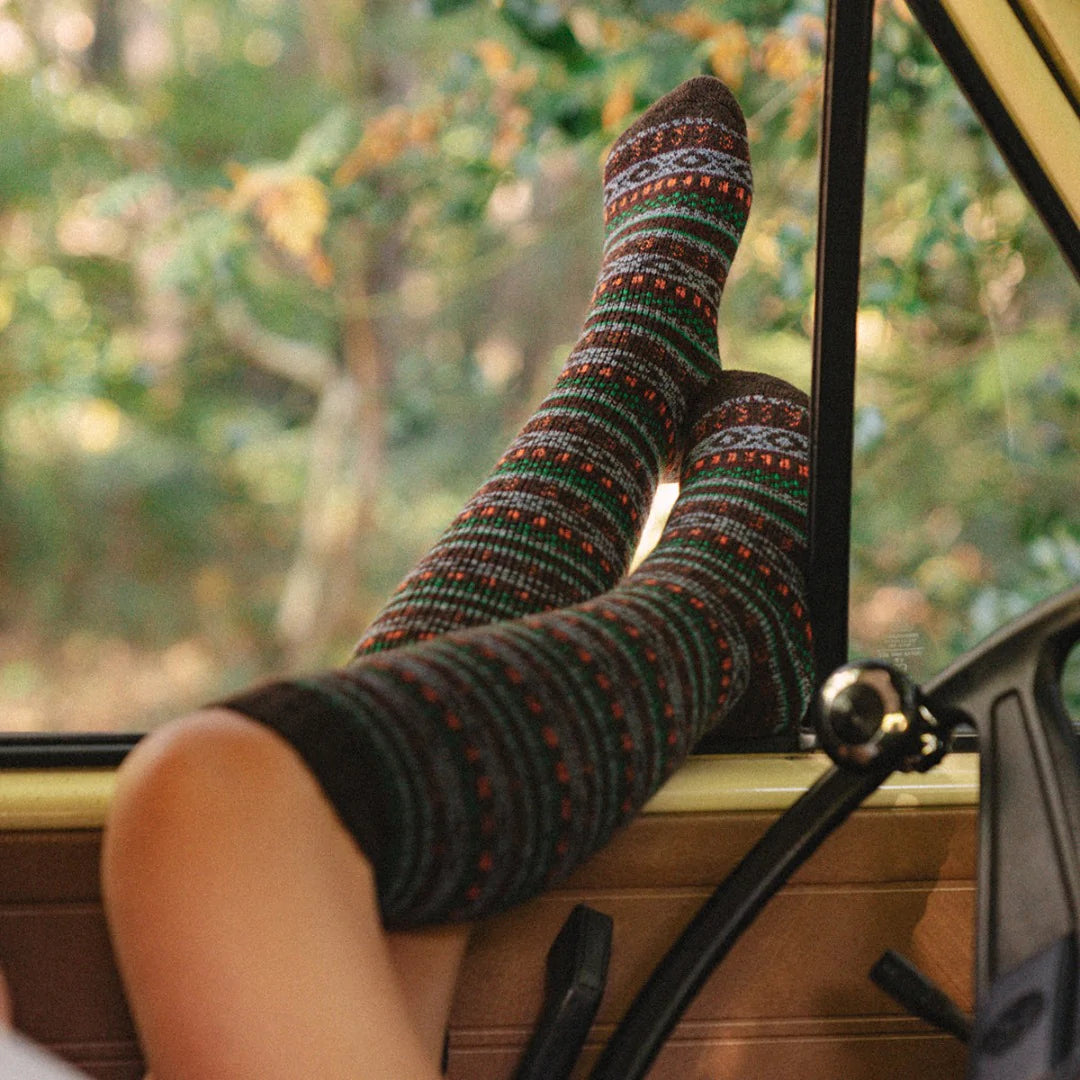
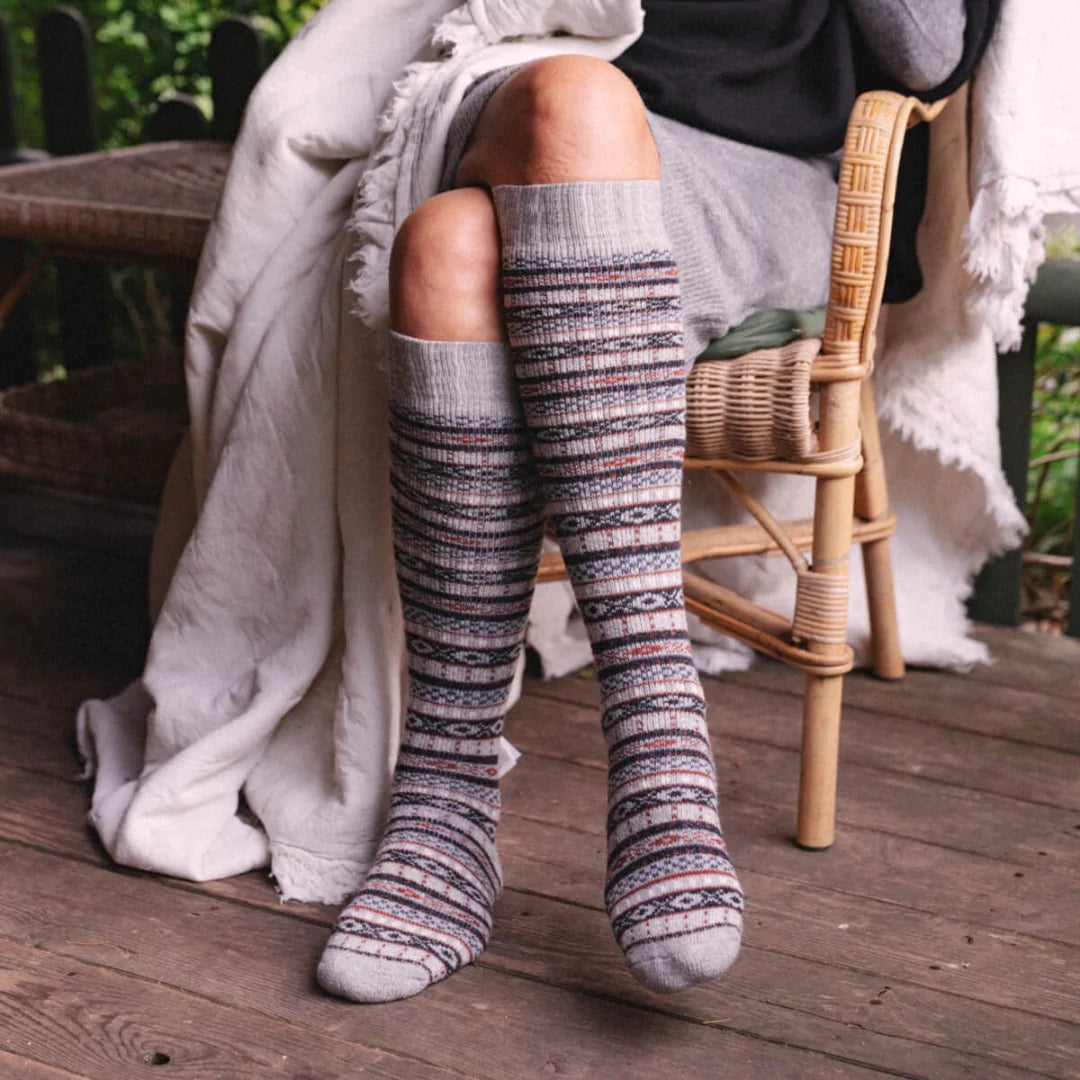
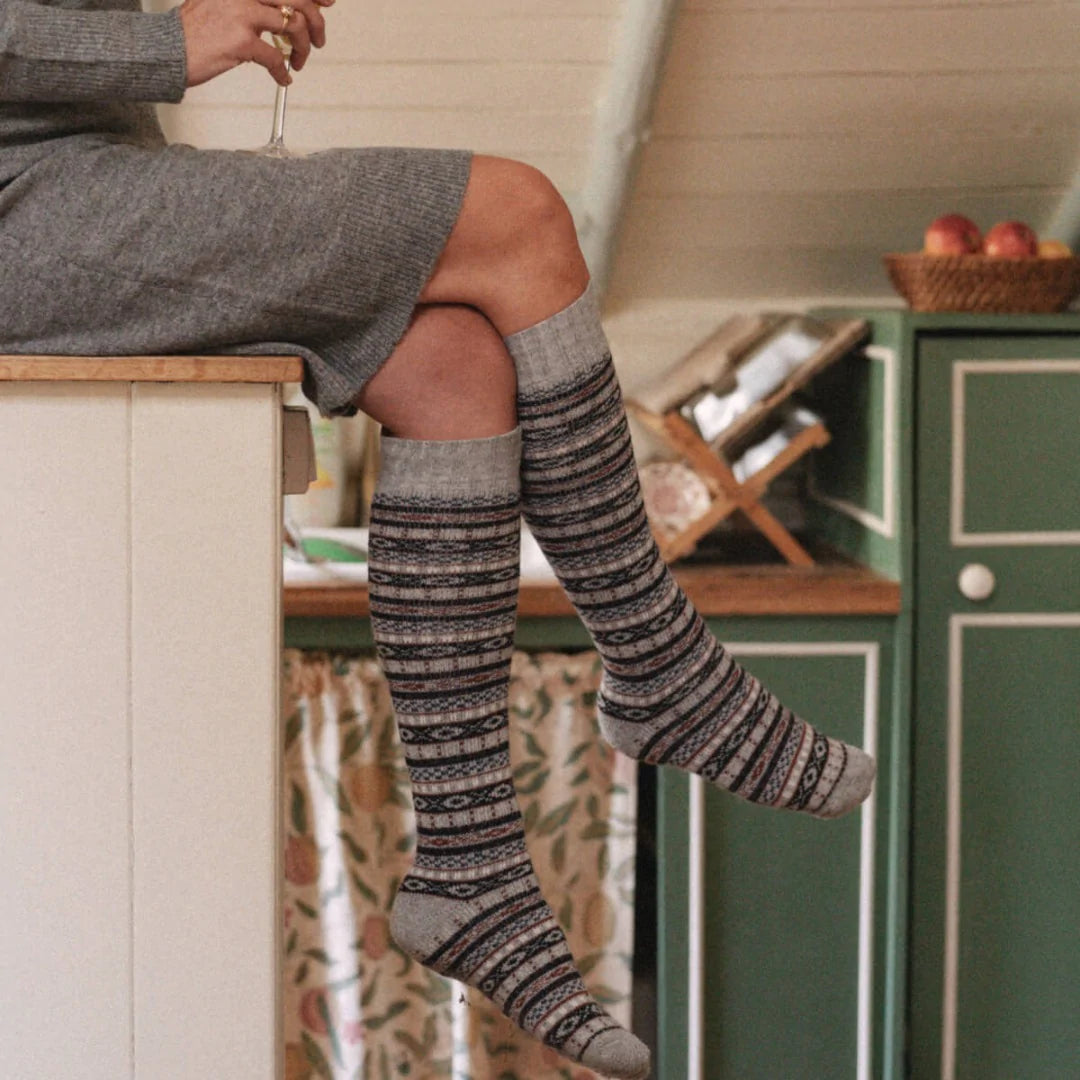
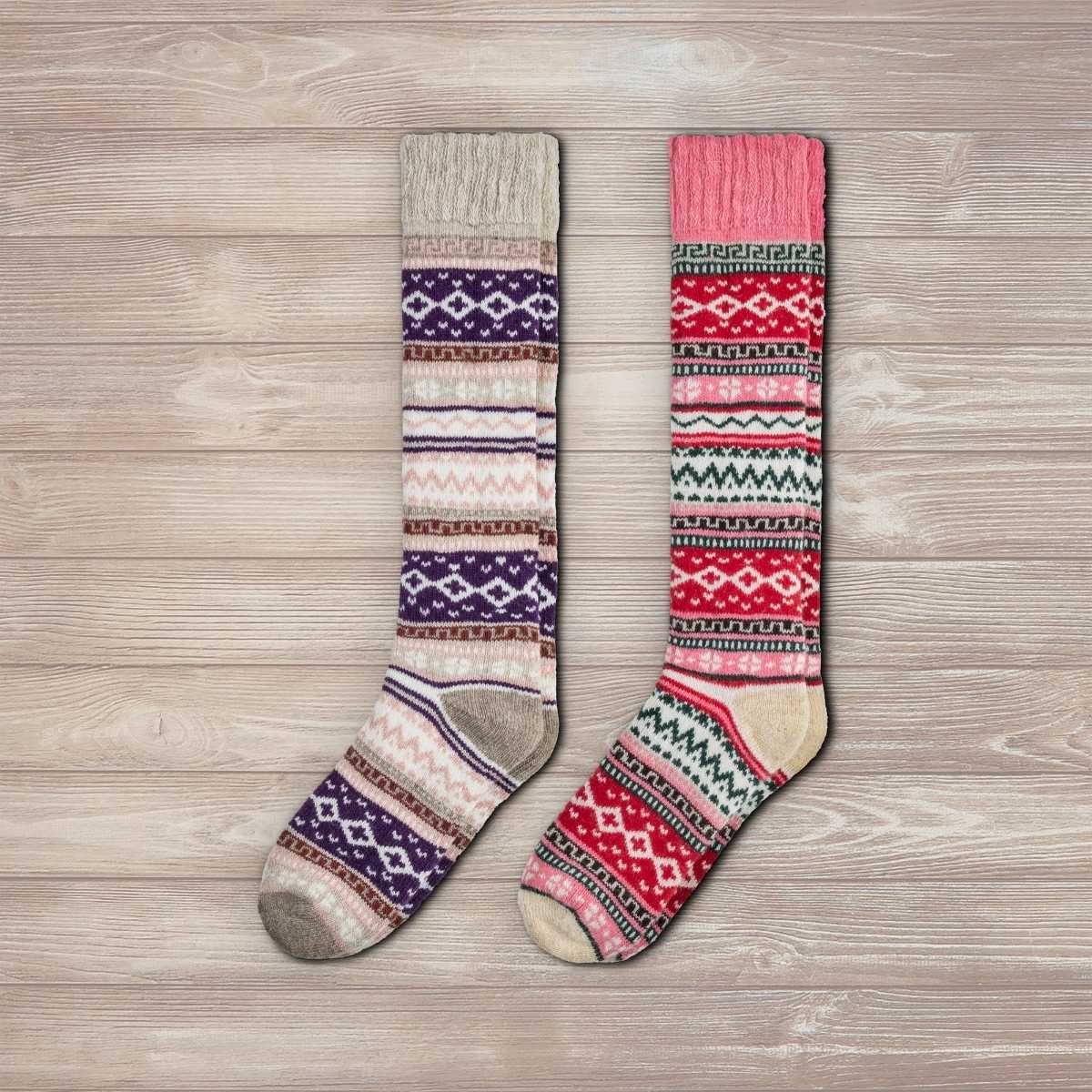
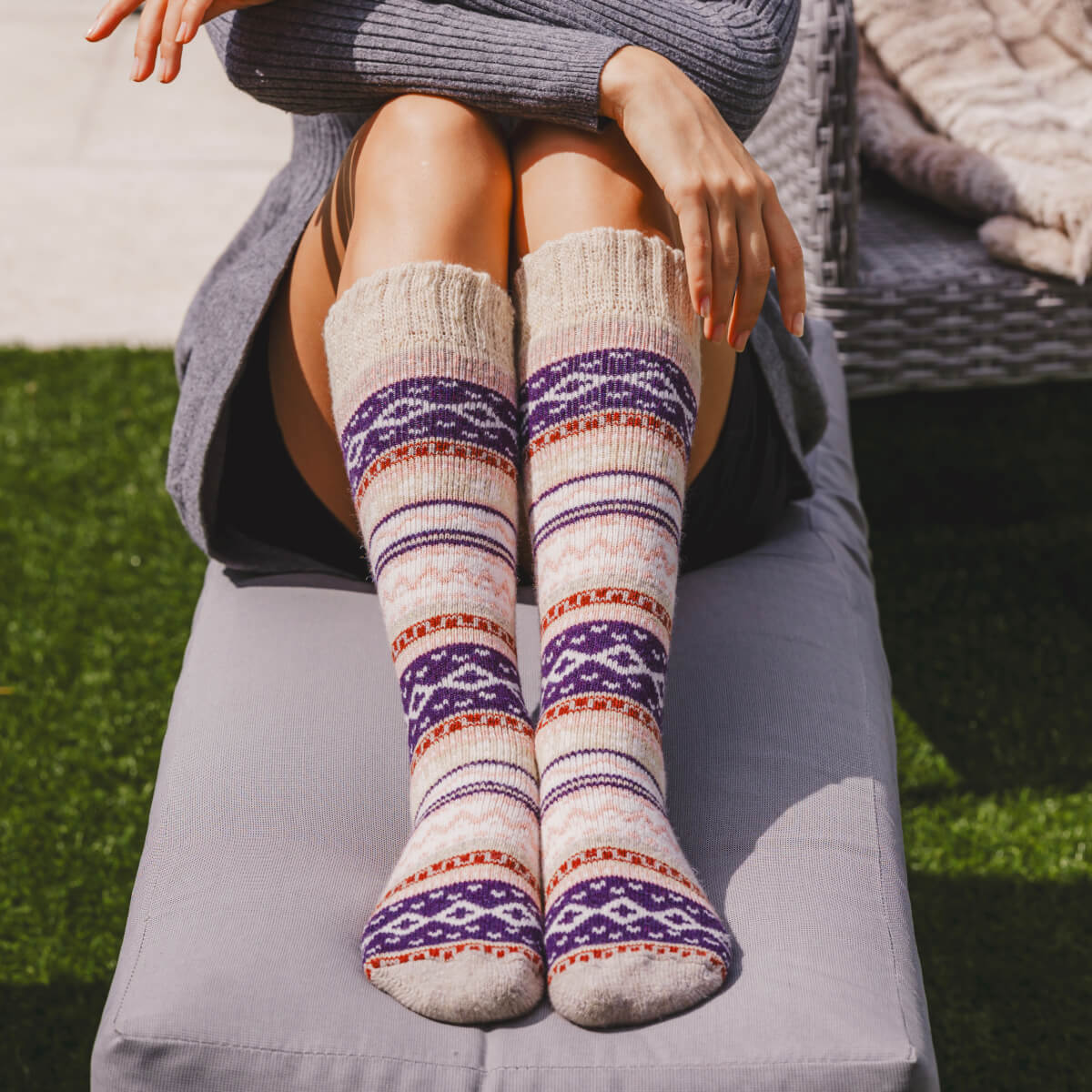
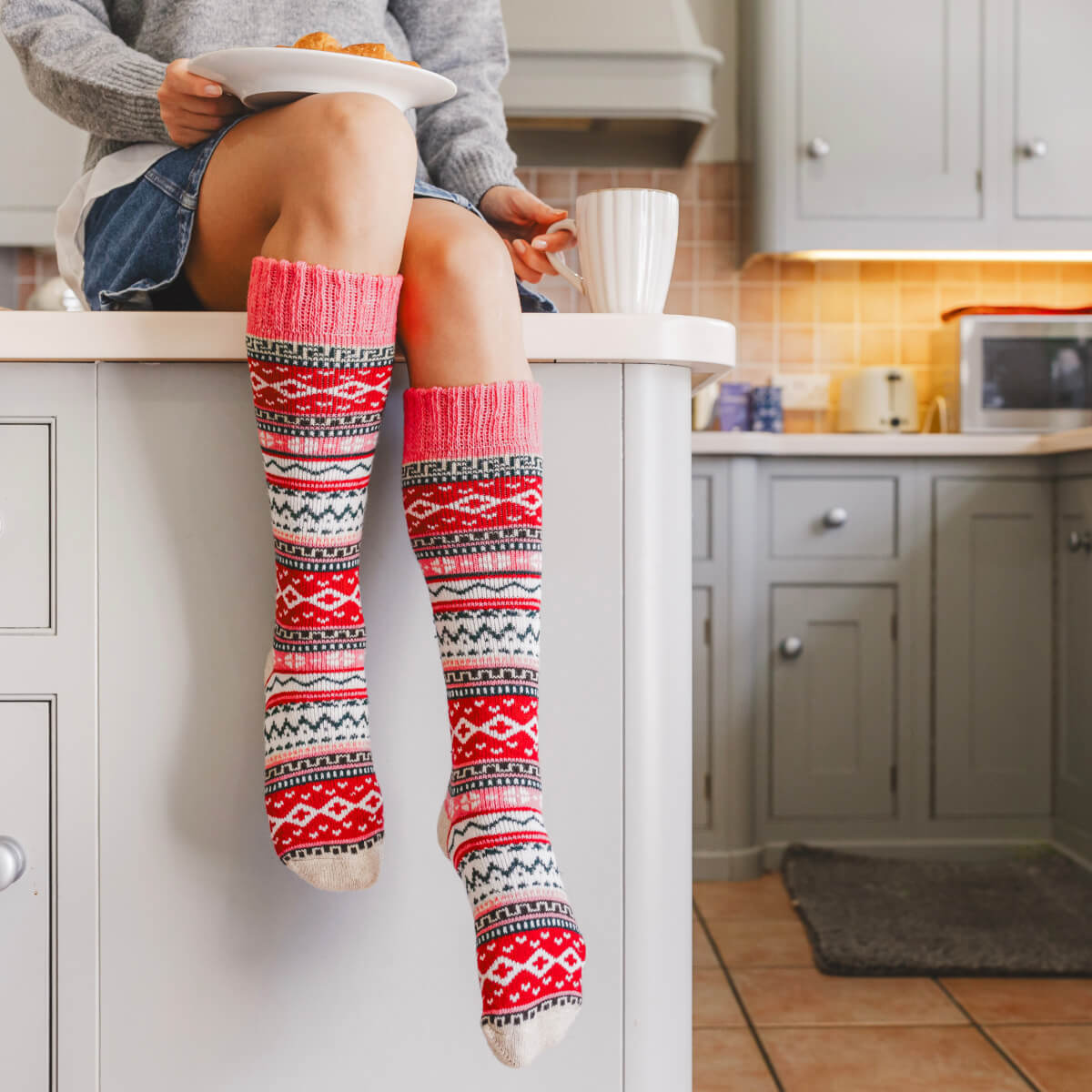
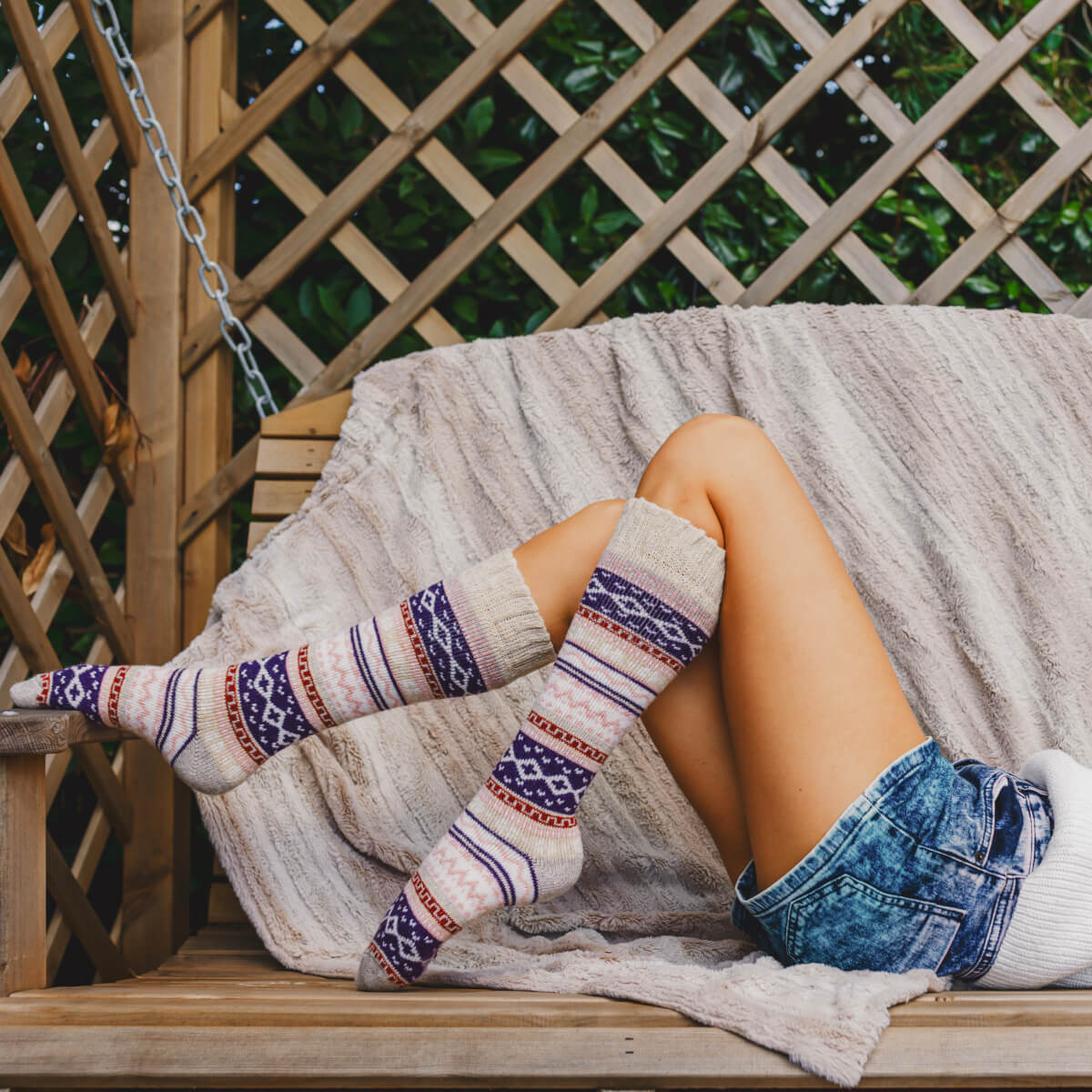
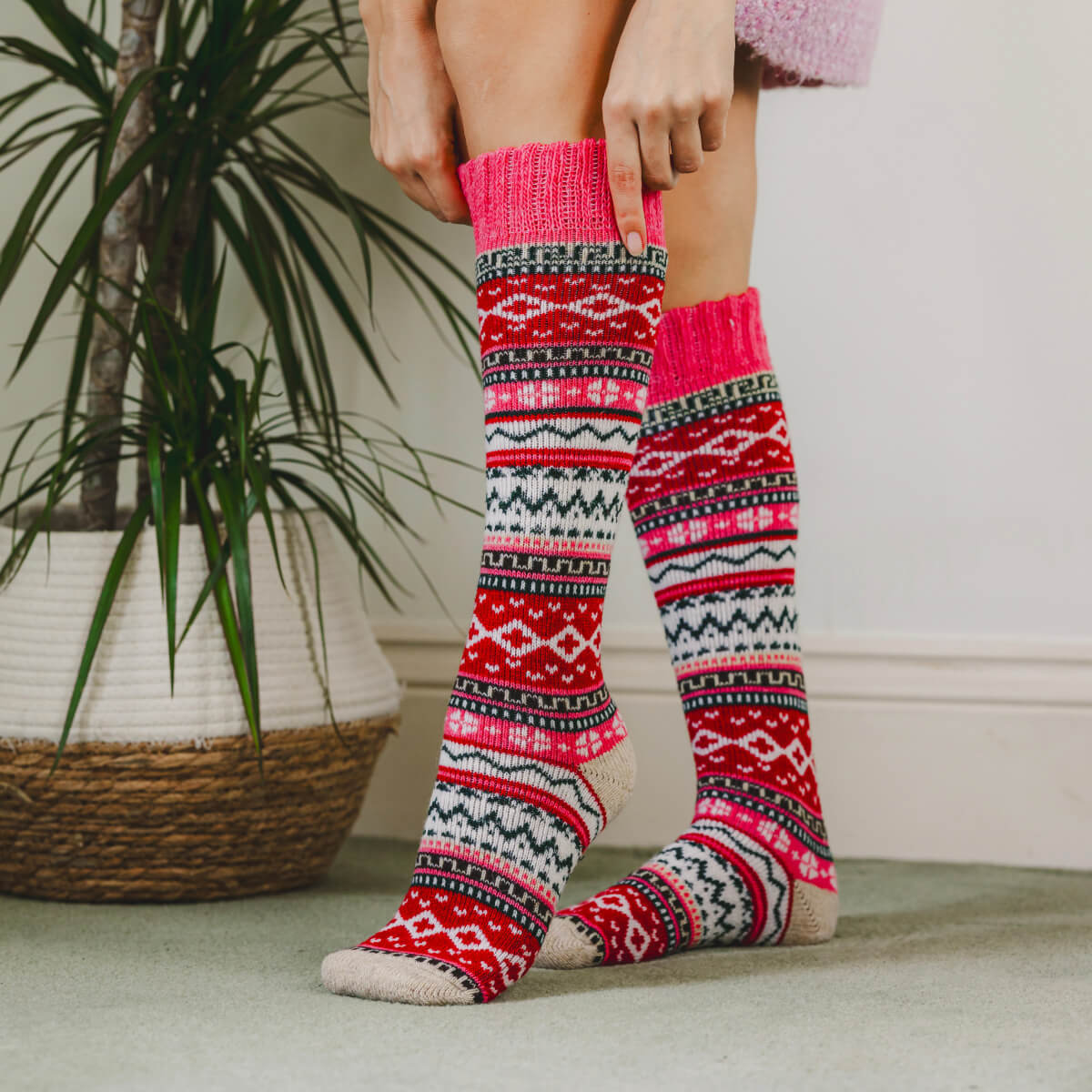
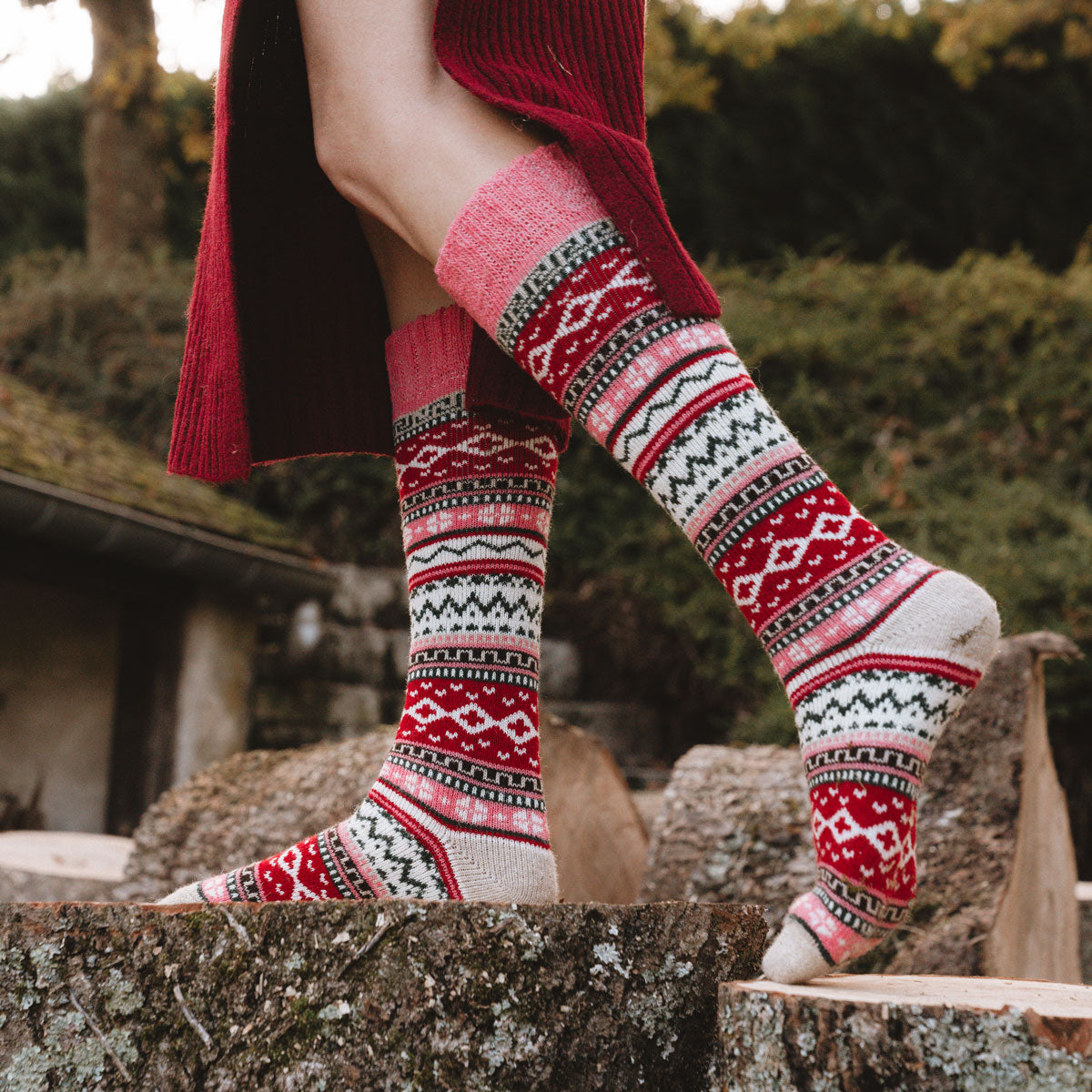
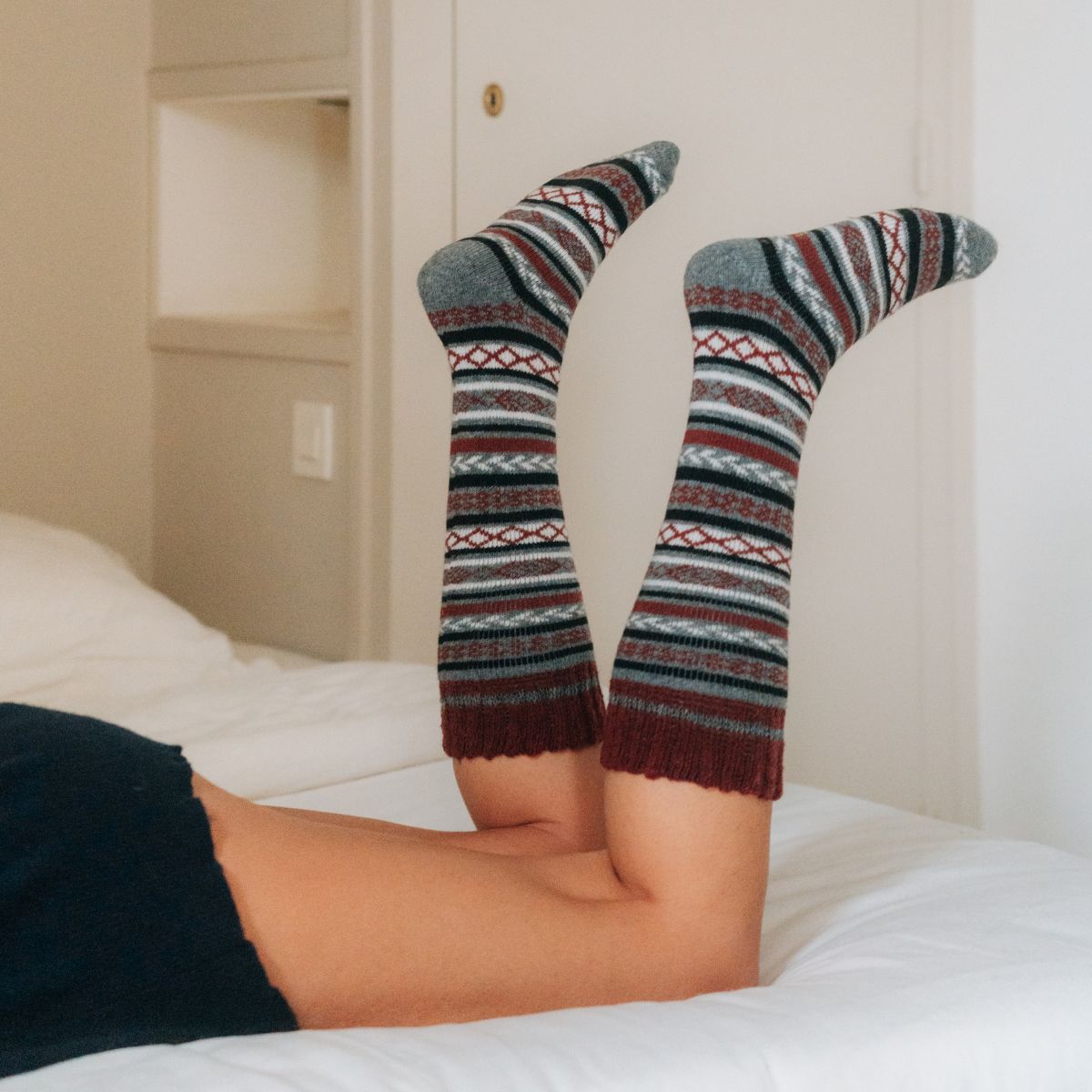
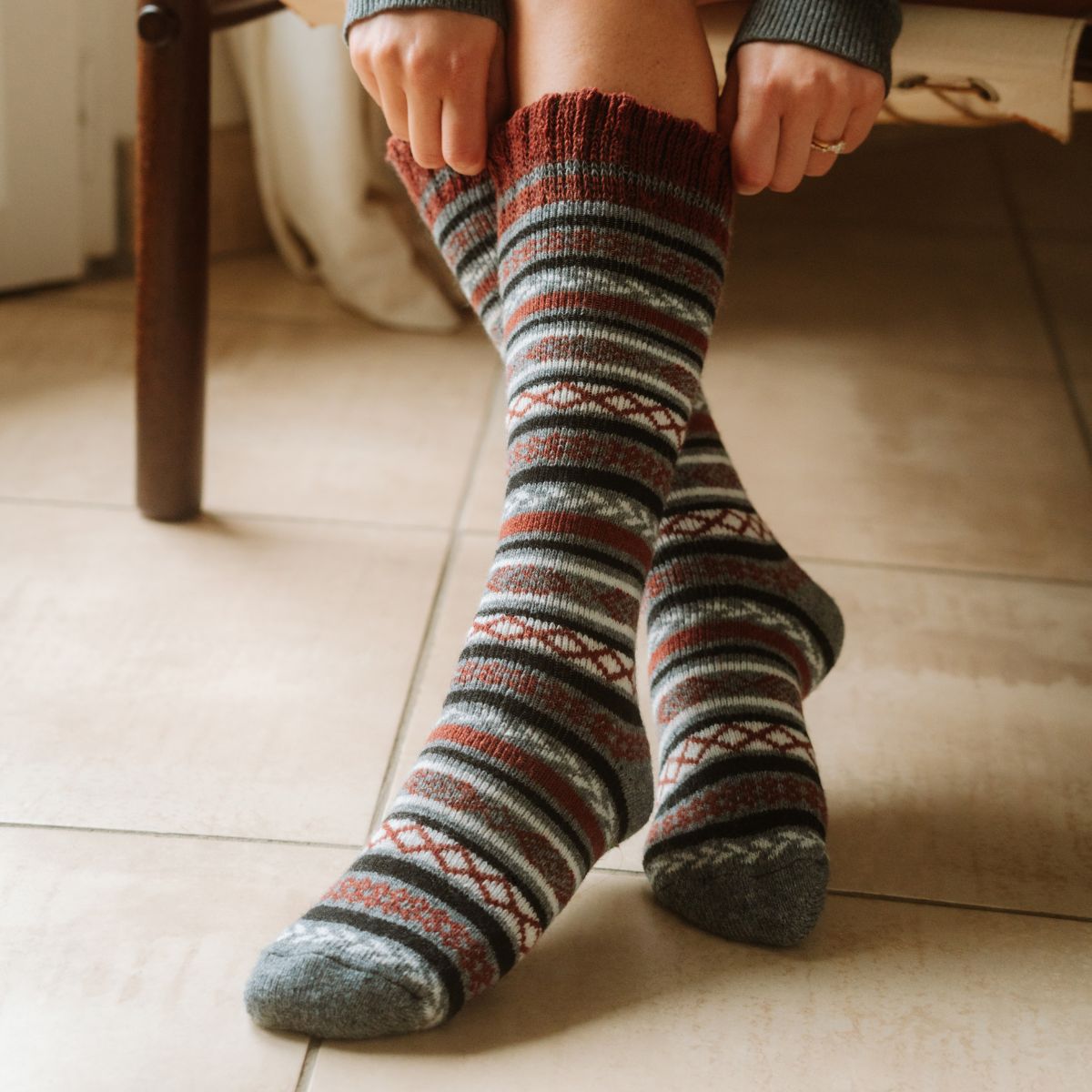
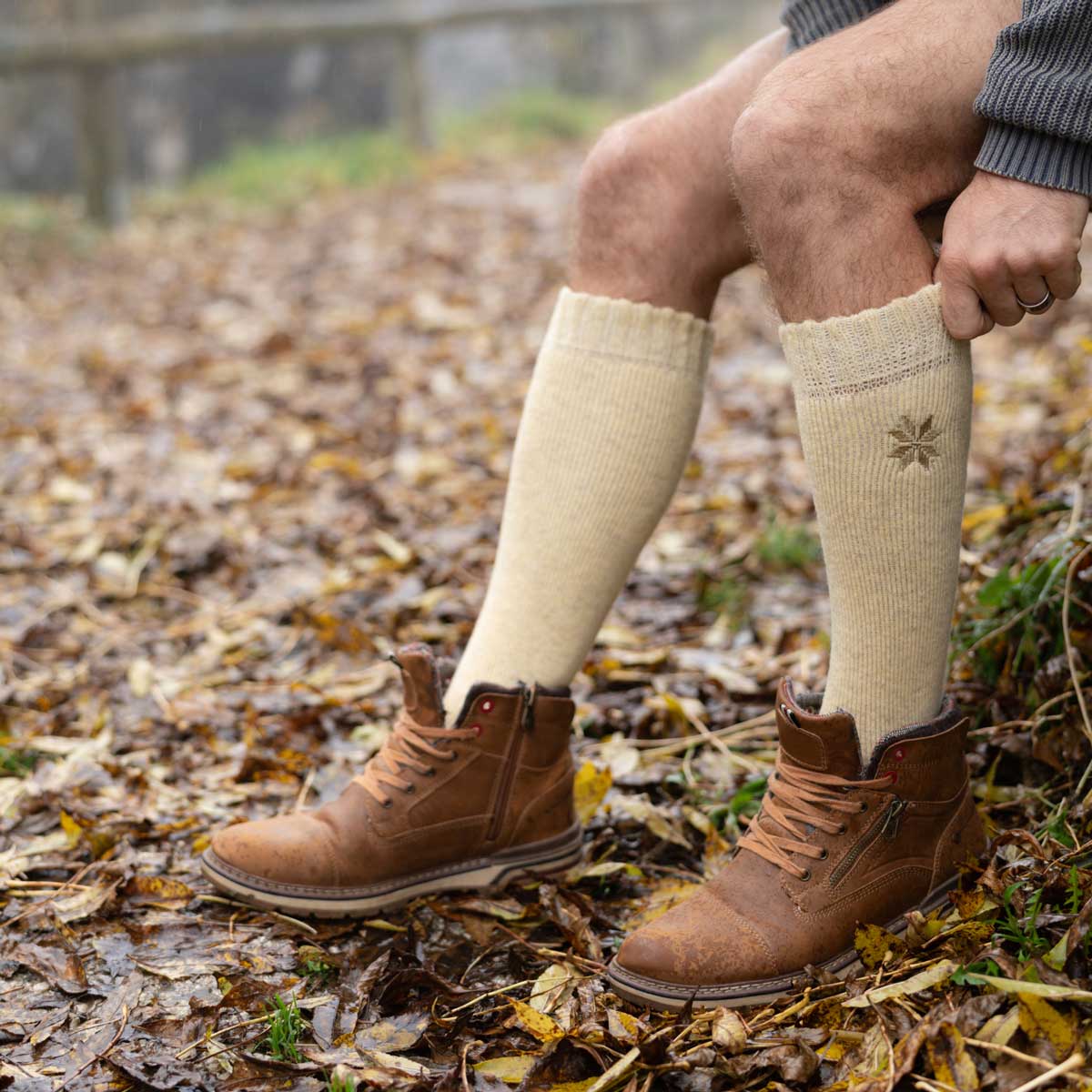
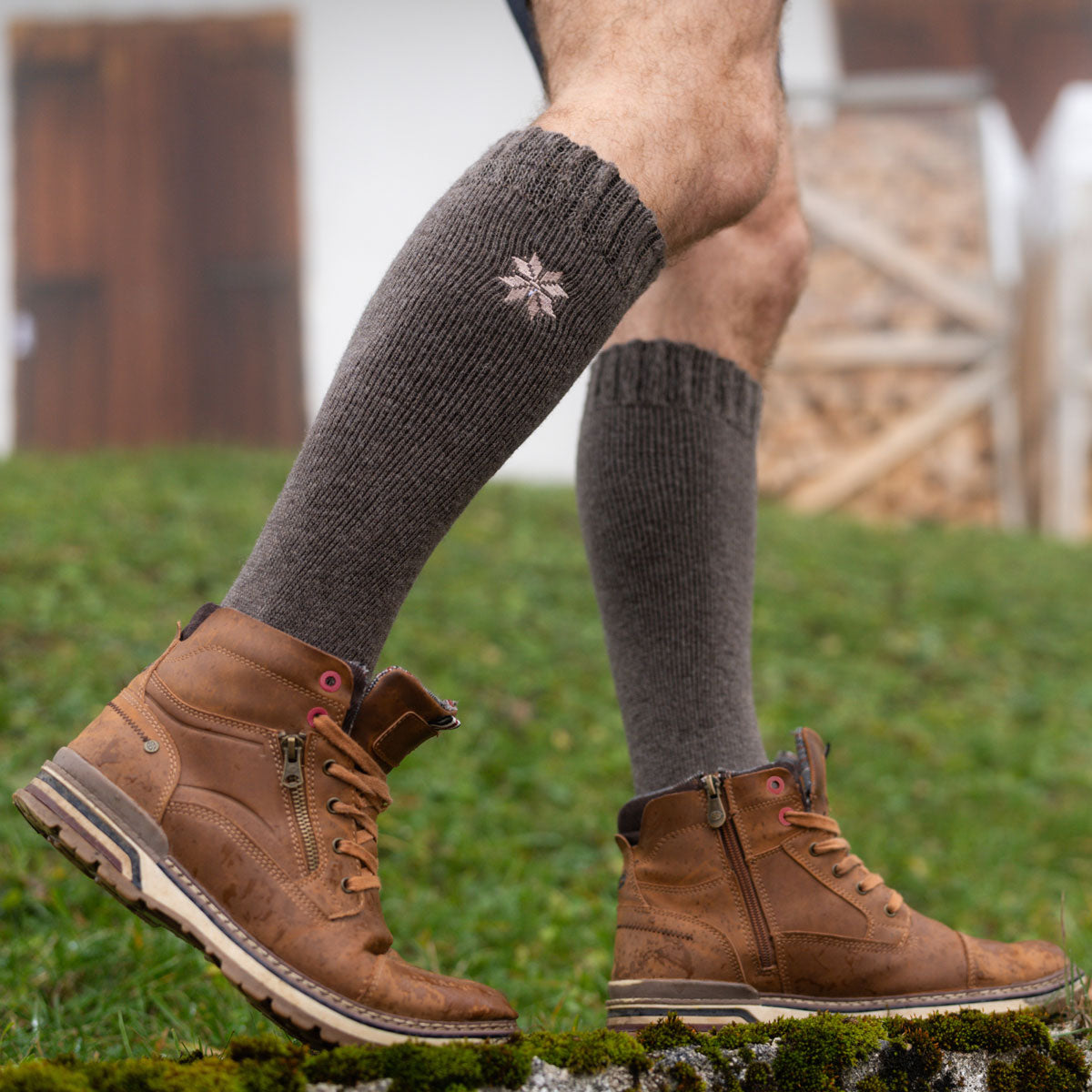
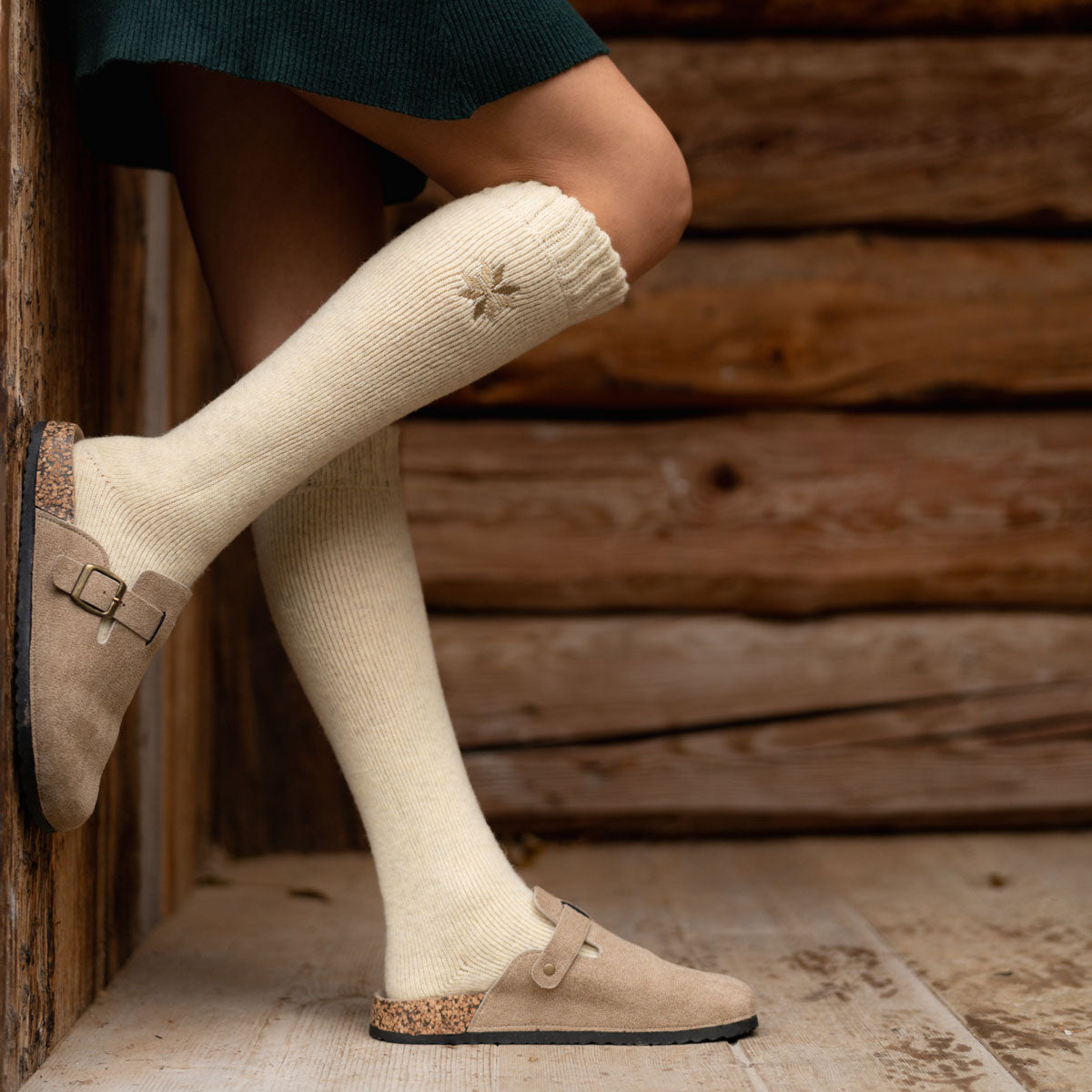
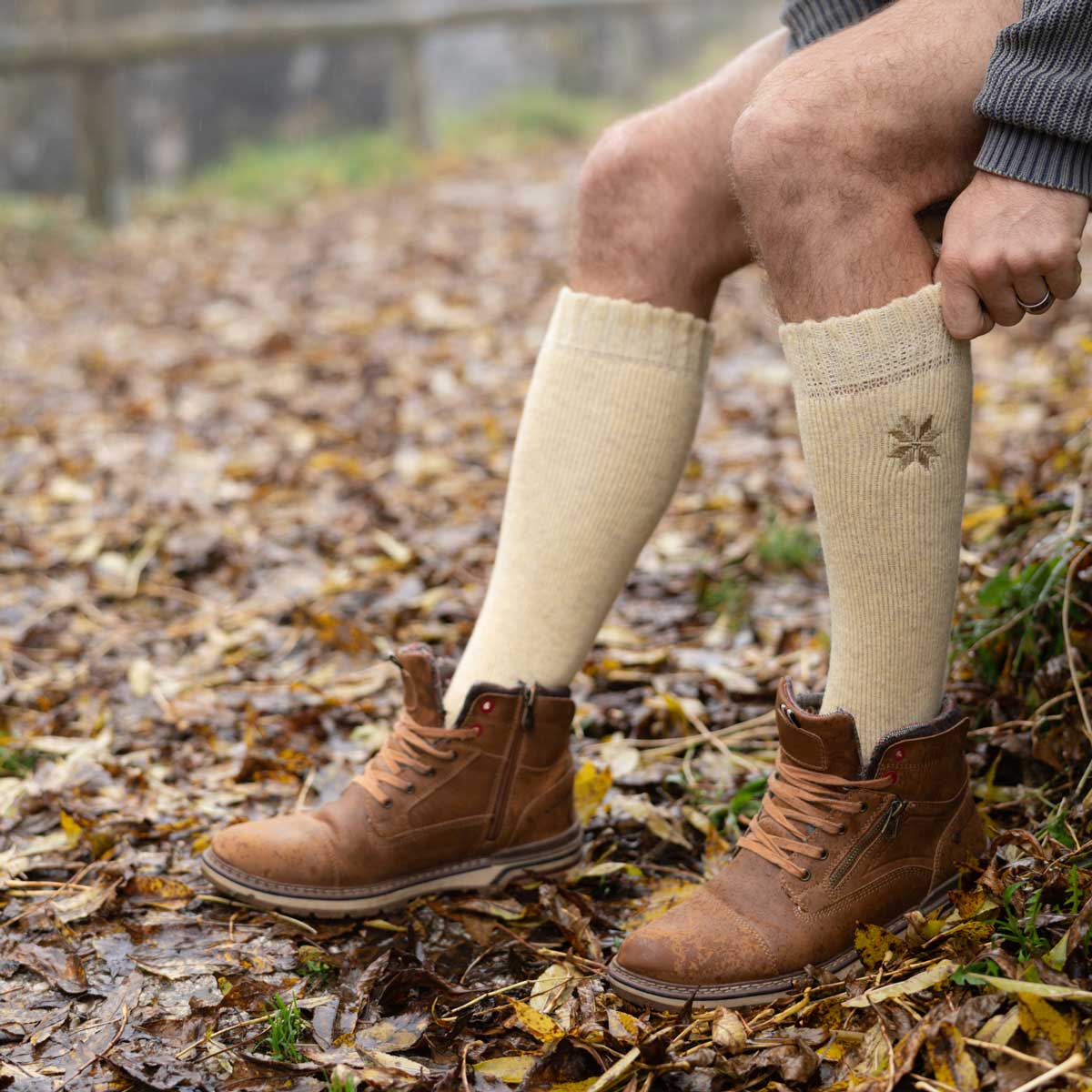
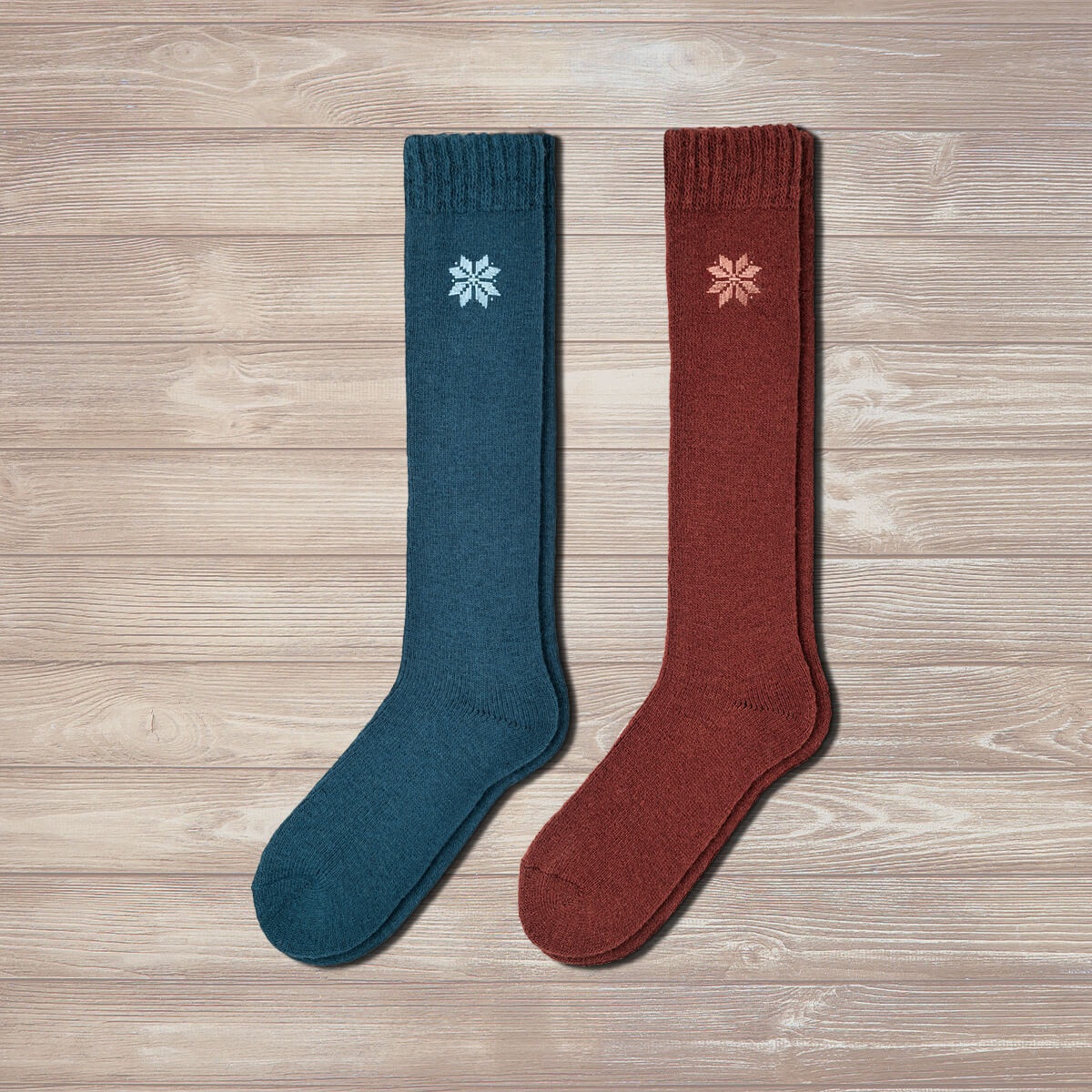
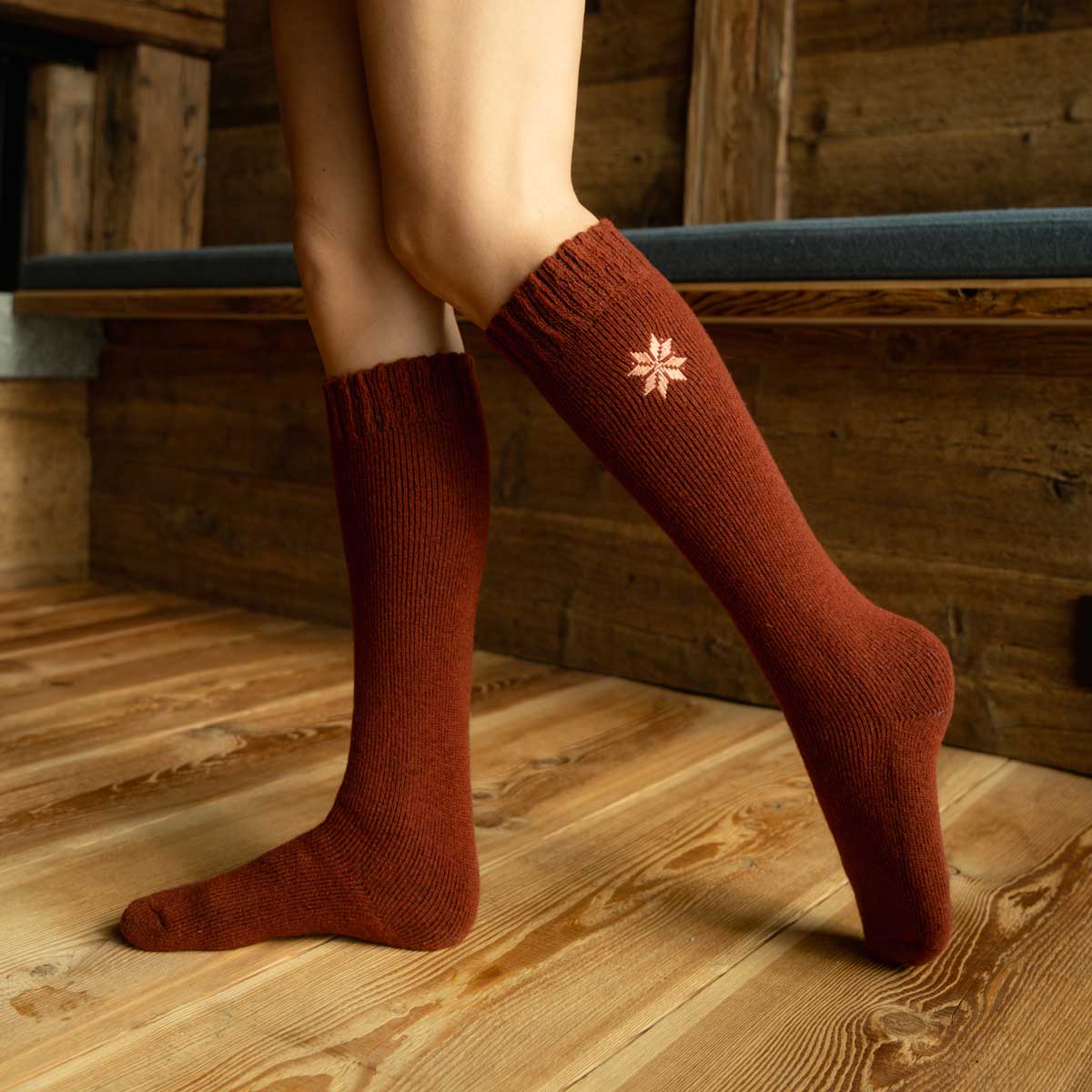
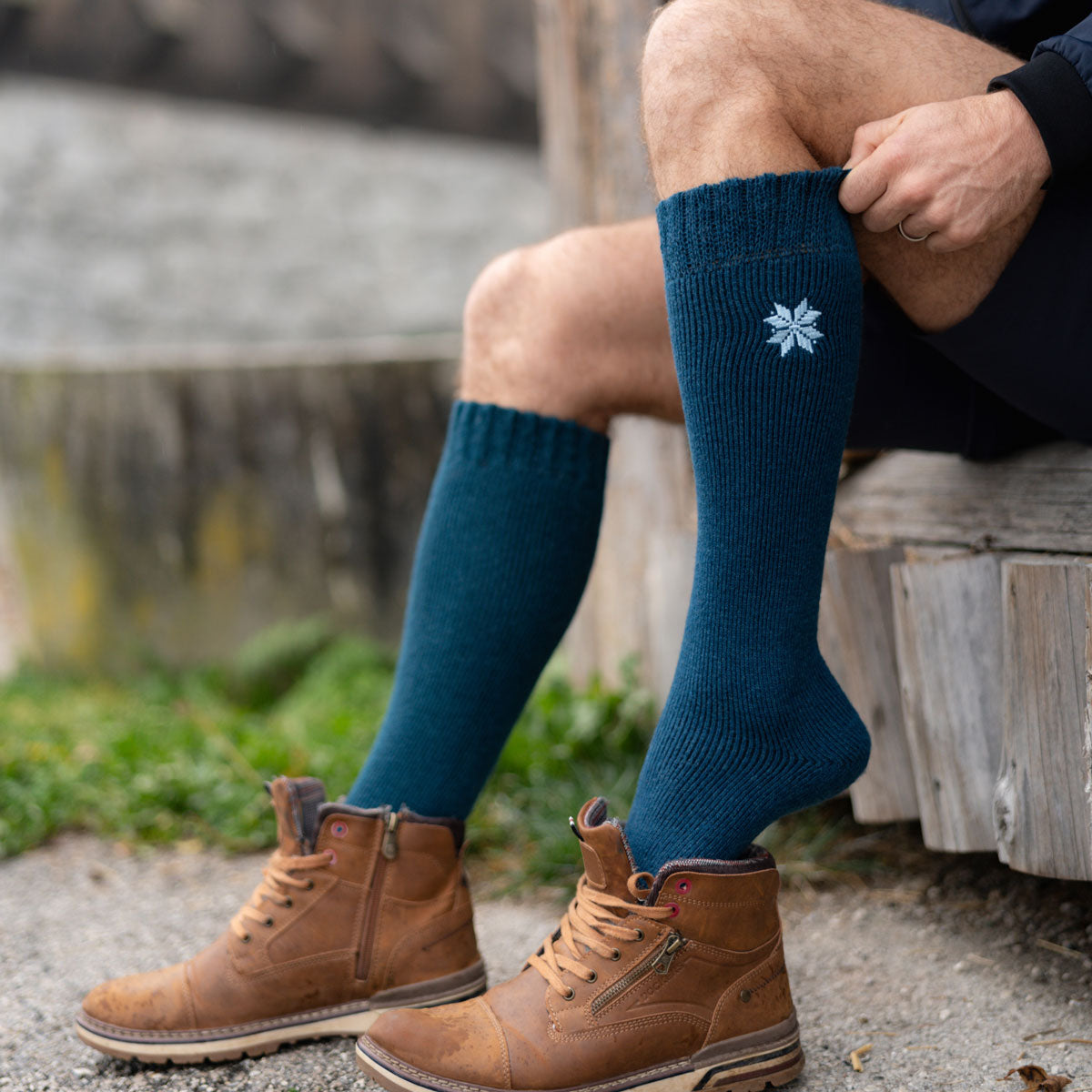
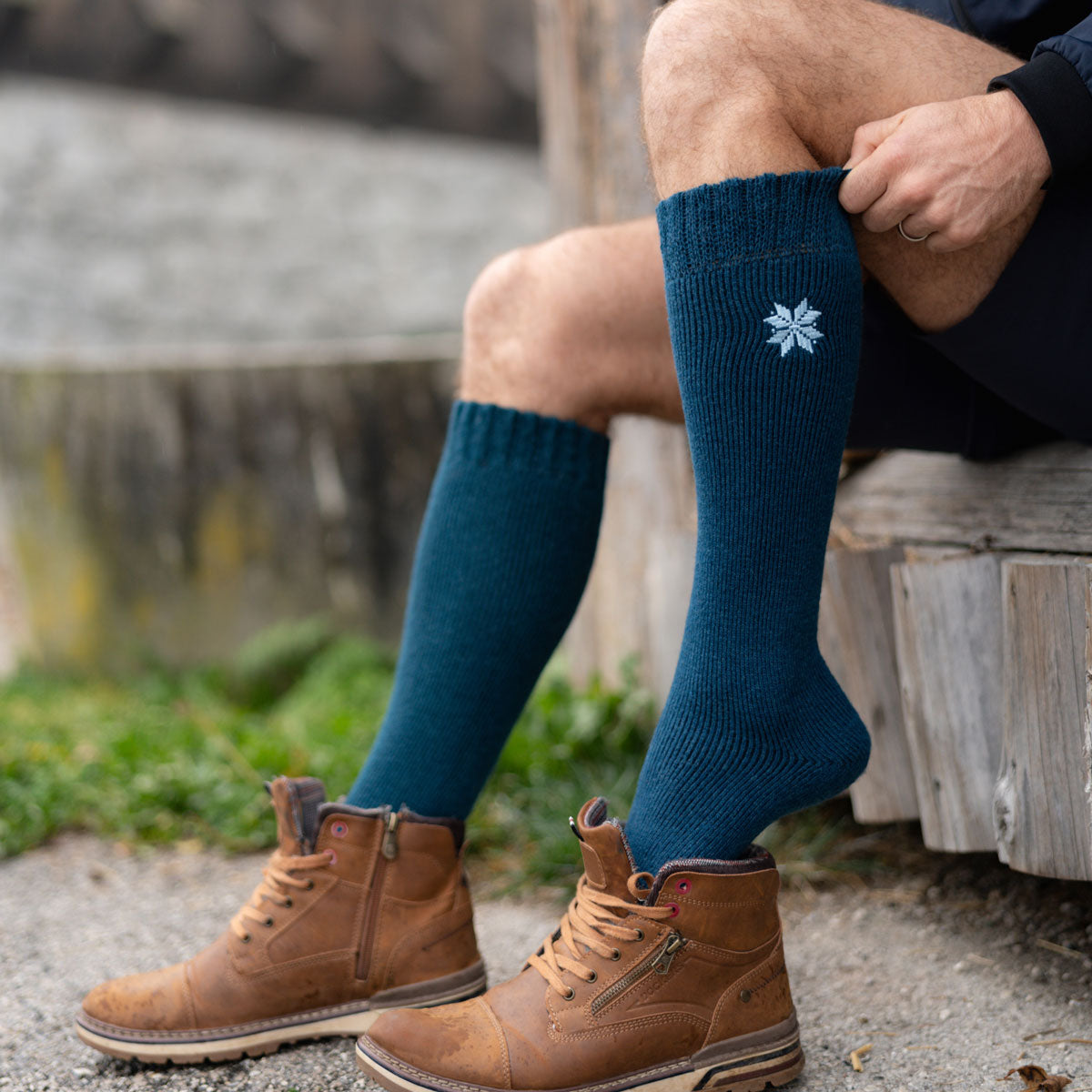
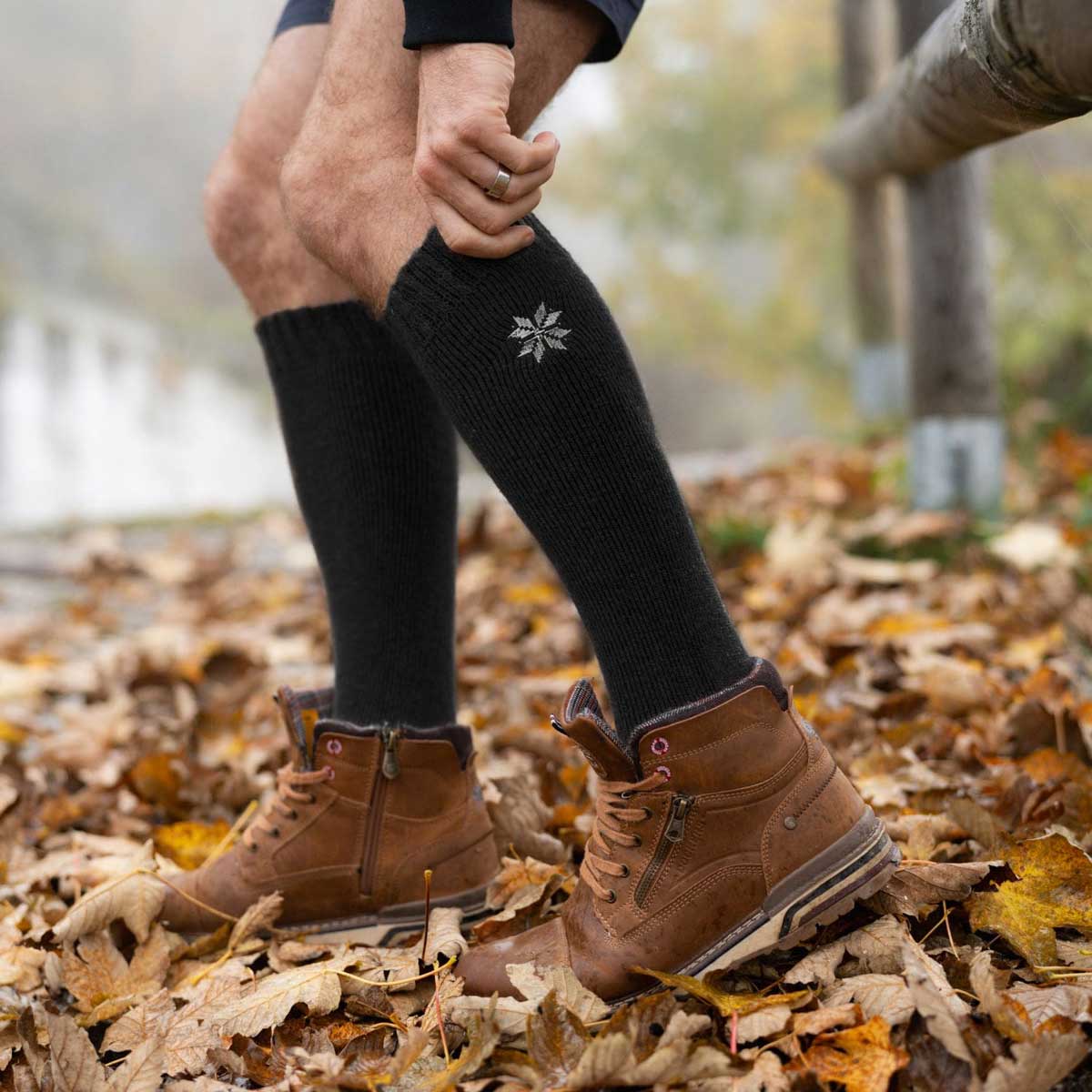
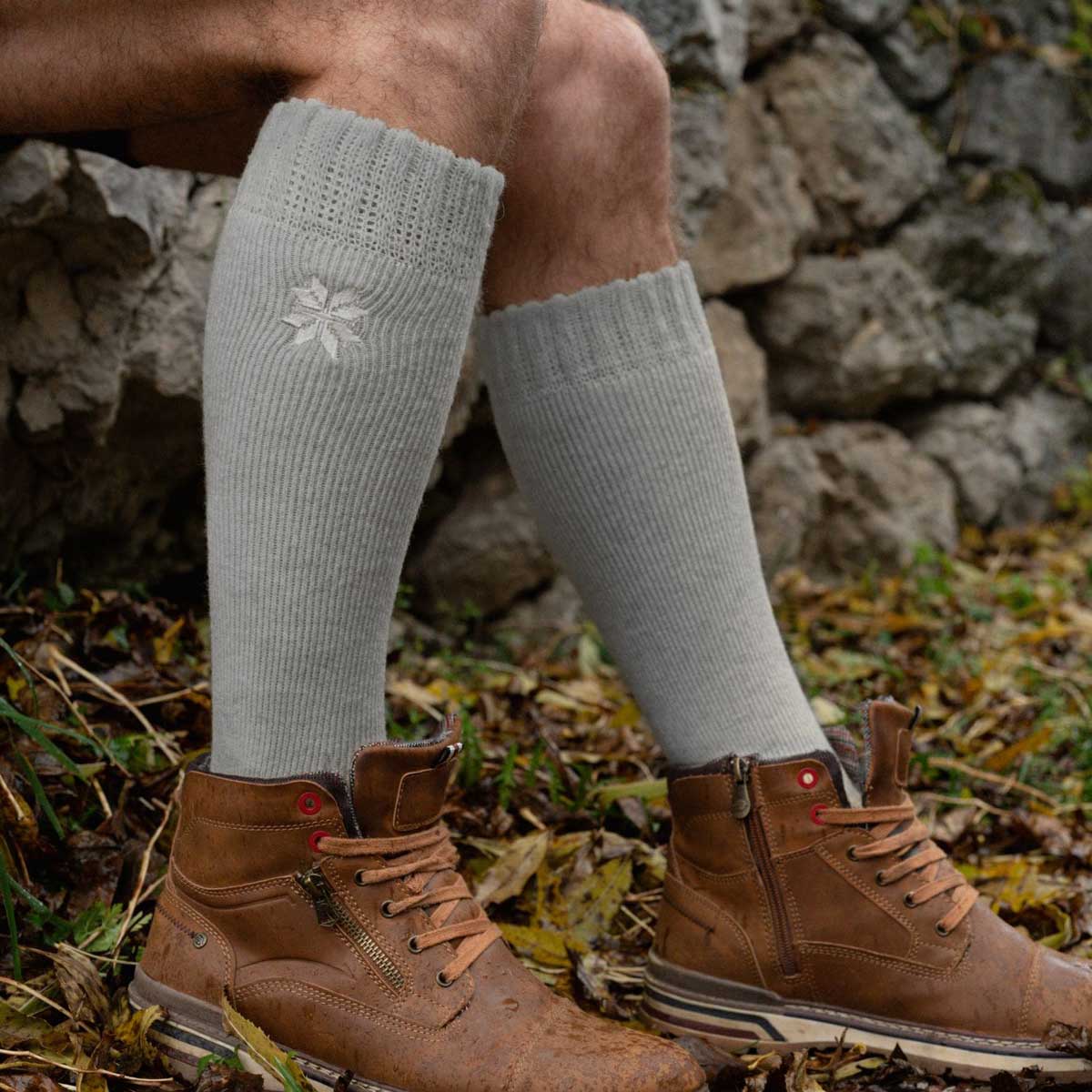
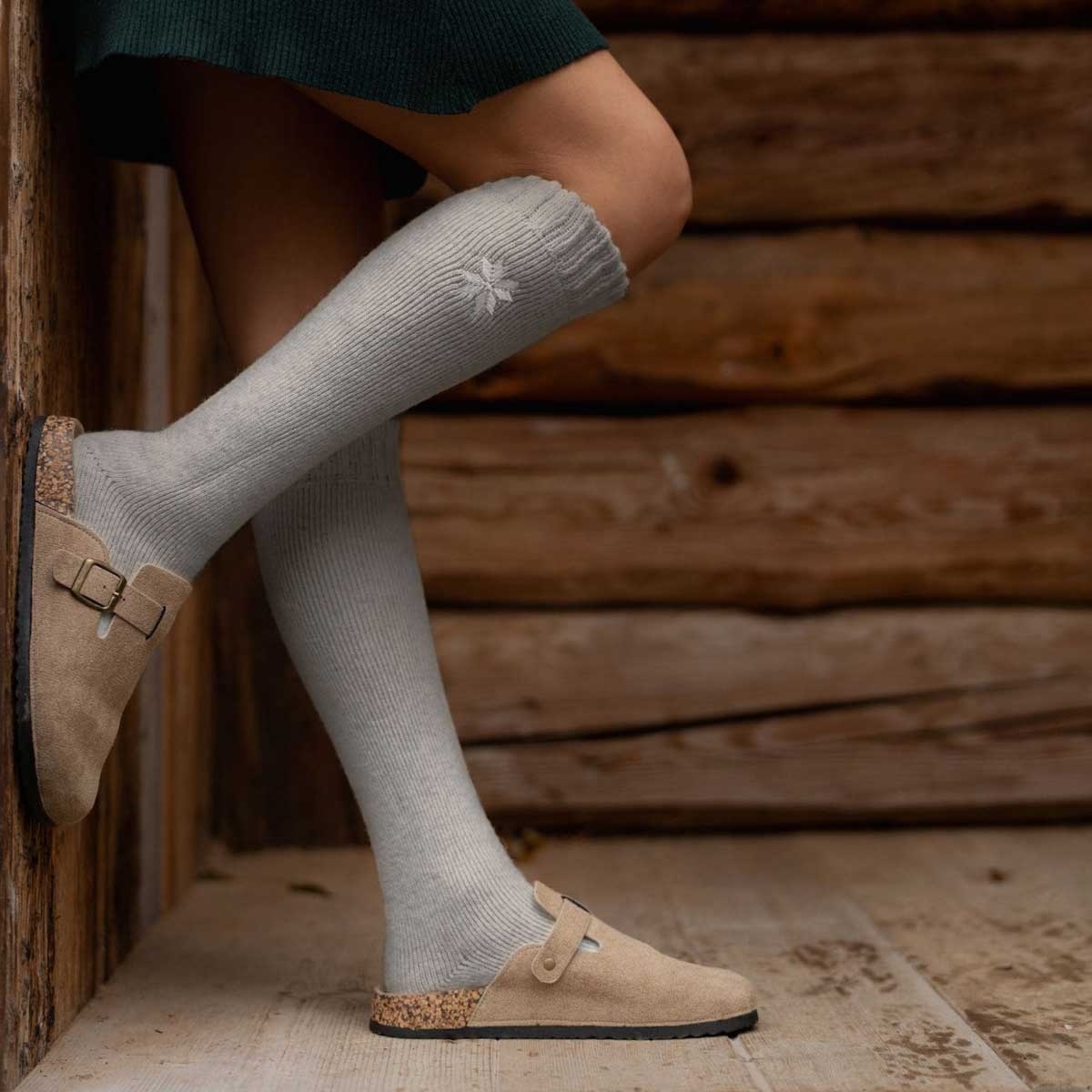
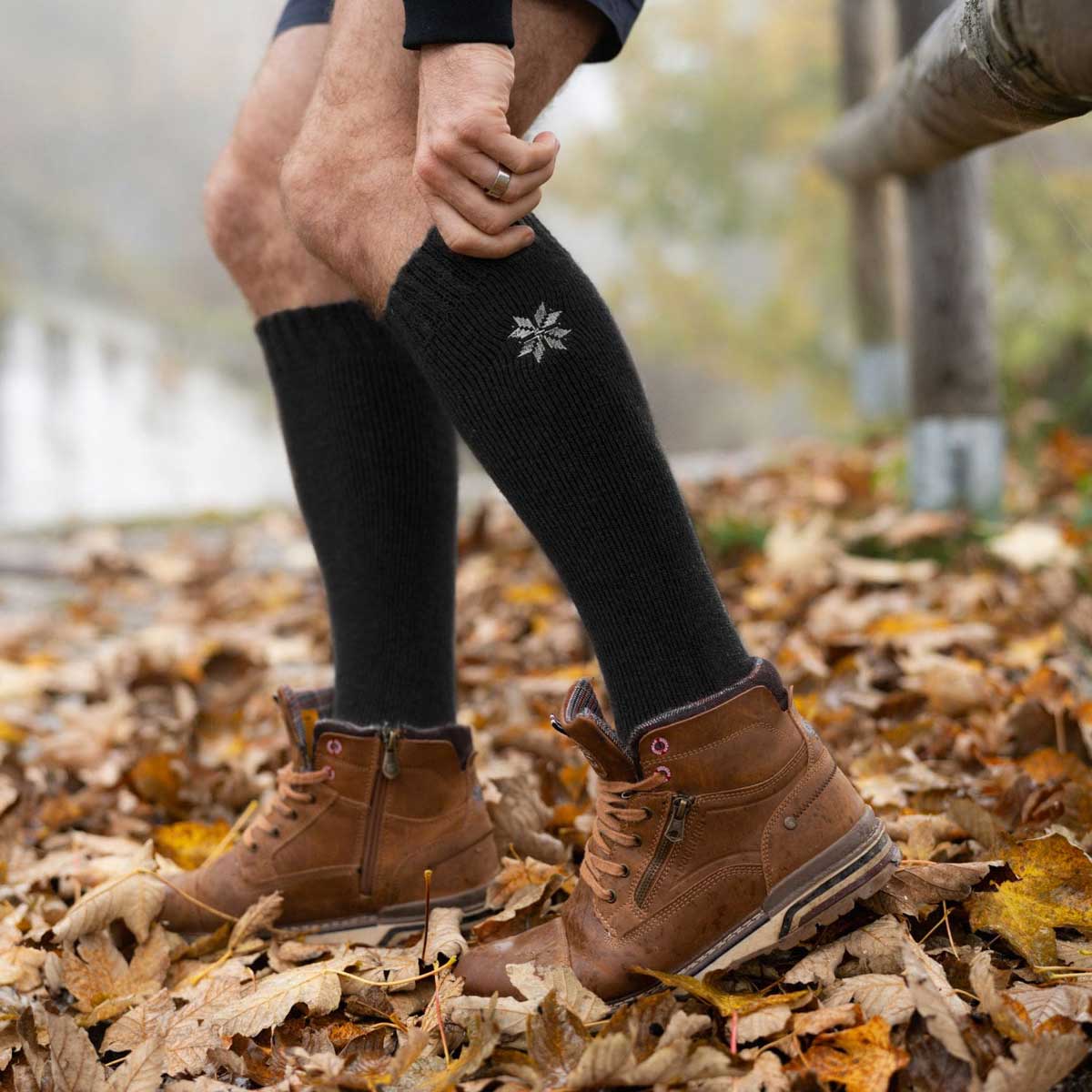
Mountain socks are adorned with vivid patterns. They come in regular crew and knee-high lengths. The knee-high variant is recommended for those who are highly sensitive to the cold. They will fit perfectly under your hiking trousers and boots.
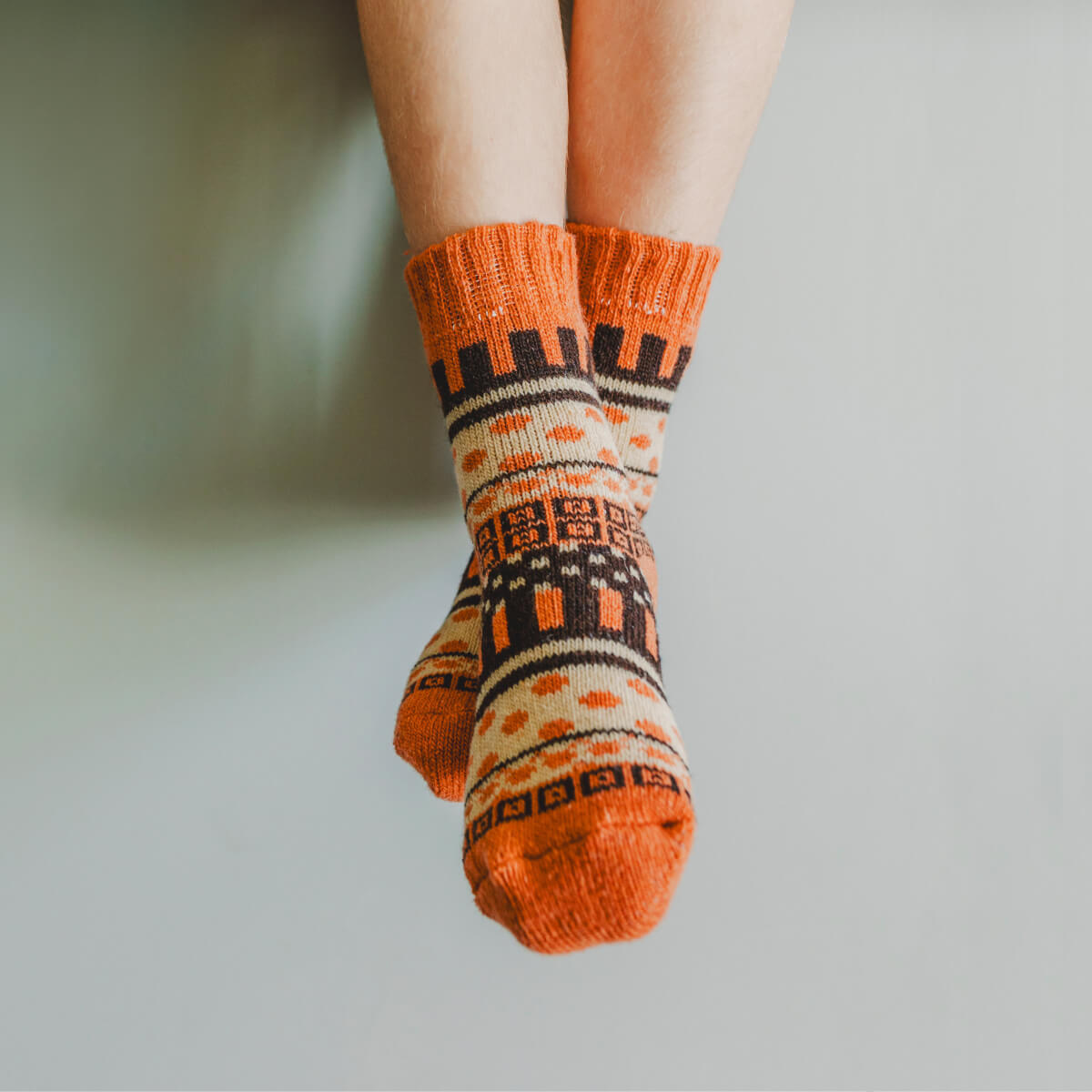
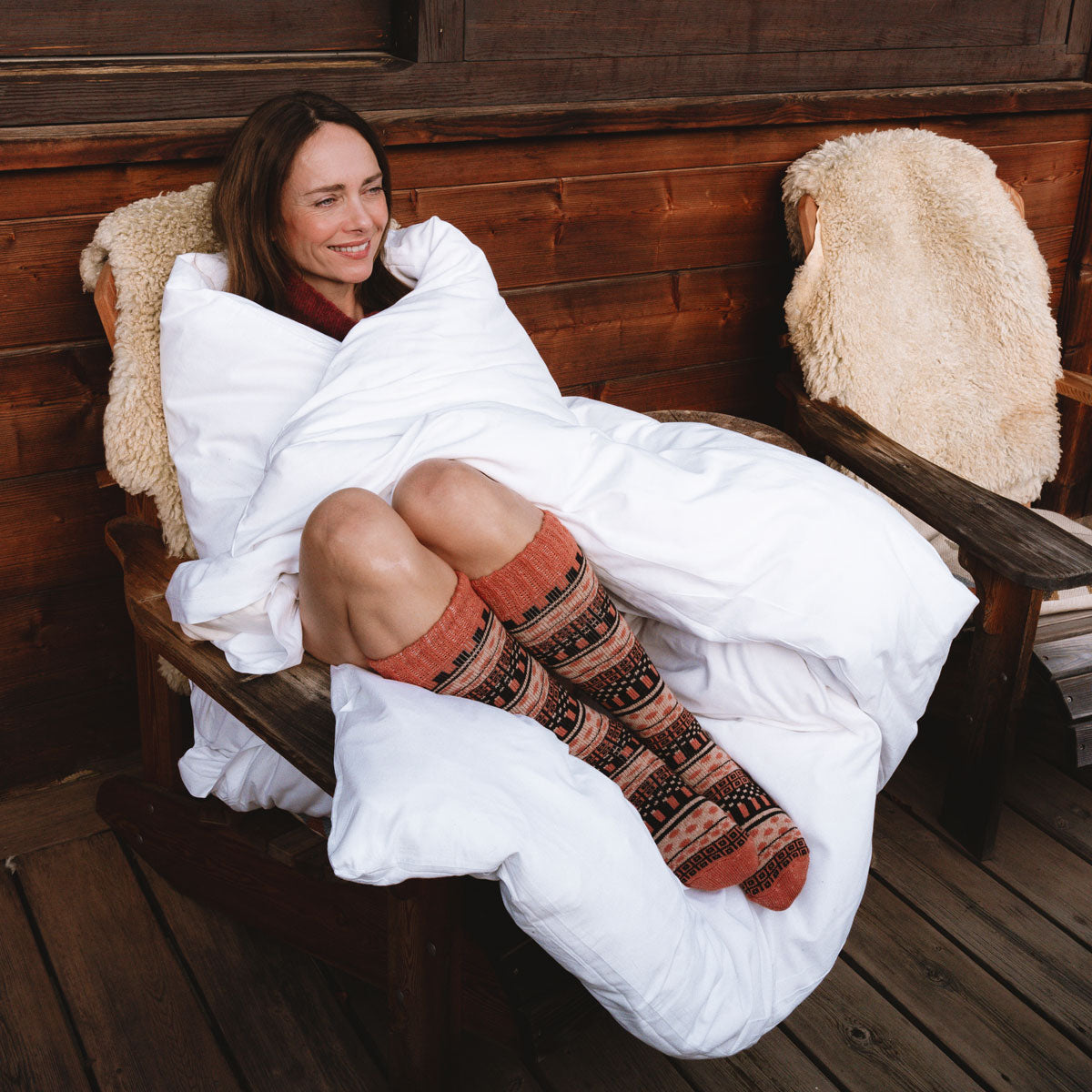
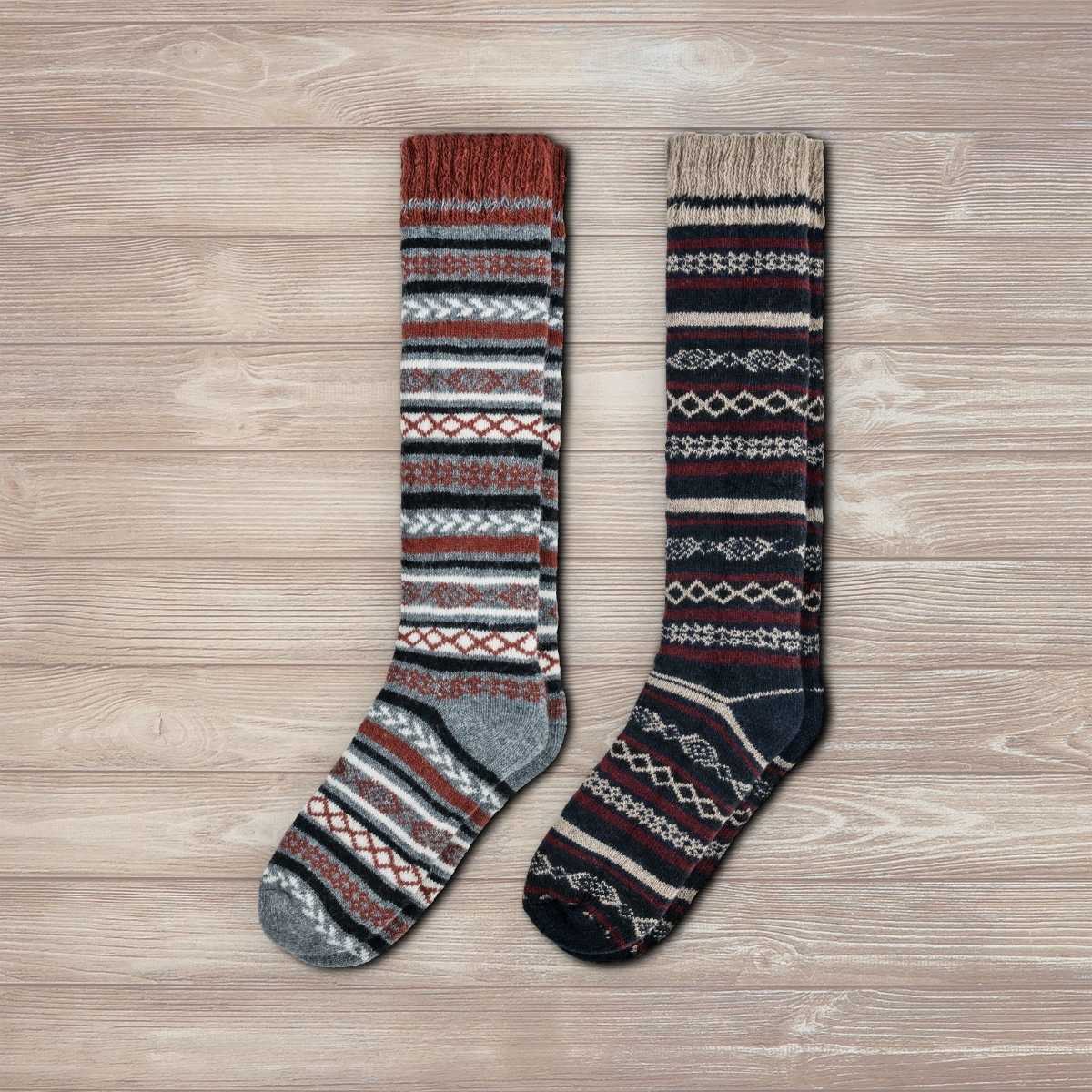
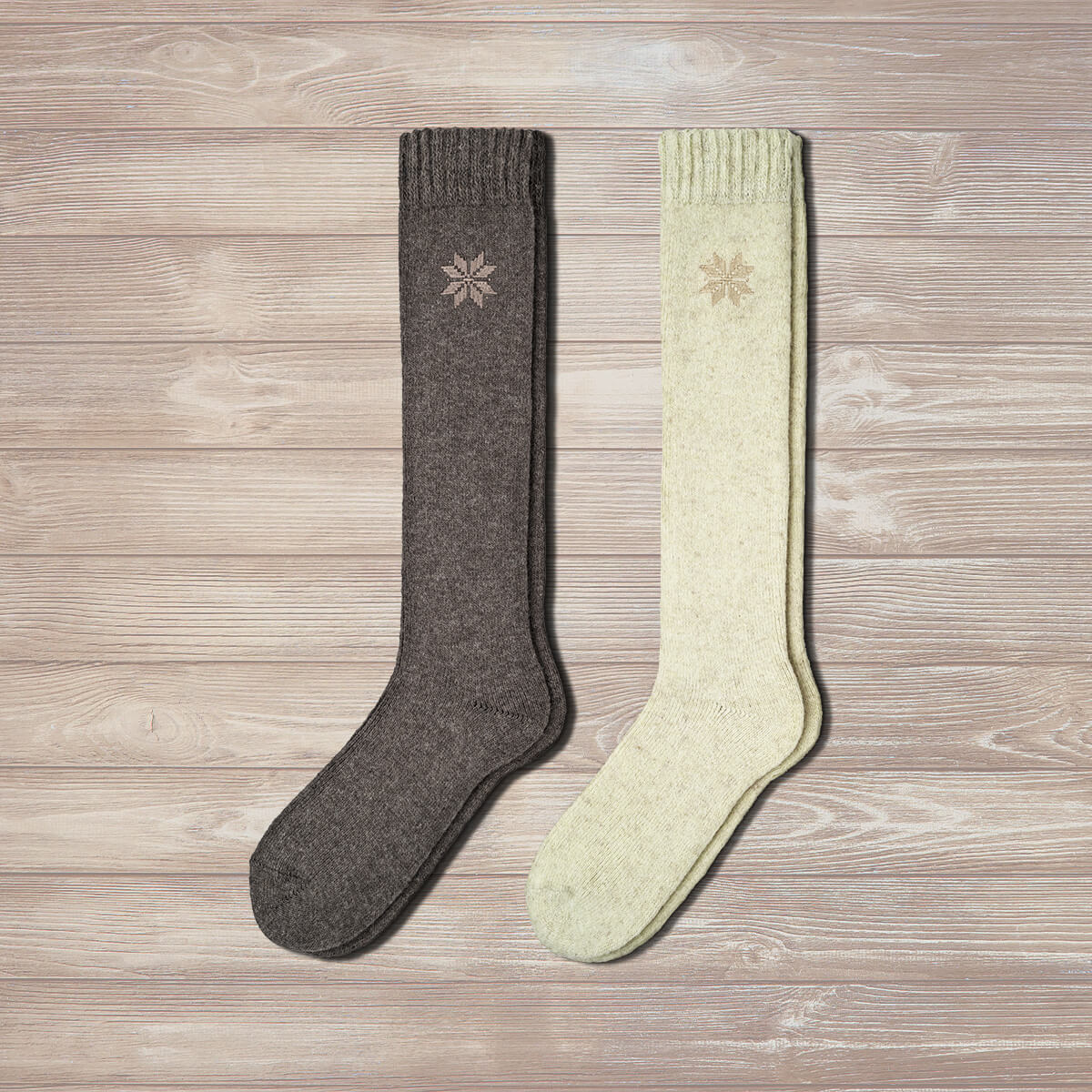
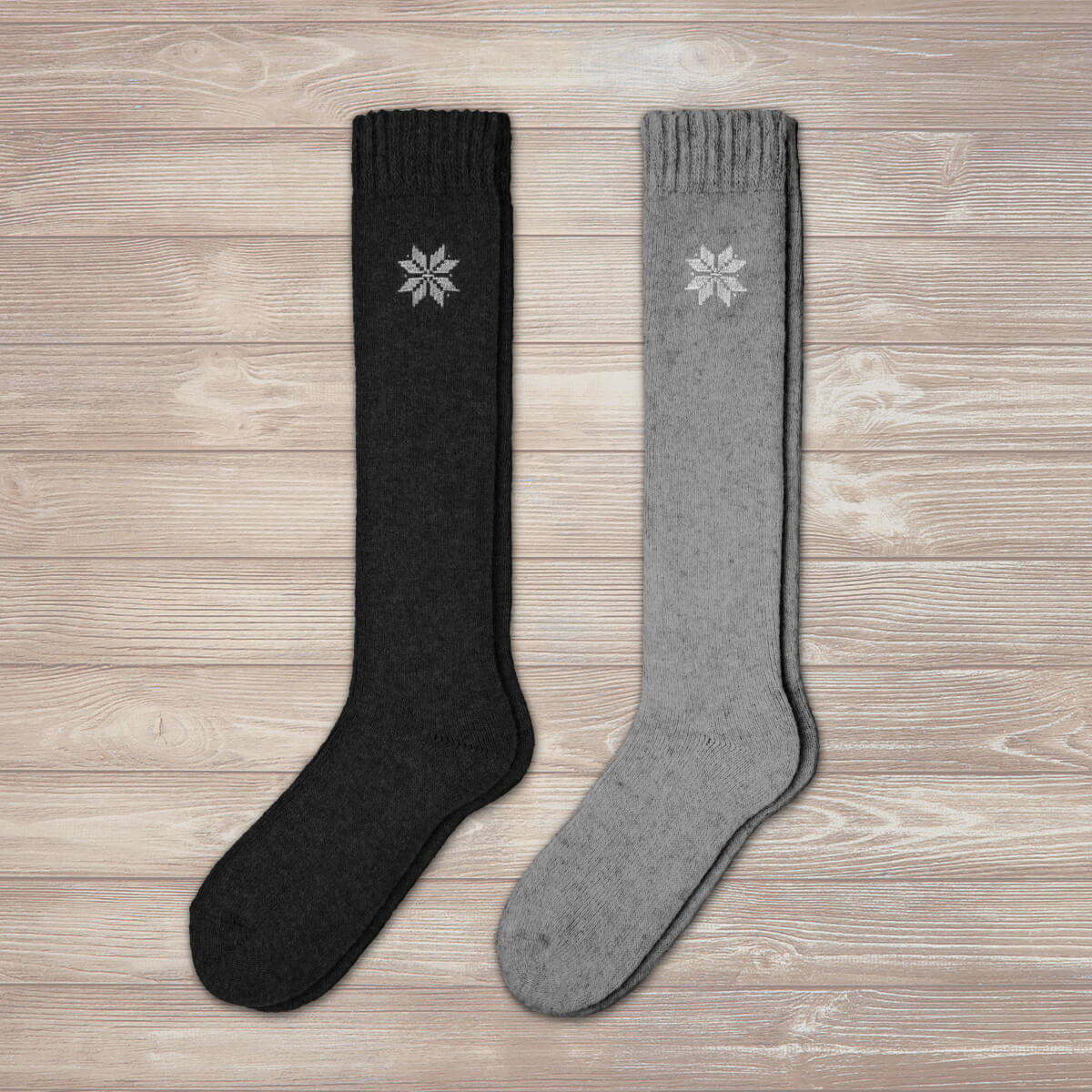
The thickest woolen socks you can get are Nordic's Nature Collection. They are rich in Merino wool—70% of the blend comes from Merino sheep! The high concentration of wool ensures superior temperature regulation. Even so, the material will not bulk up, the presence of other elastic fabrics will maintain the snug fit you grew to know and love from other collections.
You can get your Nature socks in three heights:
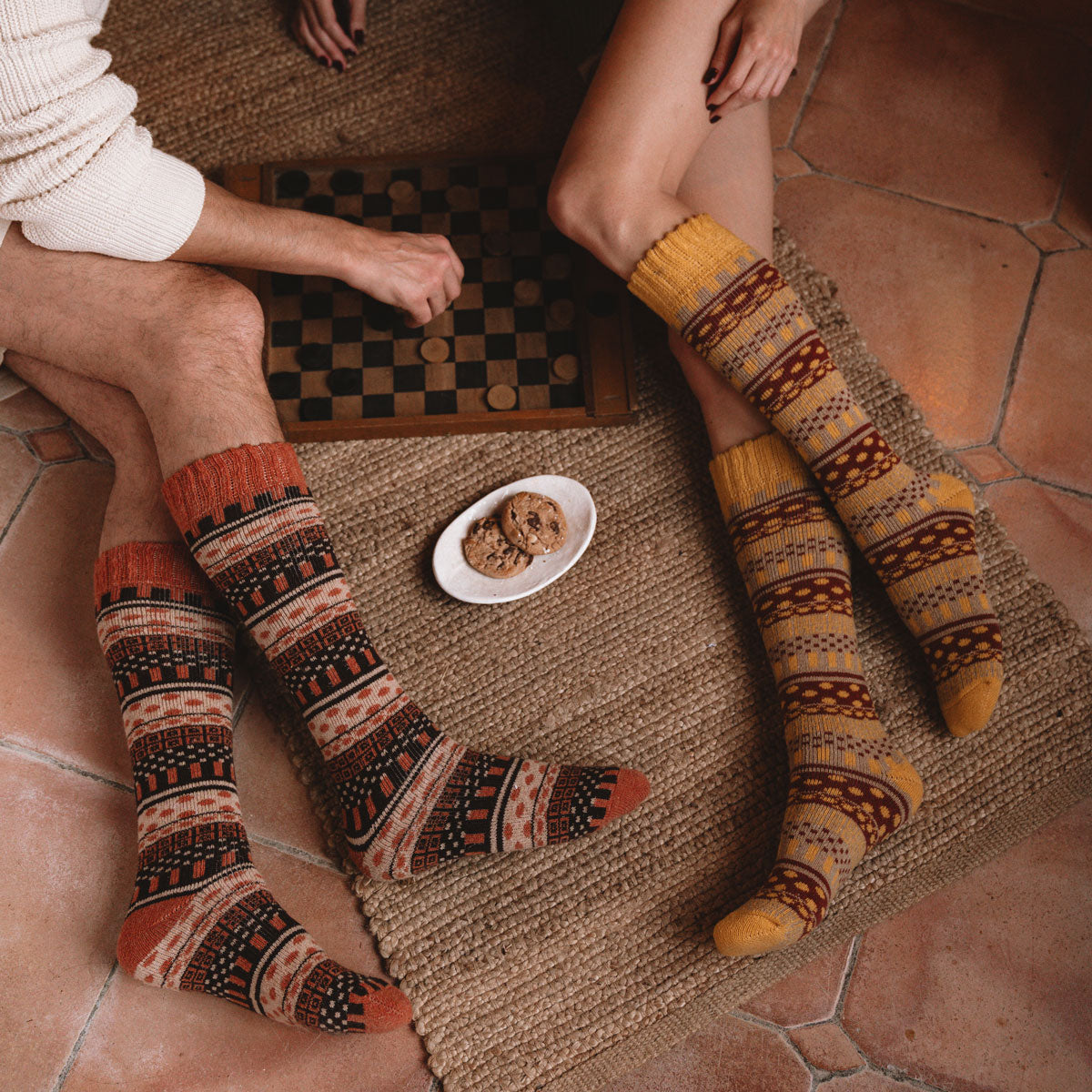
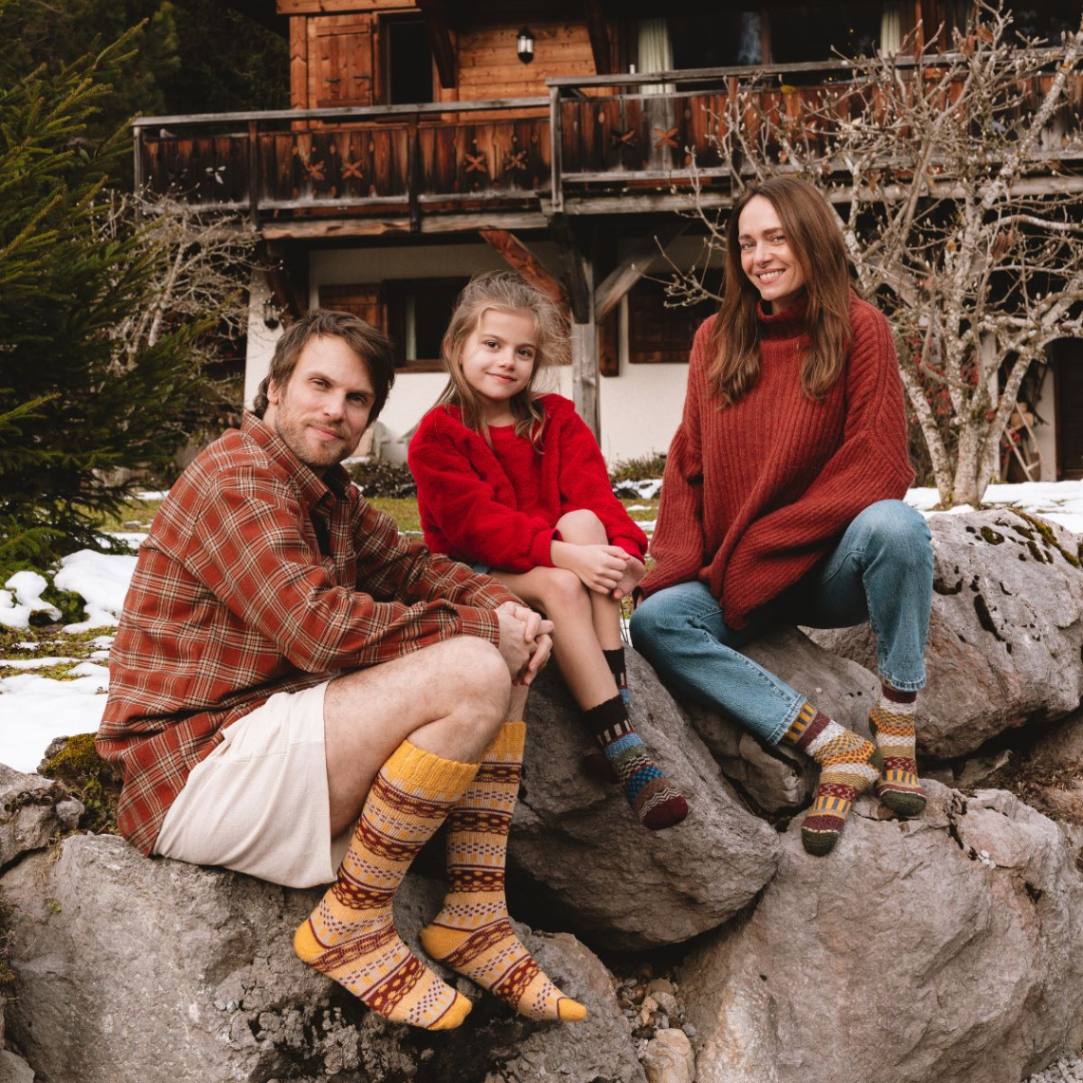
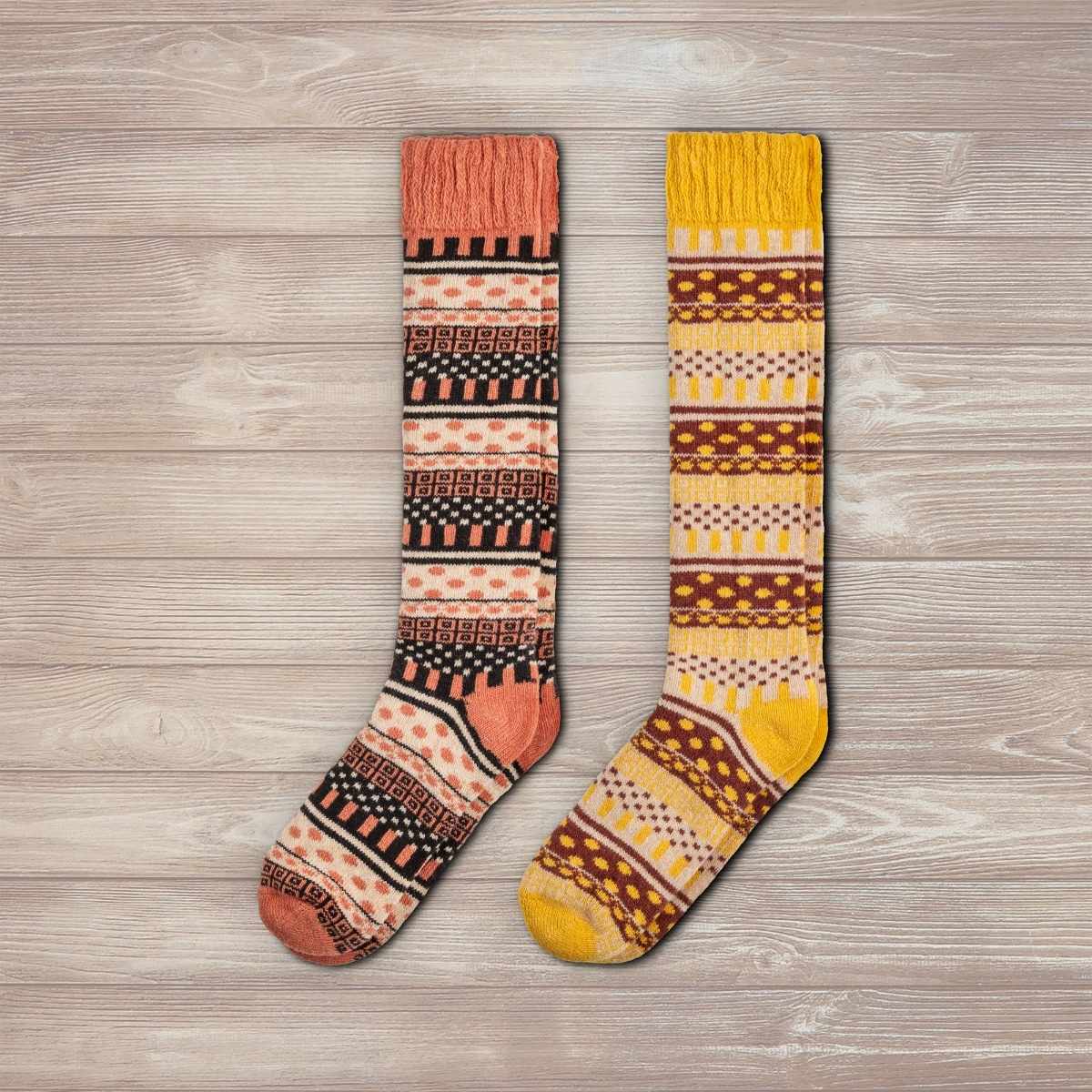
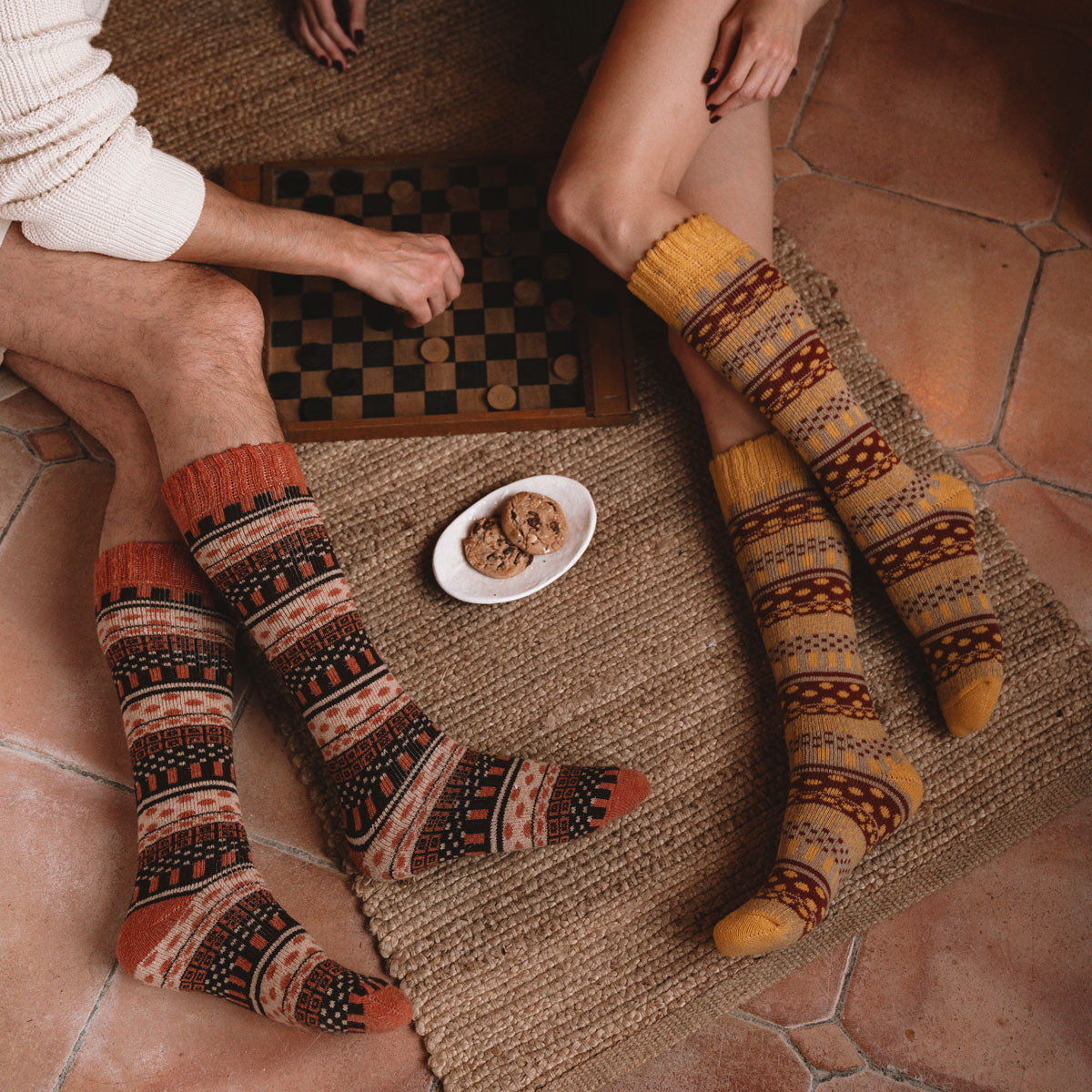
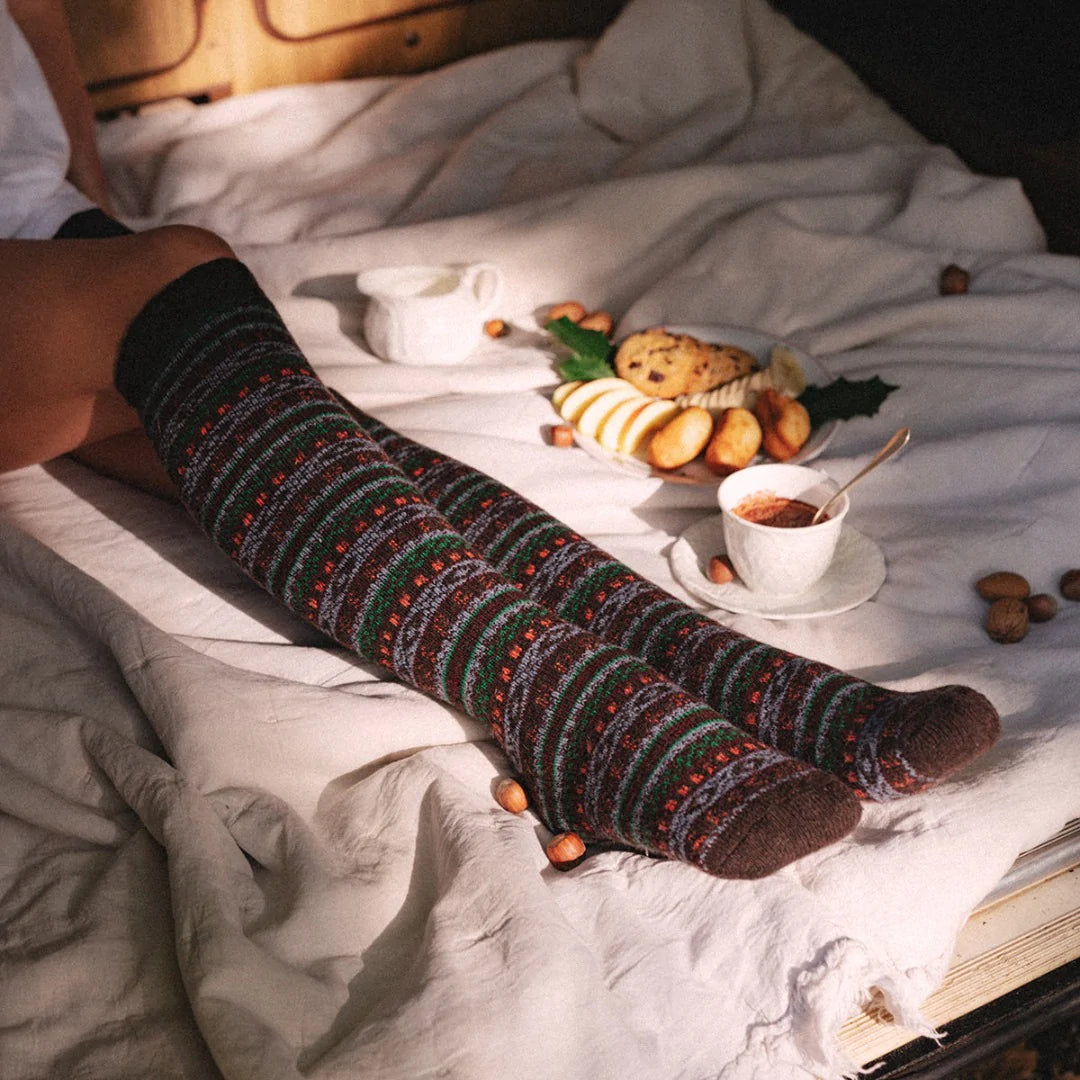
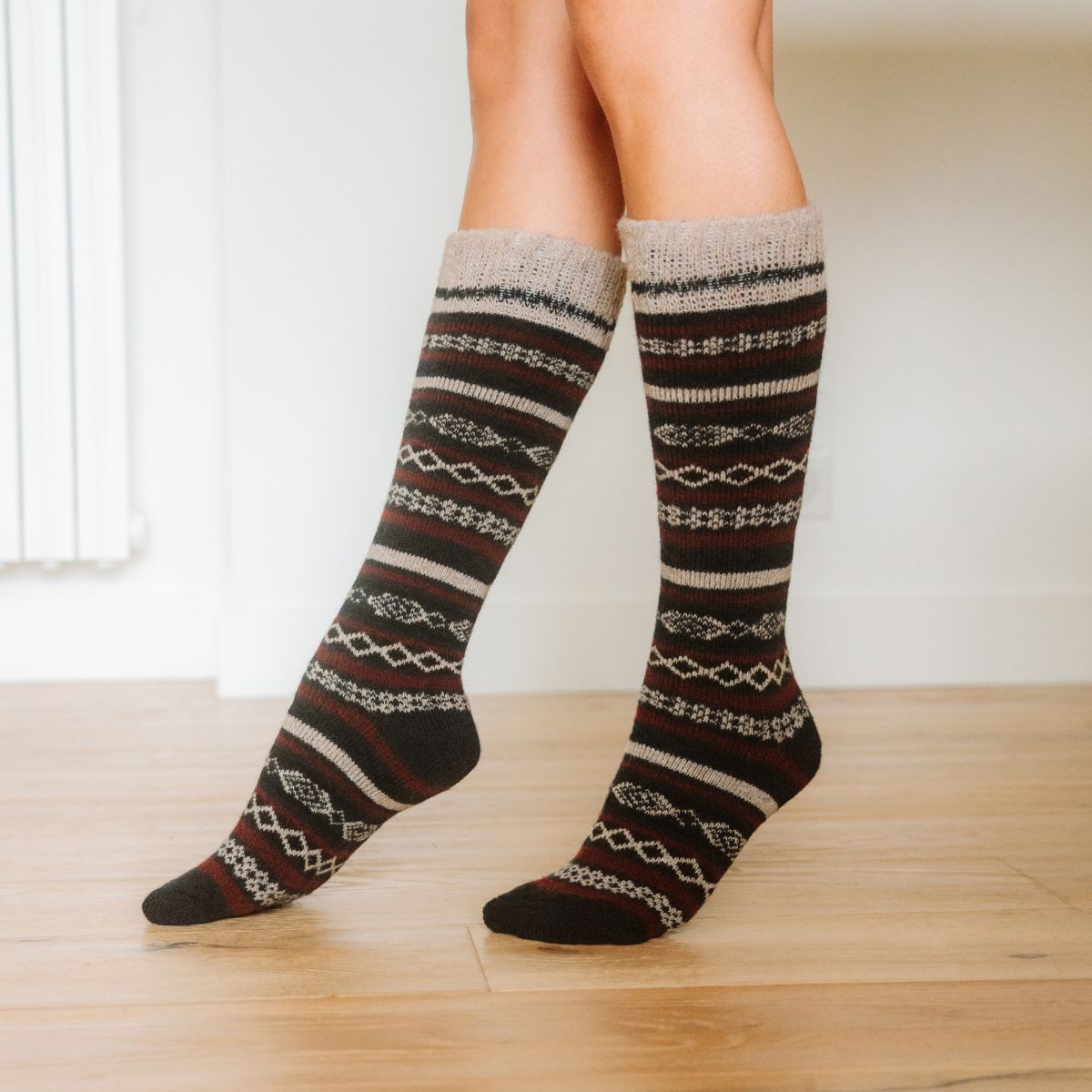
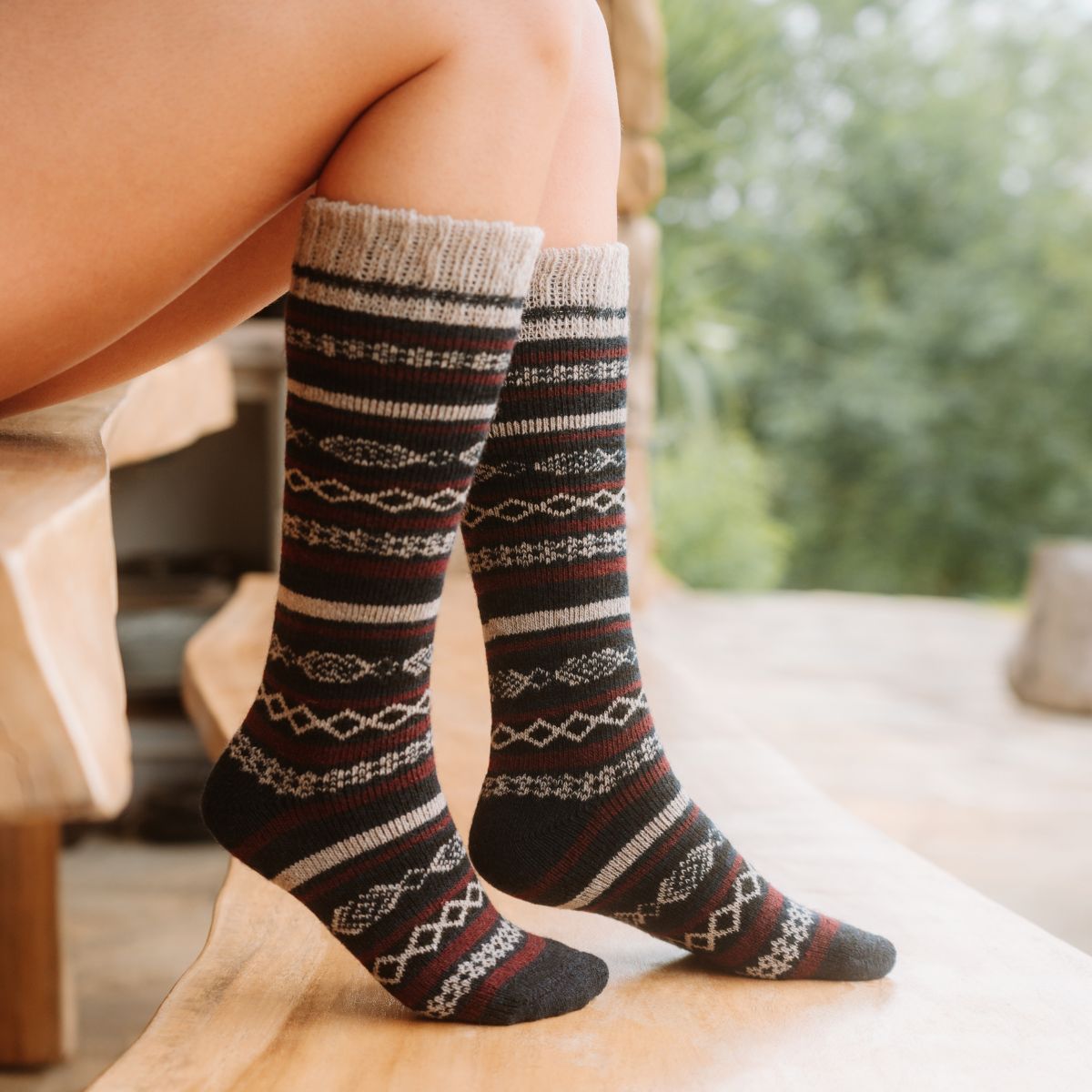
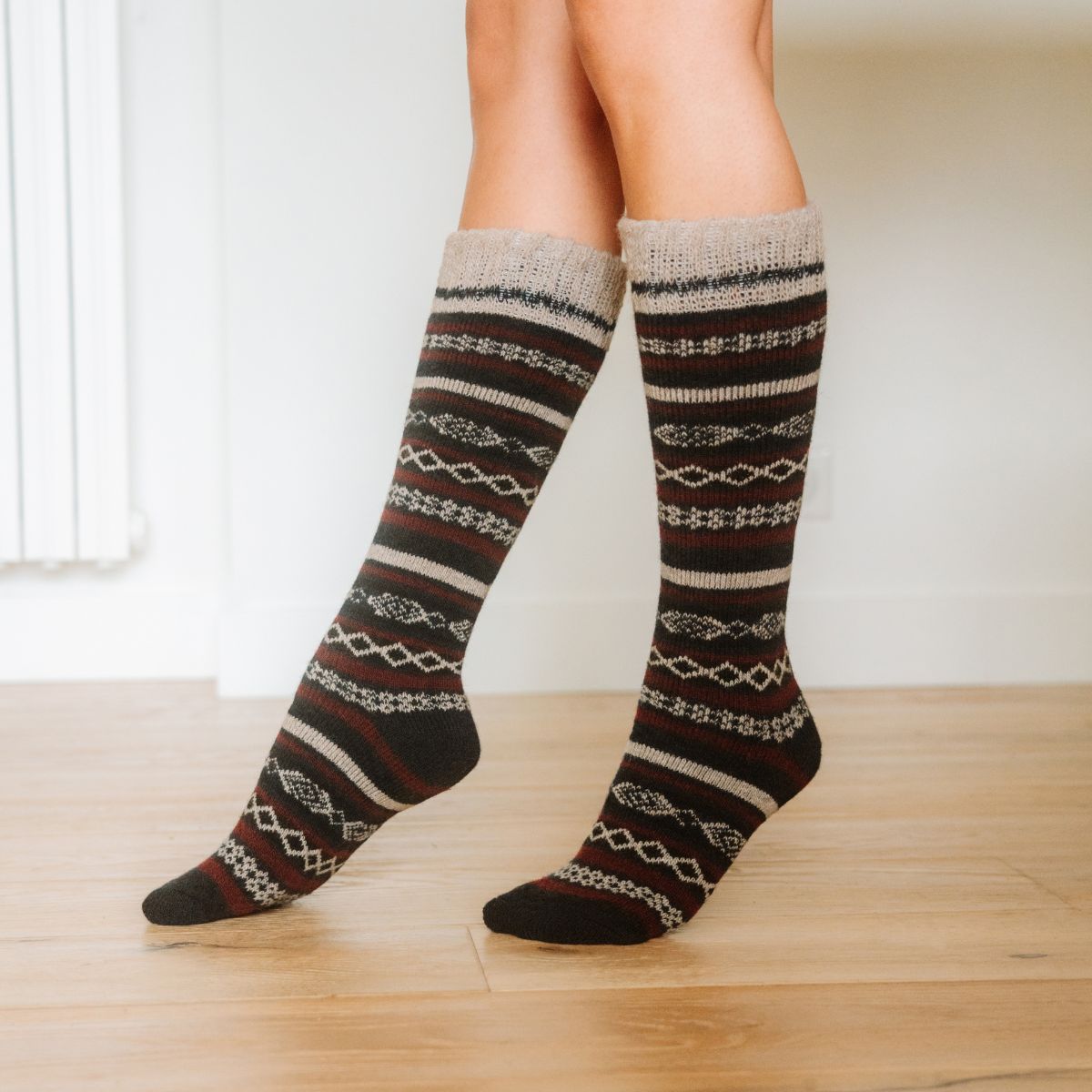
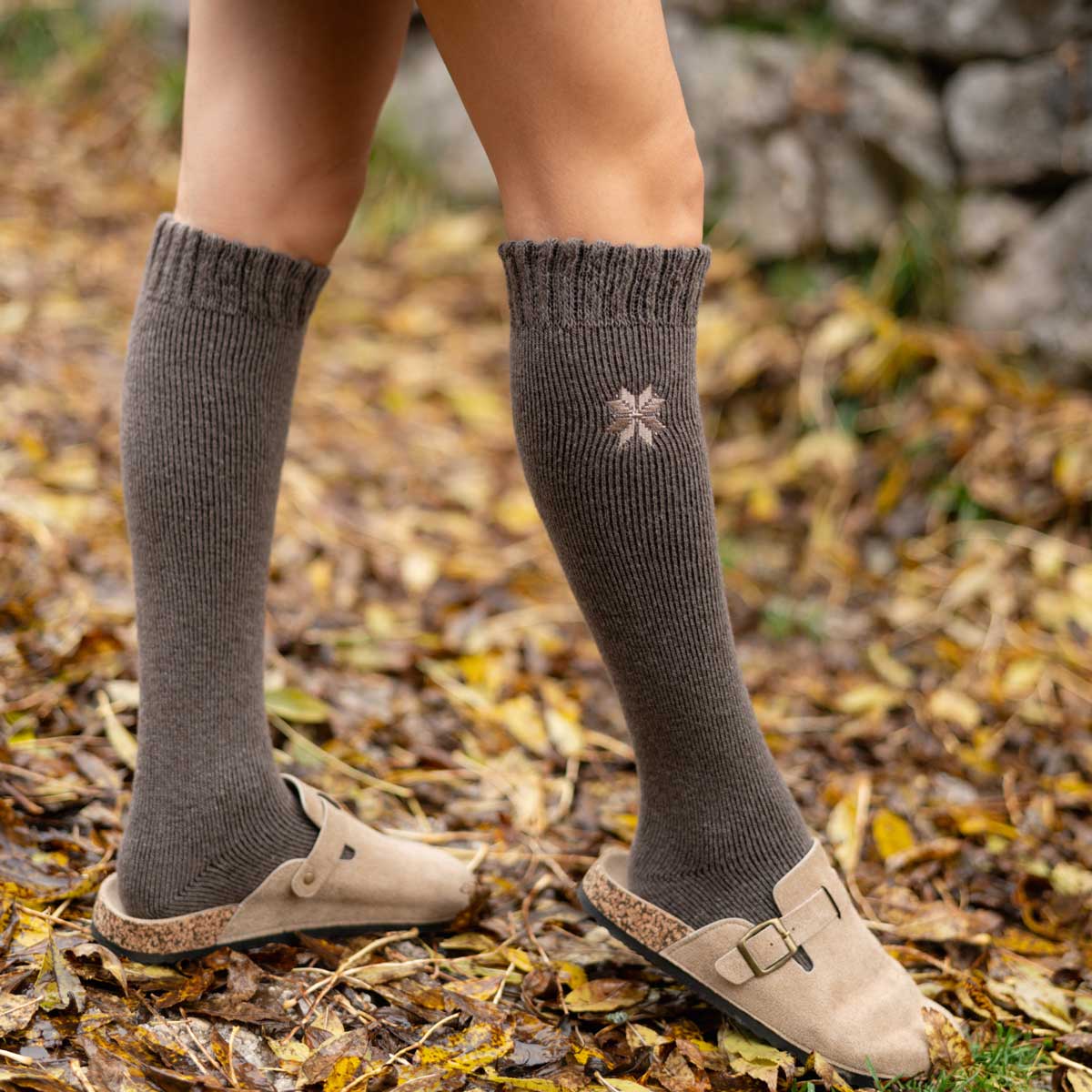
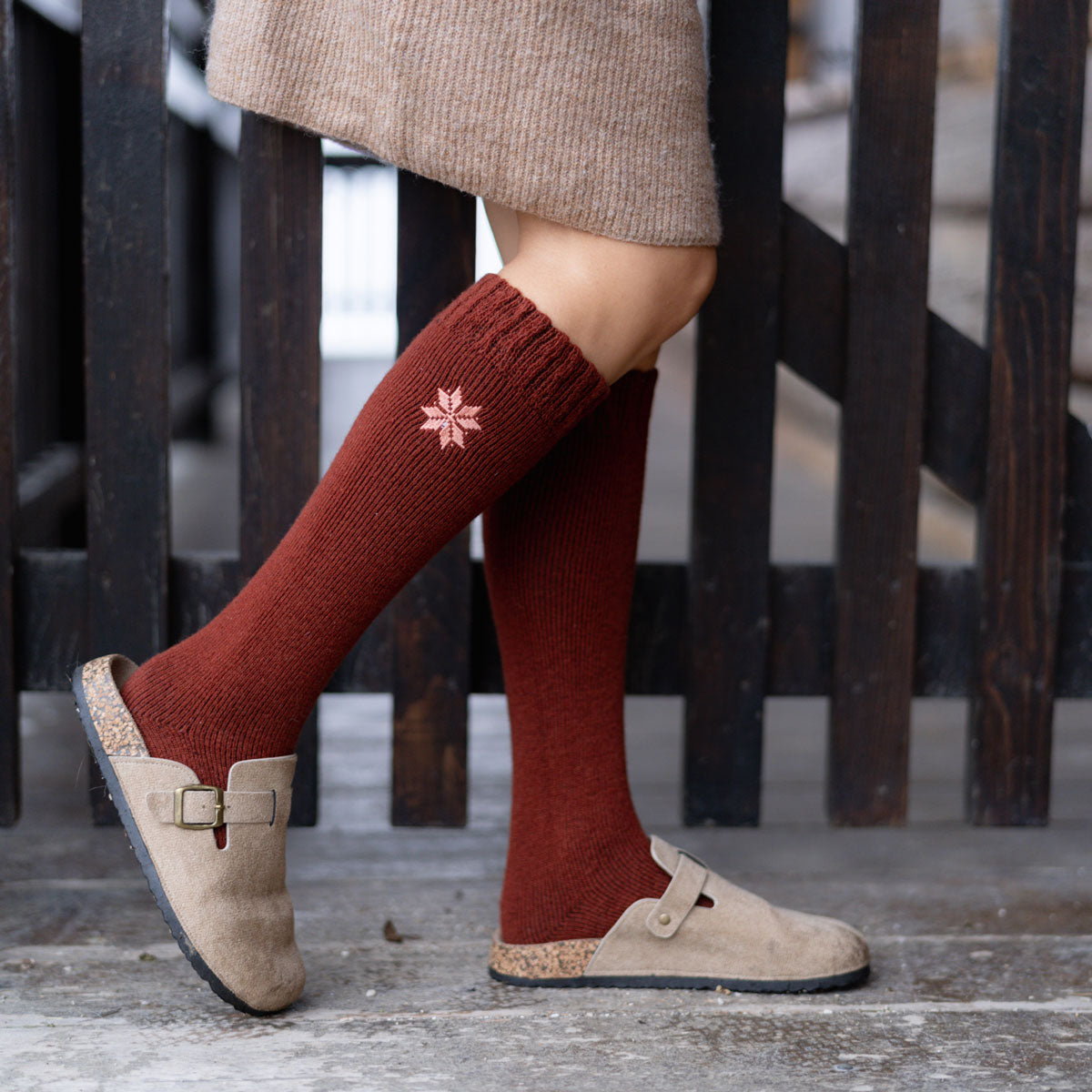
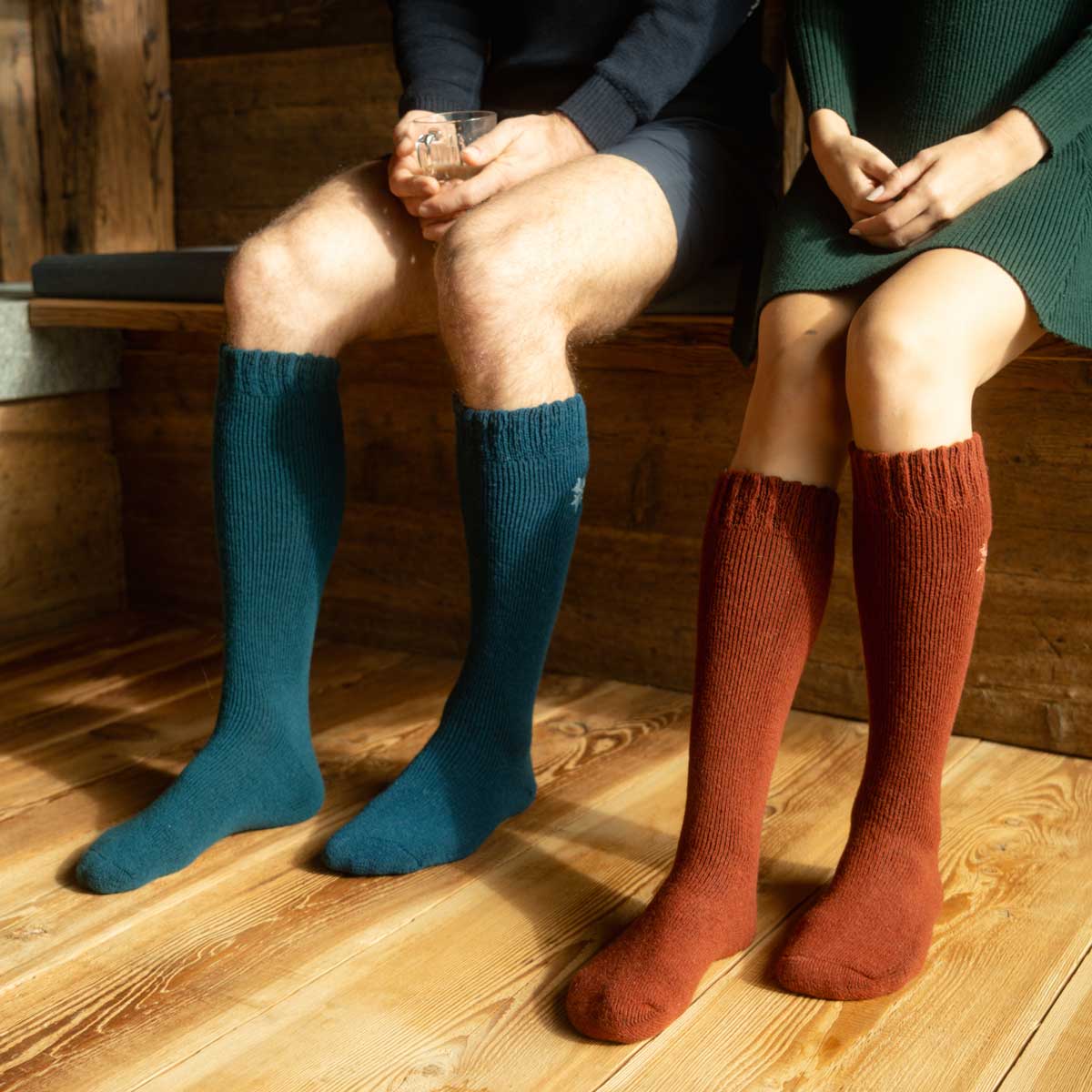
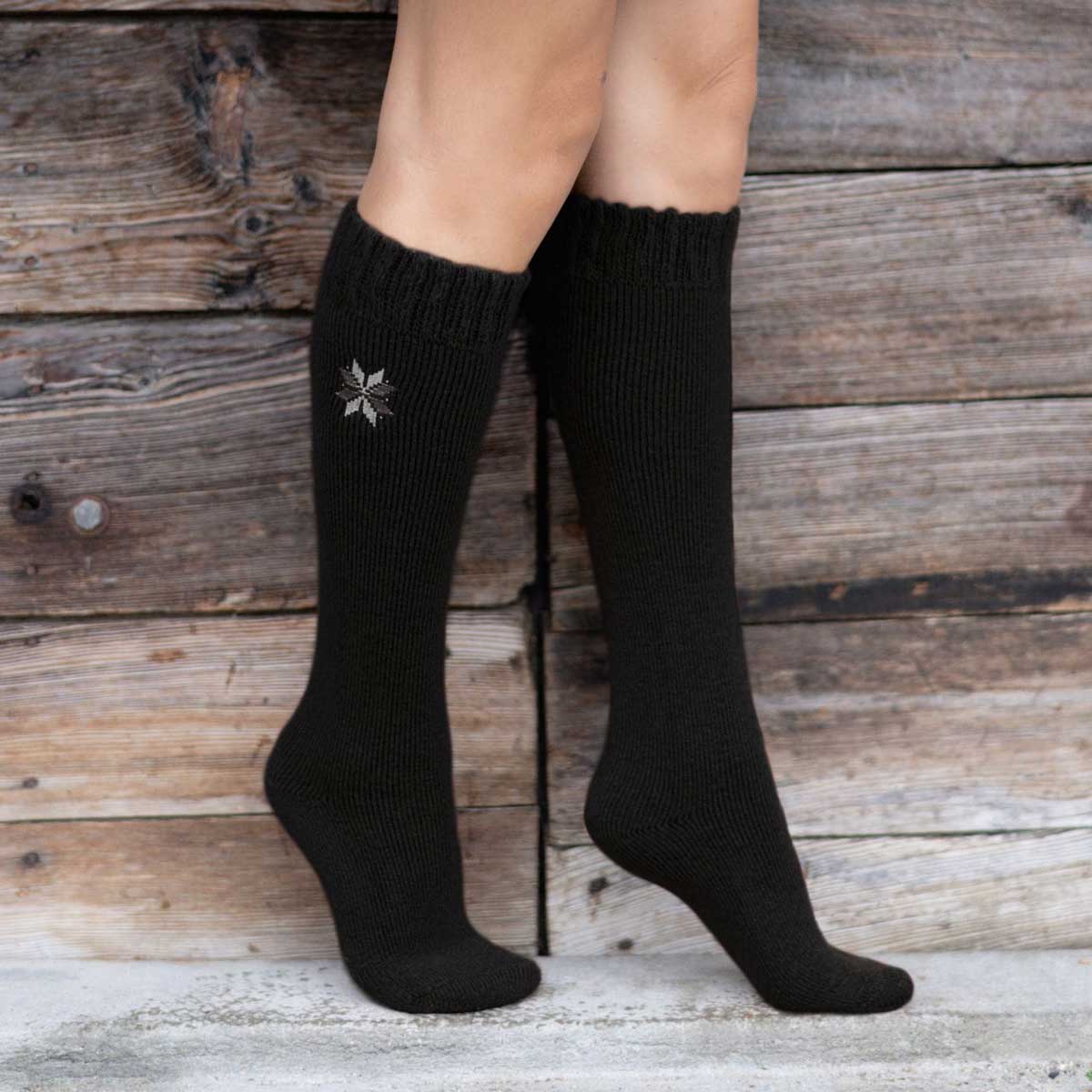
Regular crew socks reach your ankles and provide necessary compression at a key point. If you feel that the cold and numbness go higher than that, you can keep yourself warm with the taller socks available in the collection. The toasty feel and firm fit will keep your confidence and thermal comfort at all-time highs, even in subzero temperatures. Style is another factor to consider when buying longer socks. They are bona fide boot socks that fit any winterwear, but their versatility does not stop there.
They also work as formidable accessories for
We understand, however, that the cold feeling is not always avoidable by wearing woolen socks. You may need to layer up. And there are several other solutions to try out.
If all else fails, you can also go the hi-tech route, with electrically heated socks. They act like heating pads for your feet, ensuring you will not go numb or freeze, even if you struggle with a serious case of Raynaud's, severe anaemia, or perimenopausal symptoms.
 Besides material and style, several key features often go overlooked when people go sock shopping. Don't be one of them!
These are the essential characteristics for a full year of toasty feet:
 The number one question to ask yourself when you shop for socks is: What do I do in my day-to-day life? If you frequently expose yourself to the elements, opt for thick, absorbent sock sets. Merino wool is a warm, hydrophilic material that helps keep moisture inside the sock and away from your sensitive feet.
The key factor is to be adequately insulated at all times, but insulation does not equal suffocation. Breathable materials will help you get through every day with a smile and feet that overcome any obstacle. As temperatures change, you will need to get some adjustments for your baseline of thermal comfort. Firstly, thin and shorter socks are the way to go when the summer sun threatens your feet with overheating. Thicker socks, like those in the Mountain and Nature collection, feature full-terry knitting and will help you get through freezing winter days.
 Cold feet are an unpleasant symptom of conditions that are painful at best and dangerous at worst. To alleviate discomfort associated with poor circulation and hormonal fluctuations, an active lifestyle and proper hydration are good solutions. But what more can you do? Why, make some additions to your sock drawer. Based on your lifestyle and environment, you can try
We recommend opting for natural material blends. Merino wool is a year-round solution, whereas cotton can help you in milder seasons. Although Merino tends to cost more than cotton textiles, it remains affordable and an investment in your health and general well-being. If nothing helps alleviate the cold, you should consult your podiatrist and opt for stockings with in-built heating. For mild symptoms, a nice set of Nordic socks will do. You can have a relaxing day at home or get your blood pumping while your feet are clad in protective, supportive, and, last but not least, fashion-conscious socks.
 Keep your feet warm externally
Improve circulation through movement
Avoid habits that reduce blood flow
Check for underlying health conditions
Wear appropriate footwear and socks for the conditions
Stay well hydrated and maintain a good diet
Control body core temperature and external environment
Manage stress and avoid “fight‑or‑flight” vascular responses
Physical factors: ensure good posture & avoid pressure
Know when to see a doctor

Purchase from your country’s website.
It’s the fastest way to pamper your feet with comfy socks.